Renovating, rebuilding or buying?
If you’re buying a new home, a pre-purchase asbestos and lead inspection can also put your mind at rest about the presence of hazardous materials.
Different councils have different requirements and use different words. You may be asked for an:
- Asbestos Inspection
- Asbestos and Hazardous Materials Inspection
- Asbestos Survey
- Asbestos and Hazardous Materials Survey
Whatever your council requires, Airsafe can provide you with all the necessary documentation to meet council requirements and start the construction process faster.
Even if your council hasn’t asked you for it, Airsafe is happy to quote on completing an inspection and audit for your home. An inspection will give you the peace of mind of knowing exactly where any asbestos or lead exists in your house, whether you need to take any safety precautions around it right now, and whether anything needs to be professionally removed before any future renovations.
Book an inspection today
Airsafe are the experts in asbestos and lead inspections. From our Sydney base we work across NSW and travel Australia-wide for major projects – we’ve worked everywhere from Perth to Darwin and at remote sites across the country, with travel built into our quotes. We’ve conducted countless audits that will provide you with complete and accurate documentation. To book an inspection, call us on 1300 888 338 today.
Our inspectors have worked across Sydney for over 35 years – council DA inspections in Blue Mountains, Wollongong, Sutherland and Ku-ring-gai, pre-purchase inspections, commercial inspections for builders including Multiplex, Lend Lease and Built, and refurbishments at hospitals including Royal Prince Alfred, Prince of Wales and Sutherland.
Our Inspection Process
A typical inspection with Airsafe goes like this:
- Fill in our quote request form.
- Our consultant will examine your details and provide a quote.
- One of our fleet of inspection vehicles will be dispatched to your home, anywhere in Sydney.
- Specialist consultants will take samples for testing in our NATA-accredited lab (NATA accreditation No. 2959). Lead in paint is usually tested on site using our Olympus Vanta XRF analysers.
- The location, extent, and condition of asbestos and any other hazardous materials is determined.
At the end of Airsafe’s inspection, you’ll receive a comprehensive survey report. One of our recommendations might be professional asbestos removal. If that’s the case, Airsafe can recommend a reputable asbestos removal contractor who won’t cut corners.
Frequently asked questions
-
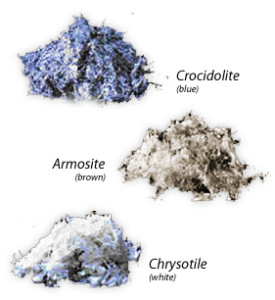
Most of us have heard of asbestos, but not everyone fully understands what it is. Simply put, asbestos refers to a set of six naturally occurring fibrous minerals. Among these, chrysotile, amosite and crocidolite asbestos are the most common.
Different types of asbestos can look very different from each other:
Asbestos fibres are small but powerful, used frequently in building and manufacturing during the twentieth century due to the material’s low cost and high durability. The highly heat-resistant fibrous mineral was often woven into fabrics and used in a variety of different fire-resistant and insulating materials.
But in the 1970s, use of asbestos sharply declined when it became evident that the mineral had the potential to threaten human health and safety.
Asbestos can be found in either friable or bonded (non-friable) form. Friable asbestos products are generally quite loose and are far more likely to crumble into a fine material or dust with the application of very little pressure. An asbestos audit will help to determine what kind of asbestos is present on your property.
-
If you’re thinking about renovating your home, it is important to be aware of asbestos. Given the wide use of the mineral in the early twentieth century, the potentially deadly fibres can be found in more places than you think.
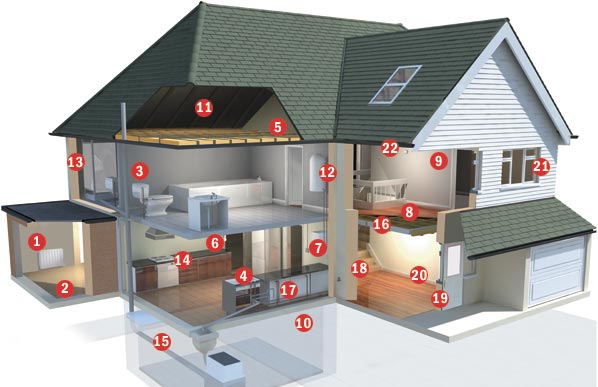
Asbestos can be loosely or firmly bound. In older Australian homes, asbestos may be found in:
- Exterior fibre cement cladding (AC or fibre) and weatherboards
- Artificial brick cladding
- Flexible building boards – eave linings, bathroom linings, cement tile underlay
- Corrugated cement roofing
- Flue pipes
- Architectural cement pipe columns
- Textured paint
- Vinyl floor tiles or coverings
Outside the home, asbestos could also be found in:
- Backings for electrical meter boards
- Fences
- Garages
- Gutters
- Insulation for hot water pipes and tank
- Garden sheds
-
Asbestos exposure carries a number of health risks. For instance, breathing in asbestos fibres can cause asbestosis, lung cancer and mesothelioma. The risk of contracting these diseases increases with the number of fibres inhaled. The greater the exposure, the greater the chance of developing an asbestos-related illness.
Finding that your home contains asbestos products does not mean that your health is immediately at risk. If products containing asbestos are in a sound condition, there may be no immediate concern.
However, if you think you may have found asbestos in your home, it’s a good idea to get it inspected in order to assess the potential risk.
Lead inspections
Like asbestos, lead is a hazardous building material that’s still common in Australian homes – particularly anything built or last painted before 1997. Lead paint, lead in ceiling dust and lead in surrounding soil all pose health risks, especially to young children and pregnant women. If you’re renovating, demolishing or buying a pre-1997 property, a lead inspection can identify where the risk sits before work starts.
An Airsafe lead inspection typically covers:
- Lead paint on interior and exterior surfaces, tested on site using our Olympus Vanta XRF analysers (Airsafe was the first Australian laboratory to be NATA accredited for portable XRF lead paint analysis)
- Lead in ceiling dust, sampled and tested in our Beaconsfield laboratory
- Lead in soil around the property, where deposits can come from old lead paint flaking off external walls, leaded petrol from before 2002, or nearby historical industrial sites
The current Australian standard defines lead paint as paint containing more than 0.1% lead by mass. The threshold was reduced from 1% in 2017, so older surveys based on the 1% threshold can miss paint that’s now classed as lead-containing.
We can run a lead inspection on its own, or as part of a combined asbestos and lead inspection – which is usually the most practical option for renovation and pre-purchase work on older homes.
Should I have an inspection, or just send a sample for testing?
Any samples that are collected during an inspection will be tested in our state-of-the-art laboratory. However, Airsafe also offers asbestos testing as a separate service. If there’s one particular area in your house that you think might contain asbestos, you can collect a sample yourself (taking the precautions we outline on our asbestos testing page) and bring it to Airsafe for testing.
So, should you have an inspection, or send a sample in for testing? The answer depends on a few questions.
-
If there’s only one small area of your house where you’re worried about asbestos (say you’ve accidentally knocked a hole in the wall), and it’s only one type of material you’re worried about, then it’s fine for you to take a sample yourself and have it tested. On the other hand, if it’s a large area of the house you’re concerned about, or there’s more than one type of material involved, it’s best to get an inspector to take a look. In some cases, multiple samples need to be tested. In other cases, we might recommend advanced safety measures while waiting for testing results.
-
Although taking a sample following our recommended procedure is easy and safe, some people understandably don’t feel comfortable doing this themselves. In particular, you might prefer not to crawl around in dusty or hard-to-reach places to take a sample. Our asbestos inspectors are trained in taking samples safely, even from tricky nooks and crannies.
-
Are you just replacing some lino in your kitchen? Or are you knocking down walls, building extensions, or otherwise making major structural changes to your house? The more extensive your renovations, the more it makes sense to have a full inspection.
-
This one is easy! If your council requests an asbestos or hazardous materials inspection, survey or audit as part of obtaining a construction certificate, they need a full report from an expert who has inspected the property in person. They won’t be satisfied simply with test results from individual samples.
If you’re in doubt, there’s never any harm in requesting an inspection. We’re happy to quote on doing an inspection even if it’s just to put your mind at rest. You should never worry that your concerns are too trivial to get us involved.
Inspections of suspected loose fill asbestos insulation
If you think your home might contain loose fill asbestos insulation, your best course of action is to call Airsafe. We’ll organise for one of our seven Licensed Asbestos Assessors to visit your home. They will inspect your ceiling and take samples for testing in our NATA-accredited laboratory.
Our asbestos inspectors are the most experienced in the business. They can give you reliable advice about what to do if your home does turn out to contain loose fill asbestos – whether that means taking part in the NSW Government’s Voluntary Purchase and Demolition Program, or keeping your home and taking steps to minimise the danger of exposure to asbestos.
Pre-purchase asbestos and lead inspections
If you’re looking to buy a new home, especially one built before the late 1990s, you may be wondering about the presence of asbestos or lead paint. The current owners may not even be aware that their home contains hazardous materials. Both asbestos and lead can be a serious threat to your family’s safety and can hold up the Development Application process if you’re planning to renovate or develop the property.
A pre-purchase inspection from Airsafe can set your mind at rest. As with all our inspections, our expert consultant will do a thorough examination of the property, both inside and outside. We’ll identify any possible asbestos and lead, and (subject to the owner’s approval) take samples to test in our NATA-accredited laboratory. You’ll be able to make an informed decision about buying the house, with full knowledge about whether asbestos or lead is going to be a concern for you or your family.
Contact us today for a fast quote on an asbestos and lead inspection.
4.9 stars across 640+ Google reviews – from Sydney councils, builders, home buyers and tenants across NSW and beyond.
“As a residential design and construct builder, speed and efficiency are much appreciated to keep our projects moving and Airsafe always delivers. Their process is easy, they are always prompt in their service, maintain communication throughout the testing process and their reporting is clear. Would recommend.” – Cape Cod Australia, November 2024
“I first contacted Airsafe as I was needing a full asbestos report for a property built in the early 80’s. From the onset, the team were informative and quick to respond to my queries and the report came back within a couple of days of the on-site testing being completed. Luckily there were no signs of Abestos but a week later, after removing some plasterboard from the property, we uncovered a different type of cement board that was a little suspicious. I contacted Airsafe to see if we could have some additional samples taken. I was so impressed at how seriously they took our concerns and they were able to provide some additional samples free of charge to ensure we had peace of mind. All in all, it was an great experience and I highly recommend Airsafe for anyone needing Asbestos testing done!” – Lauren Tess, February 2022
“We had a fantastic experience with AirSafe! They handled the asbestos compliance notice at our property with the highest level of professionalism. The team was efficient, thorough, and kept us informed throughout the entire process. They even went above and beyond by contacting the council directly to clarify certain matters, which gave us extra peace of mind. Highly recommend them!” – Rachel Mourad, April 2025
FAQs
-
We do both in the one visit on most jobs. Our consultants are equipped with handheld XRF analysers for on-site lead paint testing, so you usually get lead results the same day, and any asbestos samples taken go straight back to our Beaconsfield laboratory for analysis. You get one report covering both. For older homes, this is almost always the most practical option. Just call us on 1300 888 338 and tell us about the property.
Using a NATA accredited laboratory is a requirement of the Work Health and Safety Regulation, and it’s what makes a result rigorous and independent. You can check any provider’s accreditation, and its scope, at the NATA website, and a genuine report will always name the laboratory that carried out the analysis. Here’s what to look for in a report.
-
For an average Sydney house, the on-site inspection usually takes one to three hours, depending on the size of the property and how many outbuildings are involved. Larger properties, commercial sites and DA-related work can take longer. We’ll give you a clear time estimate when we quote, and we always show up when we say we will.
-
Yes. Airsafe reports are accepted by Sydney councils and councils across NSW as part of Development Application documentation. Different councils have slightly different wording for what they ask for – asbestos inspection, asbestos and hazardous materials inspection, asbestos survey, asbestos and hazardous materials survey – but the underlying report we produce satisfies all of these. If your council has specific requirements, let us know on 1300 888 338 and we’ll make sure the report addresses them.
-
Not always. Asbestos that’s in good condition and not likely to be disturbed is often best left where it is, with a note in the inspection report explaining how to manage it safely. Removal becomes the right call when the material is damaged, deteriorating, or in the way of renovation or demolition work. We’ll spell out our recommendations clearly in the report and we’re happy to talk through the options with you.