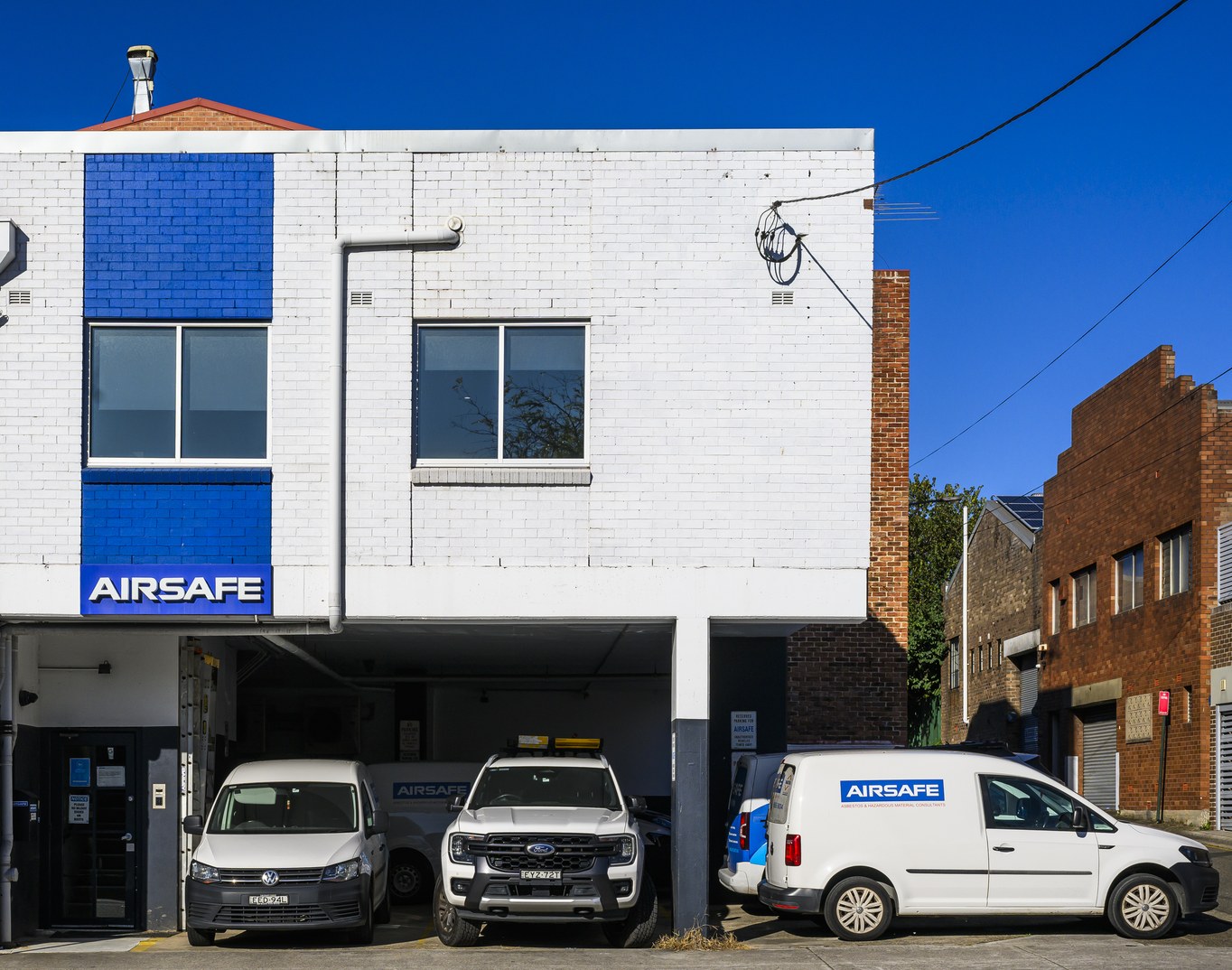
As one of NSW’s most experienced work health and safety consultancies, we have many years’ experience dealing with sites with difficult or complex contamination issues, from residential to large commercial sites. Asbestos contamination, waste management and the recovery of former hazardous-materials storage sites are among the many issues we’ve dealt with. We are familiar with, and comply with, the relevant guidelines including the National Environment Protection (Assessment of Site Contamination) Measure when conducting all land contamination assessments.
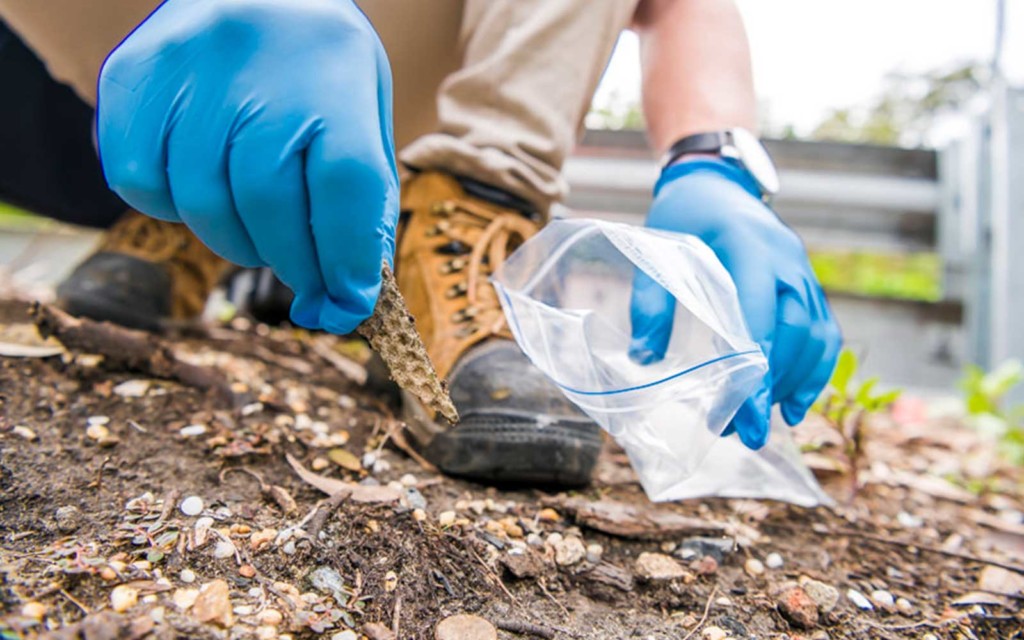
We assess. A licensed contractor remediates.
This is the part that sets us apart on a contaminated site. Airsafe is an independent consultant. We investigate the site, recover and test the samples, work out the scale of the problem, and where remediation is needed, write the remedial action plan and validate the work once it’s done. We don’t carry out the remediation ourselves. A separate licensed contractor does that.
Because we don’t do the removal, there’s no conflict of interest in our reports. We work out the remedial scope separately from the cleanup contractor, so we can determine the full extent of the job, not the extent that suits whoever is being paid to dig it out. For councils, buyers, regulators and site auditors, that independence is what makes an assessment worth relying on.
The four stages of a contaminated land assessment
A contaminated land assessment runs in four stages. Not every site needs all four. Where the site history is clean, the process can stop at the first stage; where remediation is needed, it runs through to final sign-off.
Stage 1: Preliminary site investigation (PSI)
The first stage in the contaminated land assessment process is for Airsafe to inspect the site and establish whether it has previously been used for any activities that may have led to contamination.
If the site’s history gives us a clear indication that there have been no contaminating activities in the past, there may be no need for further investigation or site sampling.
However, if we find that the site has previously been subjected to contaminating activities, or we are unable to establish what the site has been used for in the past, we’ll carry out a preliminary sampling and analysis program to find out whether more detailed site investigations are needed.
An Airsafe preliminary site investigation and land contamination report will tell you about:
- any potentially contaminating activities that have occurred in the past
- any potential types of contamination at the site
- the condition of the site
- whether there is a need for further investigation at the site.
Stage 2: Detailed site investigation (DSI)
Where our preliminary investigations find there may be an unacceptable risk of land contamination on the site, we’ll then carry out a detailed site investigation, looking more closely at the issues raised in the preliminary investigation and at the type, extent and level of contamination.
Our detailed site investigation contamination report will give you an assessment of:
- the likelihood and extent of contamination having spread via air, surface water, groundwater, soil and dust
- the potential effects of contaminants on public health, the environment and building structures
- any off-site impacts on soil, sediment and biota
- remediation options.
In some cases, we can use risk assessment methods to develop site-specific clean-up levels, but appropriate procedures must first be discussed with the EPA.
Stage 3: Remedial action plan (RAP)
If our detailed site investigations find that the site, or its surroundings, pose an unacceptable risk to human health or the environment, now or in the future, we prepare a remedial action plan (RAP) for making the site suitable for reuse.
A RAP prepared by Airsafe will:
- set goals for remediating the site to make it suitable for its proposed future use and safe for human health and the environment,
- give you detailed procedures and plans for reducing risks at the site to acceptable levels for that use,
- set up the necessary safeguards for the remediation works to be carried out in an environmentally acceptable way, and
- include proof of the approvals and licences required by regulatory authorities.
The plan is ours; the work is the licensed remediation contractor’s. We can help you put the RAP out to tender and oversee the works on your behalf, so that what gets done on site matches what the plan requires.
Stage 4: Validation investigation and report
Once the remediation works are complete, Airsafe prepares a validation report detailing the work that was carried out and the regulatory requirements that have been met. This is the final sign-off. It lets us, and the regulators and other interested parties, assess whether the goals set out in the RAP have been achieved and whether the site meets the clean-up criteria specified by the EPA.
The report includes the results of the site validation and outlines any additional work that needs to be carried out if targets set in the RAP have not been met.
If ongoing site monitoring is required following remediation (for example, where full clean-up is not feasible or onsite containment of contamination is proposed), we will provide you with a detailed monitoring program that includes:
- the proposed monitoring strategy
- the parameters to be monitored
- monitoring locations
- frequency of monitoring
- reporting requirements.
Signed off by a certified contamination specialist
Airsafe’s contaminated land reports are signed off by Michael Edwards, our Certified Environmental Practitioner (Site Contamination Specialist), CEnvP-SC No. 40039. Michael is an environmental and engineering geologist with more than 30 years in the field. He holds a BSc in Geology from the University of Newcastle and a Master of Applied Science from the University of NSW in engineering geology, hydrogeology and environmental geology. He is a Registered Professional Geoscientist in environmental geoscience (RPGeo No. 10093) and a Licensed Asbestos Assessor (LAA001125).
From 2019 to 2024, Michael was Registrar of the Certified Environmental Practitioner Scheme, the national certification scheme for environmental practitioners. He has administered the very certification he now signs Airsafe’s reports under.
This matters for your development application. A site contamination report signed by a certified specialist is recognised by the NSW EPA, and it gives your DA the best chance of progressing through the council approval process. Using a certified consultant is the simplest way to avoid the delays that come when a council questions who prepared and signed the assessment.
A site contamination report is not the same as a statutory Site Audit Statement. A Site Audit Statement is a separate, higher tier of review, issued by an EPA-accredited site auditor, and it is only required in particular situations: for example, where a site is regulated, where land is being redeveloped to a more sensitive use such as housing or childcare, or where an authority specifically requires one. Airsafe is not the statutory auditor. Where a site audit is needed, a separate accredited site auditor is engaged for that role, and our investigation and validation reporting is prepared to the standard that review requires. Keeping the consultant and the auditor as separate roles is what gives the final sign-off its weight.
How your samples are tested
Airsafe’s consultants recover samples on site in line with NEPM and EPA sampling methodologies. Soil and water samples, for heavy metals, hydrocarbons, PFAS, solvents and the rest of the chemistry, are analysed by a NATA-accredited laboratory. Using an external accredited laboratory keeps the results independent of the people recovering the samples, which is part of what makes the assessment reliable.
Where the contaminant is asbestos in soil, identification is done in our own NATA-accredited laboratory (Accreditation No. 2959). Having that work in-house means a fast, definitive answer with full legal weight. For more on that work, see our Asbestos in Soil page.
The regulatory framework
Contaminated land in NSW sits across several pieces of regulation. The main ones we work to are:
- The National Environment Protection (Assessment of Site Contamination) Measure: the national framework for assessing whether a site is contaminated and whether it is fit for its intended use. It sets the investigation and screening levels we measure your results against.
- The Contaminated Land Management Act: the NSW Act, administered by the EPA, that deals with significantly contaminated land. It also sets out the duty to notify the EPA when contamination above certain levels is found.
- The State Environmental Planning Policy (Resilience and Hazards): the planning policy that carries the contaminated-land provisions formerly in SEPP 55. It is why a council assessing a development application or a rezoning has to consider whether a past land use may have contaminated the site, and why remediation work has to be notified and validated.
- Waste classification and VENM: when soil leaves a site, it has to be classified before it can be moved, reused or disposed of. We cover this on our Waste and VENM Assessment page.
The framework changes from time to time. We keep across it so you don’t have to.
From our case files
Airsafe’s contaminated land work spans Sydney, the Central Coast and country NSW, and most of it is done to get a development application through council. A few real examples:
- Arden Anglican School Junior Campus, Beecroft. A major campus redevelopment, assessed for a large development application with Hornsby Shire Council. Airsafe carried out four preliminary site investigations and three detailed site investigations, approved by council as part of the DA.
- A residential development application at Batemans Bay, on the NSW south coast, with Eurobodalla Shire Council. Airsafe completed a preliminary site investigation together with an Acid Sulfate Soil Management Plan (see our Acid Sulfate Soils page).
- A residential development application at South Bowenfels, near Lithgow, with Lithgow City Council, supported by a preliminary site investigation.
- 309-311 The Entrance Road, Long Jetty. A childcare facility development application with Central Coast Council, supported by a remedial action plan.
- 39 Carnation Avenue, Bankstown. A two-level childcare facility development application with Canterbury-Bankstown Council, supported by a detailed site investigation and a remedial action plan.
Every job above was signed off by Michael Edwards, our Certified Environmental Practitioner (Site Contamination Specialist).
4.9 stars from over 640 Google reviews, from builders, demolition and remediation contractors, developers, councils, government and industrial clients across NSW.
“We recently appointed Airsafe to undertake air monitoring and reporting at a brownfield development site during the demolition stage. Their proactive, professional and cost and time-efficient approach and implementation were excellent.”
Carl O. Peterson, December 2021 — 5 stars
“Air Safe has promptly assisted in inspecting and testing materials that are found to be a cause for concern either by our client or our internal team. It has always been a pleasure to work with Air Safe, whether that be with their administrative staff or their on field professionals. Services have always been fast, reliable and professional. Highly recommend Air Safe to all wishing to navigate through contaminated materials with ease and reassurance.”
Projects Division, March 2024 — 5 stars
“I use Airsafe on a regular basis for commercial construction. Liam Matthews and the Airsafe team always get the job done professionally, safely, and in a prompt manner as required. If only I could give more stars.”
Jordan Kissane, September 2021 — 5 stars
Frequently asked questions
-
Most often it’s triggered by a change of use or a development application, for example turning an old industrial or commercial site into housing or a childcare centre. A council assessing the application has to consider whether the previous use may have contaminated the site. You may also need one when buying or selling land, when a site is on the EPA’s contaminated land record, or when you have reason to think a site has been contaminated by a past activity. If you’re not sure whether you need one, call us on 1300 888 338 and we’ll tell you straight.
-
No. Airsafe is an independent consultant. We investigate the site, test the samples, work out the extent of the problem, write the remedial action plan and validate the work once it’s done. The actual cleanup is carried out by a separate licensed remediation contractor. Because we don’t do the removal, councils, buyers and regulators rely on our reports. We can also put the work out to tender and oversee it on your behalf.
-
Our reports are signed off by Michael Edwards, our Certified Environmental Practitioner (Site Contamination Specialist), CEnvP-SC No. 40039, an environmental and engineering geologist with more than 30 years in the field. A report signed by a certified specialist is recognised by the NSW EPA and gives your development application the best chance of progressing through council. A statutory Site Audit Statement is a separate, higher tier of review issued by an EPA-accredited site auditor, required only in particular situations. Airsafe is not the statutory auditor; where one is needed, a separate accredited auditor is engaged.
-
Our consultants recover the samples on site in line with NEPM and EPA sampling methodologies. Soil and water samples are analysed by a NATA-accredited laboratory, which keeps the results independent and reliable. Where the contaminant is asbestos in soil, the identification is done in our own NATA-accredited laboratory (No. 2959), which means a fast, definitive answer with full legal weight.
-
We’re based in Sydney and carry out contaminated land assessments across Sydney, Newcastle, Wollongong and country NSW. Travel is built into our quotes for sites outside the metropolitan area, so there are no surprises. If you have a site anywhere in NSW, call us on 1300 888 338.
Contact us for contaminated land assessments today
Airsafe delivers clear, well-documented land contamination reports and gives you practical advice on what to do next. Whether you’re a developer, a builder, a council, a government department or a landowner, we can take you from the preliminary site investigation through to validation and final sign-off, and work alongside your remediation contractor, and the accredited site auditor where one is required, to get the site signed off.
To organise a contaminated land assessment, call us on 1300 888 338.
Last updated: June 2026