Who inspects and tests mould in Sydney homes and workplaces?
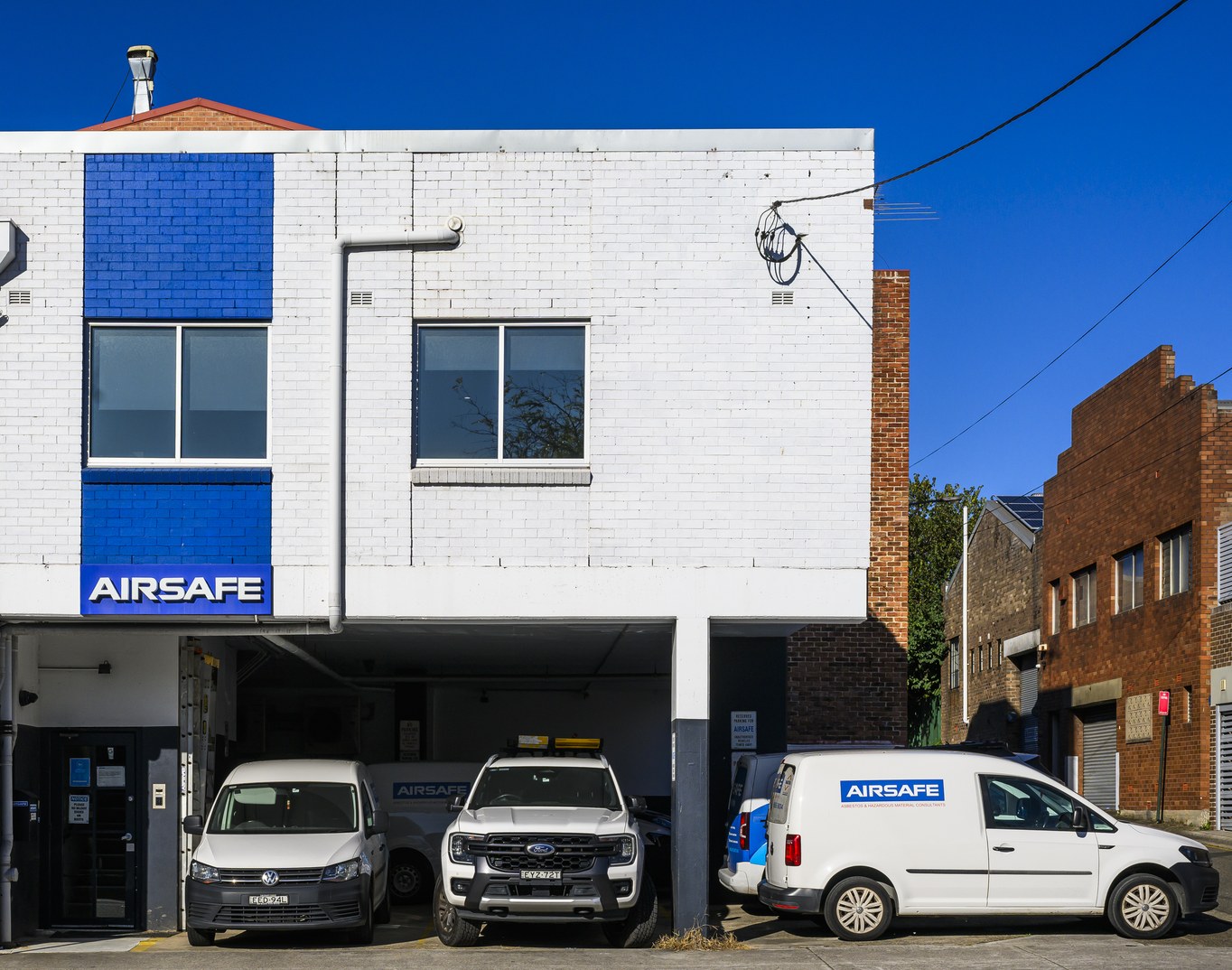
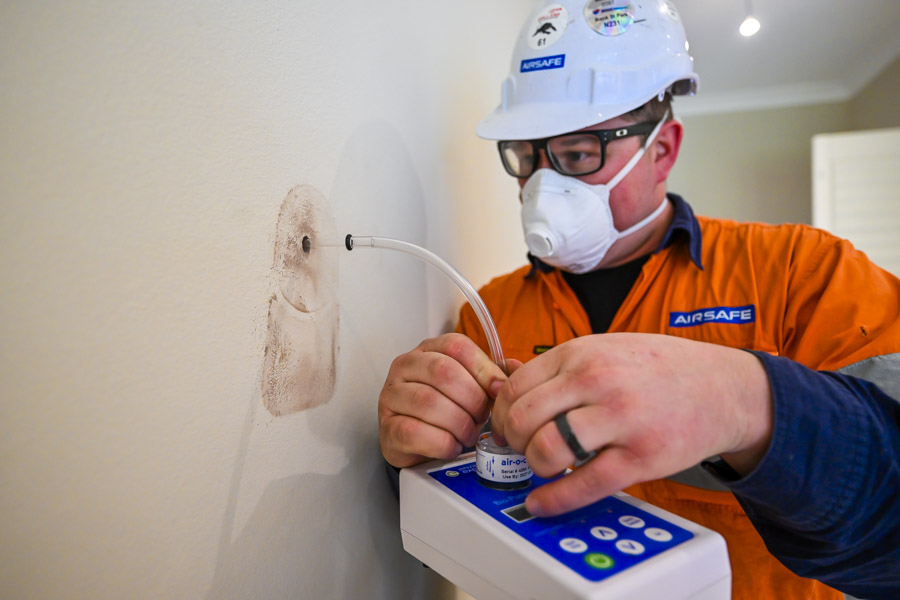
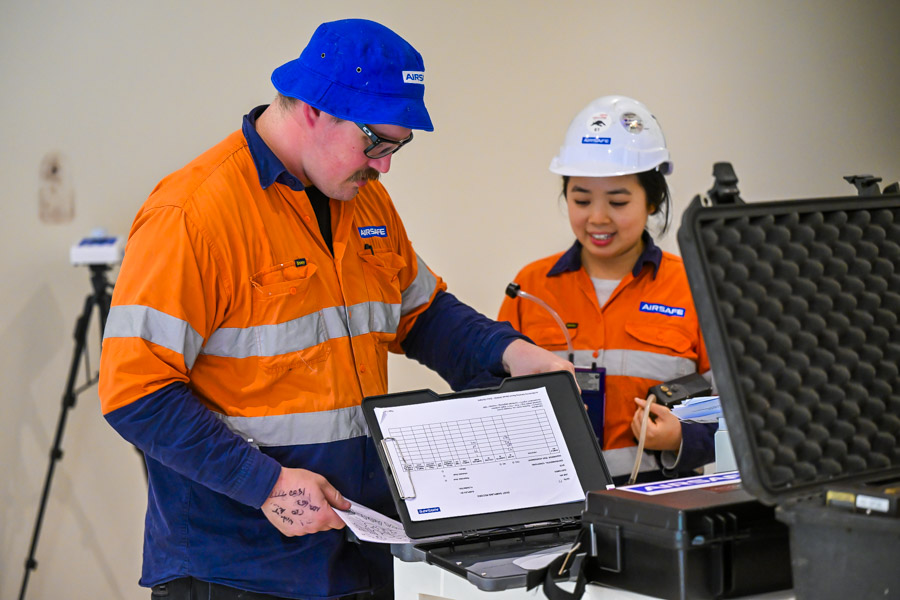
Airsafe inspects and tests mould in Sydney homes, apartments, offices and workplaces, including commercial and industrial buildings, hospitals and schools. An Airsafe occupational hygienist finds the source, samples air and surfaces, traces moisture, and prepares a Mould Inspection Report with recommendations. We also do clearance inspections after remediation.
Who analyses the mould samples?
Selected samples go to an independent NATA-accredited laboratory for analysis. Airsafe interprets the results as part of the Mould Inspection Report or clearance assessment. The report sets out where the mould is, where the moisture is coming from, what the laboratory found, and what needs fixing.
How soon can someone attend?
Airsafe can normally have an occupational hygienist on site the next day. If you need someone there the same day we can usually arrange it, for an additional cost. Because we own our sampling equipment rather than hiring it, we’re never waiting on gear before we can attend.
When mould is spreading, or someone in the building isn’t well, waiting isn’t much help. We can normally have an occupational hygienist on site the next day. If you need someone there the same day we can usually arrange it, for an additional cost. Because we own our sampling equipment rather than hiring it, we’re never waiting on gear before we can attend.
Just call us on 1300 888 338 and we’ll tell you when we can be there.
Do you need an inspection at all?
Sometimes no. A small patch of surface mould in a well-ventilated spot can often be cleaned up safely yourself, and you don’t need us for that.
Call us when the mould keeps coming back, covers a large area, is hidden behind walls or under floors, or follows a leak or water damage. Call us when someone in the building has health concerns. And call us when there’s a dispute or an insurance claim and you need an independent report. An inspection finds the source, not just the visible growth.
If you’re not sure which side of that line you’re on, call Airsafe on 1300 888 338 and ask.
Does Airsafe do the remediation?
No. Airsafe does not do the remediation. We inspect, test and work out the scope of what needs fixing, separately from any cleanup contractor. A remediation contractor you choose carries out the work, and once it’s done we come back and verify it with a clearance inspection.
We inspect, test and work out the scope of what needs fixing, separately from any cleanup contractor. A remediation contractor you choose carries out the work, and once it’s done we come back and verify it with a clearance inspection.
Because we don’t do the remediation, there’s no conflict of interest in our report. That’s also why our reports carry weight in disputes, insurance claims and tribunal matters.
Where’s the mould?
Some mould situations come with their own questions: who’s responsible, what the report needs to show, how fast it needs to happen. We’ve covered the common ones separately:
- Mould in rental properties
- Mould after a flood, leak or storm
- Mould in strata and apartment buildings
- Mould in the workplace
Mould in rental properties
Mould is a frequent source of dispute between tenants and landlords, often reaching the NSW Civil and Administrative Tribunal (NCAT) when the problem isn’t fixed or there’s a disagreement about who’s responsible. Where a mould issue arises because the landlord fails to make a timely repair, the landlord is responsible. Where the mould develops during the tenancy as a result of the tenant’s actions, the tenant may be responsible for fixing it. (Source: Safety in the home | NSW Government)
At Airsafe, we don’t get involved in the blame game between landlords and tenants, but we can help make sure that mould issues don’t escalate. We offer an initial investigation and laboratory testing to determine whether mould is present and, if so, what kind, and to make recommendations for treating it. Once the mould issue has been addressed, we can complete a clearance inspection to confirm that our recommendations have been carried out and mould is no longer a problem. In a dispute that reaches NCAT, an assessment from an occupational hygienist who doesn’t do the remediation is the kind of evidence that carries weight.
Our services are available to landlords, tenants, agents, strata managers and property managers. For NSW Fair Trading’s guidance on repairs and maintenance in a rental, see the NSW Government rental pages.
Mould: what is it?
Mould is a fungus, like mushrooms and yeast. It is present virtually everywhere, indoors and outdoors.
Mould tends to grow indoors in wet or moist areas lacking adequate ventilation, including:
- walls and wallpaper
- ceilings
- bathroom tiles
- carpets (especially those with jute backing)
- insulation material
- wood
In short, anywhere that moisture accumulates in a building, it’s likely that mould will grow. There are many different types of mould, and all have the potential to cause health problems.
Types of mould
There are more than 100,000 different species of mould, but only 20 to 30 are commonly found in Australian homes. People often refer to mould by colour (white mould, brown mould, pink mould, green mould or black mould), but the specific mould species can’t be identified by colour alone. That’s why it’s important to have mould samples professionally analysed by an independent NATA-accredited laboratory if you have any concerns.
Mould health risks
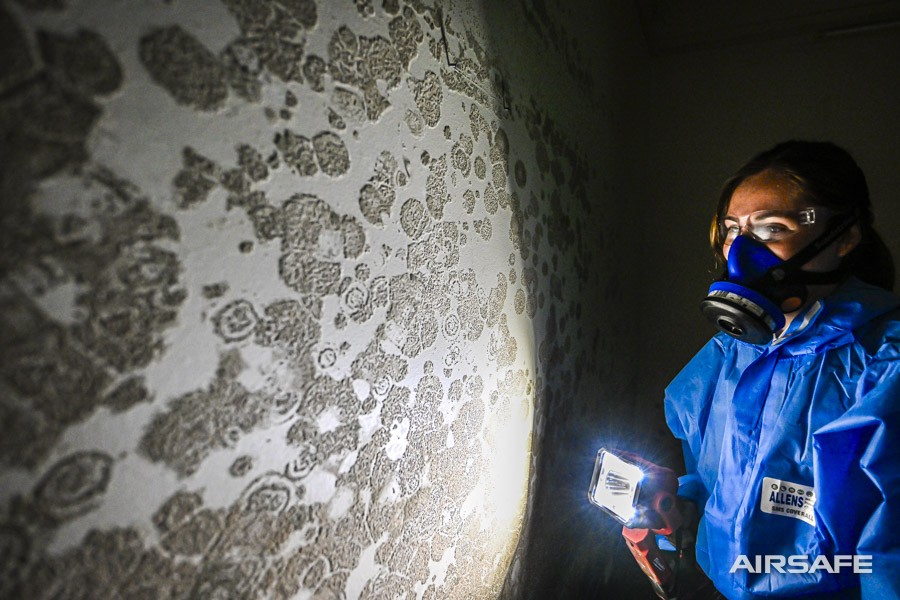
To reproduce, mould produces tiny particles called spores. Spores are carried in the air and may cause health problems if inhaled by people who are sensitive or allergic to them.
Different types of mould come with different levels of health risk:
- Allergenic moulds can temporarily affect people who are prone to allergies or asthma – about 20% to 30% of the population. They’re often found in areas that have been damp for long periods. Symptoms of an allergic reaction can include a running or blocked nose, irritation of the eyes or skin, wheezing, or an asthma attack.
- Pathogenic moulds can cause infections and diseases, especially in people with vulnerable immune systems, such as infants, elderly people, cancer and transplant patients, or people with chronic diseases.
- Toxic moulds carry the highest level of risk, producing poisonous chemicals called mycotoxins that can lead to serious illness. In Australia, the most notorious toxic mould is Stachybotrys chartarum, also known as toxic black mould.
Mould and your building
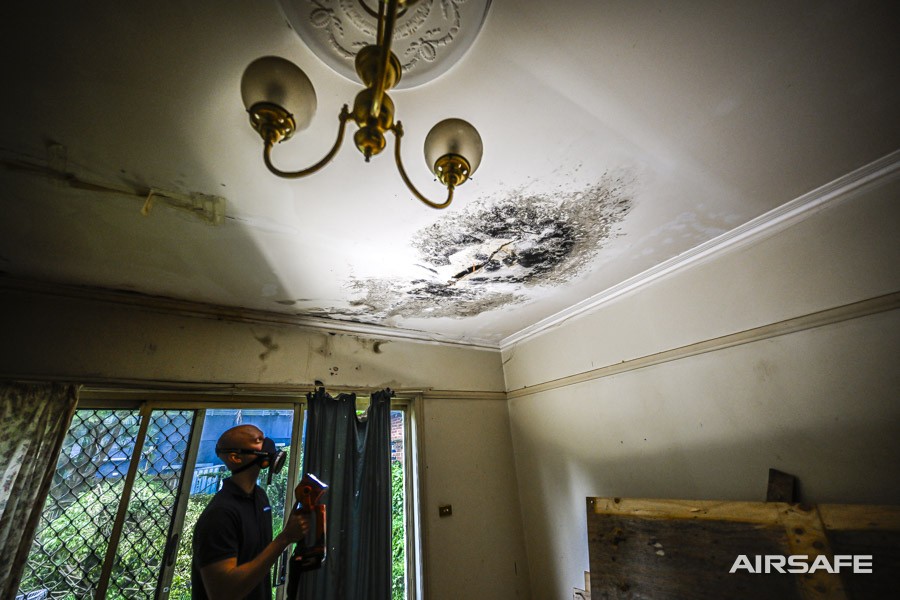
The harm mould does to people is well known. The damage it does to the building itself is often not adequately addressed, especially in older institutional and commercial premises where moisture problems can run quietly for years.
All organic building materials are prone to mould, particularly common ones made of, or containing, wood and wood fibres, paper or cardboard. Paints, glues and resins encourage growth, and carpets and insulation can collect water and dirt. Even a quick water intrusion may take days or weeks for an area to dry out, during which time mould spores can spread and thrive.
Typical sources of major water damage are failures or breaches to pipes (both supply and drainage) and failures of drainage seals. Other contributors include poor building envelope care, inadequately designed stormwater and rainwater drainage, and even alterations that don’t follow the original engineering or building design. Long-term moisture effects often go unnoticed, leading to microorganism growth, mould, and the deterioration of building components.
We assess mould in residential, commercial and industrial settings, and verify that treatment has been carried out thoroughly and safely.
Why choose Airsafe for mould testing?
Because mould is such a complex area with different types and levels of risk, it’s important to get professional help if you have a mould concern. This means engaging an occupational hygienist with proper training and expertise in mould, with laboratory analysis carried out by an independent NATA-accredited laboratory.
Unlike asbestos, there’s no licensing regime for mould work and no single legal exposure limit for indoor mould. That means the quality of a mould assessment comes down to the experience of the occupational hygienist and the consistency of the process.
At Airsafe, we’re proud of our methodical, systematic and diligent procedures for carrying out mould inspections and clearances. To undertake an inspection or clearance, an Airsafe staff member must:
- be completely familiar with the relevant documents
- undertake thorough mould assessment training in Airsafe’s procedures
- be signed off by a supervisor
- undergo routine reviews of mould testing skills and technique
If your occupational hygienist isn’t backed by rigorous procedures like Airsafe’s, there’s a risk that the premises won’t be thoroughly inspected, which can mean areas of mould are missed.
Contact us today for a fast quote on mould testing and assessments.
From our case files
Jenolan Caves
When flooding and years of wear left mould through the heritage buildings at Jenolan Caves, the Trust brought Airsafe in to work out how far it had spread and what was driving it. Over three days we assessed the lot: the historic main building, which dates to around 1887, the old employee cottages and the hydro generator buildings.
We inspected each structure, tracked down where moisture was getting in, and sampled the air and surfaces to find both the visible mould and the growth hidden away out of sight. Working in heritage buildings means you can’t just pull things apart, so we worked alongside the remediation contractors to set the testing parameters and make sure everyone was clear on exactly which areas needed work. The Trust came away with a proper picture of how bad the mould was and what was causing it, which is what you need before any sensible remediation can start.
A live hospital redevelopment
On a major hospital redevelopment in Sydney, we’re working with the principal contractor to keep mould under control while building work goes on around occupied wards. In an operating hospital the stakes are higher than usual: patients alongside a construction zone can be far more vulnerable to airborne mould spores than the average person.
We run mould risk assessments in the occupied and neighbouring areas, monitor the air for spore levels, and track down any moisture that could become a problem. We’ve also helped the contractor work out how to contain any contamination inside the work zone so it doesn’t reach patients or staff, and we carry out clearance and validation inspections as the job moves through its stages. The work is ongoing, and so far mould has stayed within safe limits right through construction.
When the source isn’t where you expect
When the Dr Phil show called in 2021, an Australian couple were convinced their neighbours were poisoning them. We ran 280 separate tests across air, surfaces and soil. After a detailed analysis, the house wasn’t being contaminated from next door at all. The real source was black mould inside their own home. Mould isn’t always the source you expect, which is exactly why a proper assessment matters.
4.9 stars from over 650 Google reviews and counting, from homeowners, landlords, property managers, commercial and institutional clients across Australia.
“John at AIR SAFE truly set the bar high with his exceptional service. From the moment I reached out, John was nothing short of fantastic. His professionalism, expertise, and genuine care for customer needs shone through in every interaction. What stood out most was John’s ability to make complex situations feel manageable, providing clear, concise advice and solutions that truly made a difference. His attention to detail and commitment to ensuring safety and satisfaction went above and beyond my expectations. John is the person to go to. His outstanding service has not only earned my trust and respect but has also made me a loyal customer of AIR SAFE for any future needs.”– Luke McArdle, Jenolan Caves, April 2024
“We had an urgent concern regarding an unpleasant odour following some water damage. Daphne came out the next day, did a thorough inspection and sent samples off. Less than a week later we had a clean bill of health which avoided an unnecessary expensive cleanup. Thanks for the speedy and detailed turnaround.”– John White, April 2025
“Provided a comprehensive and detailed report, with recommendations, of our mould issues at home. Looking forward to seeing it being used via a remediation service.”– Sertan Saral, August 2024
FAQs
Can you tell what kind of mould it is just by looking at it?
No. People often describe mould by its colour, but the specific mould species can’t be identified by colour alone, and colour doesn’t tell you the level of risk. True to its name, black mould is distinctively black, whereas other species that grow in the house may be pink, grey, white or brown. That’s why it’s important to have mould samples professionally tested in a laboratory if you have any concerns.
Do I need a mould inspection, or can I just clean it up myself?
A small patch of surface mould in a well-ventilated spot can often be cleaned up safely yourself. It’s worth getting a professional inspection when the mould keeps coming back, covers a large area, is hidden behind walls or under floors, follows water damage or a leak, or when someone in the building has health concerns. It’s also worth it when there’s a dispute, or an insurance claim, and you need a report from someone who doesn’t do the remediation. The inspection finds the source, not just the visible growth.
How do you test for mould, and what’s in the report?
We begin with an inspection of the indoor environment, surveying the area for odours indicating mould or bacterial growth, moisture sources such as stagnant water or leaking pipes, and water-damaged building materials. Air sampling is the most common way we assess mould levels, as it’s the most reliable way of assessing respiratory exposure to mould: we sample both indoor and outdoor air and compare the spore concentrations. Where we suspect mould on a specific surface, we also conduct surface sampling. Selected samples go to an independent NATA-accredited laboratory for analysis, and we set it all out in a Mould Inspection Report along with our recommendations for treating the problem.
Do you do the mould removal as well?
No. We work out the remedial scope separately from the cleanup contractor, so we can determine the full extent of the job. A remediation contractor carries out the work, and once it’s done you can engage us again to verify it with a clearance inspection. Because we don’t do the remediation, there’s no conflict of interest in our report.
Is mould testing regulated the way asbestos is?
Not in the same way. There’s no licensing regime for mould work and no single legal exposure limit for indoor mould, the way there is for asbestos. Samples are analysed by an independent NATA-accredited laboratory, but there’s no substitute for an experienced occupational hygienist interpreting the results and finding the source. That’s why a methodical, consistent process matters so much with mould. Just call us on 1300 888 338 if you’d like to talk it through.
How quickly can you come?
We can normally have an occupational hygienist on site the next day. If you need someone there the same day we can usually arrange it, for an additional cost. Because we own our sampling equipment rather than hiring it, we’re never waiting on gear before we can attend.
Mould investigations
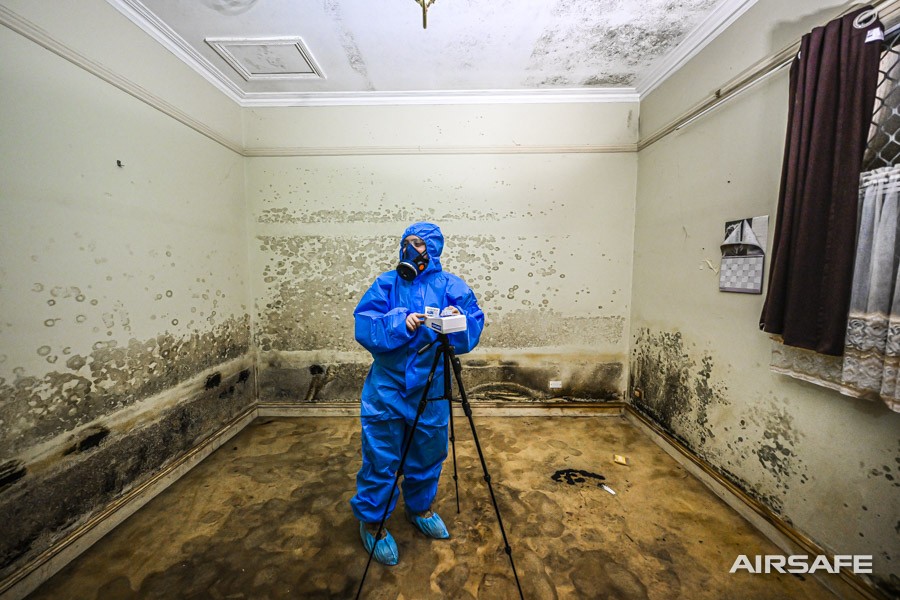
For a mould assessment, an Airsafe occupational hygienist will perform a thorough inspection to determine the source of your mould issue. This is our mould inspection procedure:
- We determine the location of items that are contaminated with mould, or likely to be contaminated.
- We conduct viable mould surface sampling within the identified areas of concern, including a blank sample.
- We conduct airborne mould sampling within the identified areas of concern, including a control sample collected from the exterior of the premises.
- We conduct moisture sampling of building materials and items the occupational hygienist presumes to be wet.
- Selected samples go to an independent NATA-accredited laboratory for analysis.
- We prepare a Mould Inspection Report.
What you get
A Mould Inspection Report that sets out where the mould is, where the moisture is coming from, what the laboratory found, and a scope of works your remediation contractor can quote from. Photographs throughout, so you can see what we saw. If there’s anything in it you’re not sure about, call us and we’ll talk you through it.
Clearance assessments after mould remediation
The procedure to conduct a mould clearance assessment may include the following:
- We inspect the premises to see that recommendations from the mould inspection report have been carried out.
- We visually inspect all the previously identified areas of concern and record any interior odours, mould staining or water staining.
- We conduct viable mould surface re-sampling within the areas identified in the inspection assessment, including a blank sample which has not touched any surface.
- We conduct airborne mould re-sampling within the areas identified in the inspection assessment, including a control sample collected from the exterior of the premises.
- We conduct moisture sampling behind or surrounding previously identified wet building materials and items.
- Selected samples go to an independent NATA-accredited laboratory for analysis.
- We prepare a Clearance Certificate.
In addition to microbial monitoring, we may undertake visual inspections and building moisture content readings to determine the susceptibility of construction material to mould colonisation.
Before we arrive
A few things make the inspection more useful.
Photograph the mould and any water damage before anyone touches it. Don’t scrub, spray, bleach or paint over the affected areas. Treating the surface before we test can hide the extent of the problem and make the source harder to find. If a leak is active, stop the water, but leave damaged materials in place if it’s safe to do so rather than throwing them out. And don’t run drying equipment hard in the day or two before we come, as that can skew the moisture readings we rely on to trace the source.
Contact us for mould testing and inspections today
Airsafe is here to keep you safe with our thorough mould testing, inspections and assessment reports. When you need help with mould in Sydney, anywhere in NSW, or interstate, it’s best to get in touch with the experts on 1300 888 338.
Last reviewed: October 2026