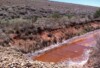
Salinity is the build-up of soluble salts in soil and groundwater. Where those salts are high, and especially where the water table rises and brings them to the surface, they do quiet, expensive damage, corroding concrete footings, slabs and steel, degrading brickwork and services, and stunting or killing plants and turf. Urban salinity is a recognised problem in parts of Western Sydney, and saline soils are common on low-lying and coastal land. The cost of dealing with it is far lower when it’s known about before you design and build, rather than found in cracked slabs a few years on.
When you need a salinity assessment
A salinity assessment is worth doing, and is sometimes required by a council as part of a development application, when you’re building on land that’s mapped or known to be salinity-prone, or where nearby sites have a history of salt damage. It informs the things that matter early: what the footings and slab need to resist, which materials and concrete mixes to use, how to handle drainage and the water table, and what will actually grow in the landscaping. On coastal and low-lying sites it’s often done alongside an acid sulfate soil assessment, since the two problems tend to share the same ground.
How we assess salinity
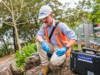
- Our consultants review the site and design a sampling program, then recover soil and, where relevant, groundwater samples on site.
- The samples go to an external NATA-accredited laboratory for analysis, electrical conductivity, soluble salts and the relevant ions, so you get results you can rely on.
- We report what’s there and what it means for the build, with practical recommendations and, where needed, a management approach to meet the council’s or the project’s requirements.
For the full contaminated land assessment process, see our Contaminated Land Assessments page.
Independent advice, no stake in the works
Airsafe is an independent consultant. We assess the soil and water, interpret the results and tell you what they mean for the project, we don’t sell the drainage works, the soil treatment or the materials, so the advice is just the advice. Where works are needed, a separate contractor carries them out to the approach we’ve set out.
4.9 stars from over 640 Google reviews, from builders, developers, contractors, councils and government across NSW.
“We recently appointed Airsafe to undertake air monitoring and reporting at a brownfield development site during the demolition stage. Their proactive, professional and cost and time-efficient approach and implementation were excellent.”
Carl O. Peterson, December 2021
“AIRSAFE has become our go-to company for all air monitoring needs. Working for a large paint company, we’ve found their service not only exceptional but also backed by valuable advice. They are consistently reliable, flexible, and a pleasure to work with. These qualities made it an easy decision to choose them as our preferred supplier.”
Nik Pappas, November 2025
“I use Airsafe on a regular basis for commercial construction. Liam Matthews and the Airsafe team always get the job done professionally, safely, and in a prompt manner as required. If only I could give more stars.”
Jordan Kissane, September 2021
Frequently asked questions
-
Some councils, particularly across Western Sydney, map salinity risk and may flag it in the development assessment. History helps too, salt damage on nearby buildings, salt-tolerant weeds, or a high or rising water table are all signs. If you’re not sure, call us on 1300 888 338 and we’ll tell you whether an assessment is worth doing for your site.
-
Mostly slow structural and material damage. Salts attack concrete and reinforcing steel, degrade brickwork and mortar, corrode buried services, and damage landscaping. The trouble is it usually shows up years after the build, as cracking, fretting and failing footings, by which point it’s far more expensive to fix than to have designed around.
-
We review the site, take soil and where relevant groundwater samples, and have them analysed at an external NATA-accredited laboratory for salinity, electrical conductivity, soluble salts and the relevant ions. You get a report on what’s there and what it means for your footings, materials, drainage and landscaping, with recommendations you can build to.
-
No. Airsafe assesses the salinity and advises on how to manage it. The works themselves, drainage, soil treatment, materials selection on the build, are carried out by others, to the approach we’ve set out. Because we don’t sell the works, the assessment stays independent.
Talk to us about a salinity assessment
If your site’s flagged for salinity, or you just want to know what you’re building on before you pour, Airsafe will assess it and tell you plainly what it means for the job.
To organise an assessment, call us on 1300 888 338.
Last updated: June 2026