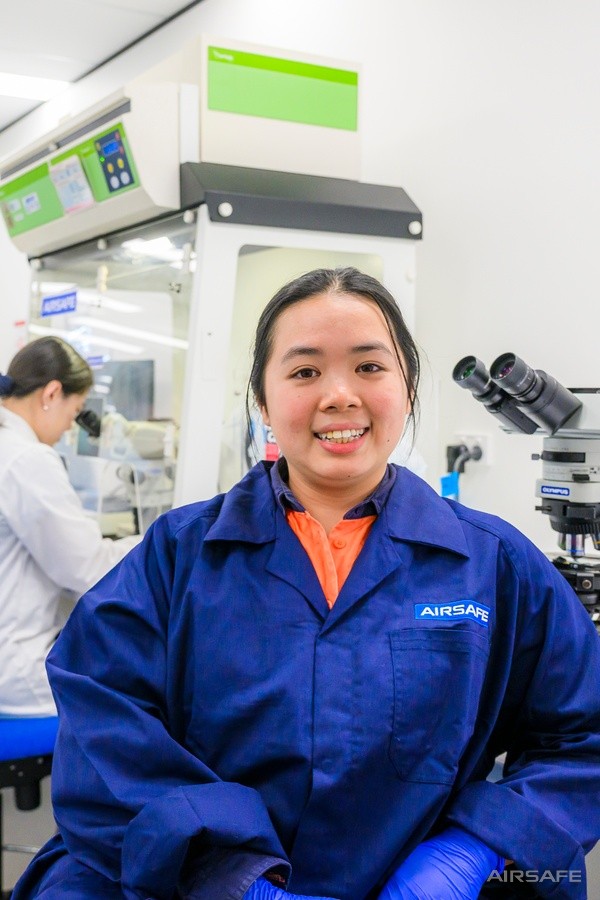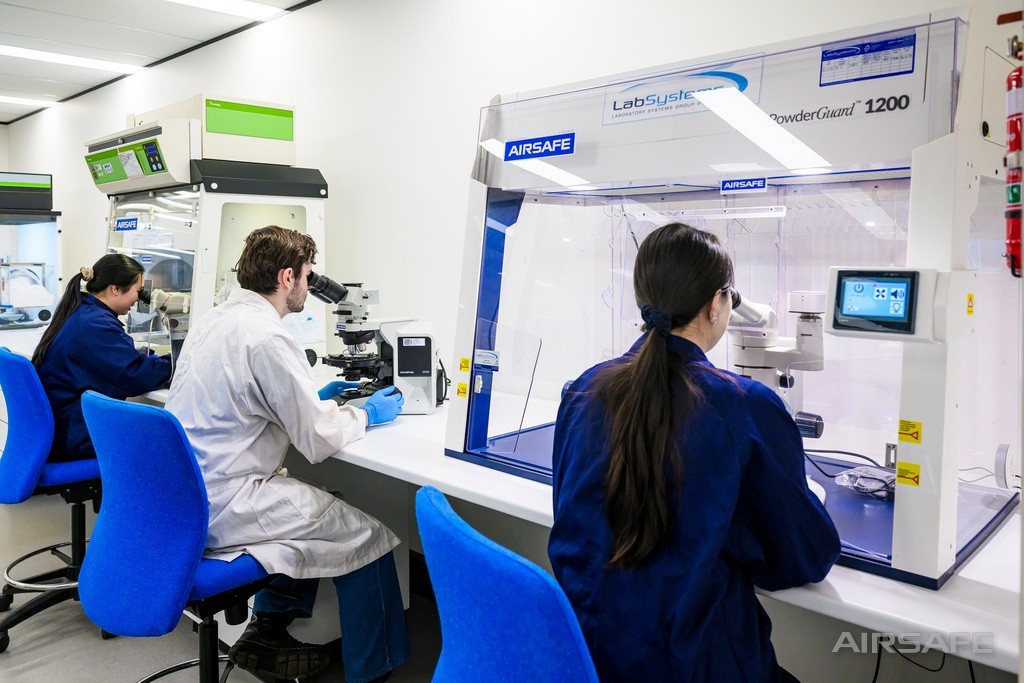
When asbestos is suspected, it’s important to get an answer quickly. Airsafe is NATA Accredited for Sample Identification for Asbestos. In our NATA accredited asbestos testing laboratory, we analyse samples using:
- Polarised Light Microscopy (PLM)
- Dispersion Staining (DS) techniques
The result: a definitive answer, backed by Airsafe’s experience and reputation since 1988.
Order asbestos testing in our advanced lab today
If you fear you may have asbestos on your property, don’t delay in getting asbestos testing completed. Airsafe are the leaders in residential and commercial asbestos testing across New South Wales. To order an asbestos test, follow the instructions below or contact us on 1300 888 338 today.
Need an answer fast? For a small surcharge, we can deliver results within hours. We can even pick up samples from you (additional costs apply). Airsafe is NATA Accredited for Sample Identification for Asbestos.
How much does asbestos testing cost?
Asbestos testing costs $110 per sample including GST. It’s a single flat fee: the same price whether you’re having one sample tested or ten, and it covers a full analysis in our NATA accredited laboratory with a written report of the result.
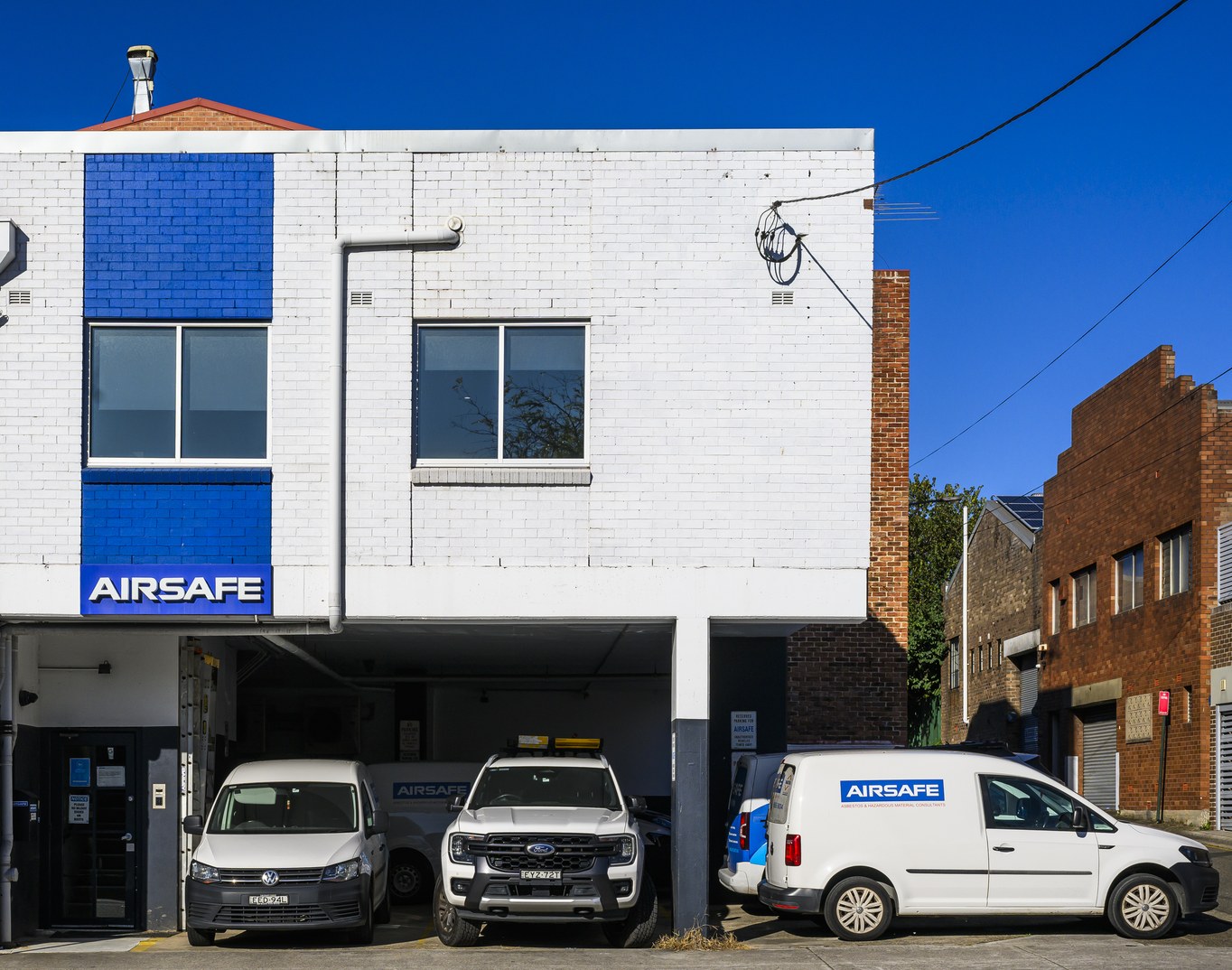
Getting the sample to us is easy. Bring it in person to Level 1, 488 Botany Road, Beaconsfield, and call first to let us know you’re coming; there’s ample parking on site when you arrive. Or send it from anywhere in Australia using the step-by-step packing guide below.
-
SafeWork NSW recommends using a professional, such as an occupational hygienist or licensed asbestos assessor, to collect samples of suspected asbestos. If you take a sample yourself, you should always be careful. Here’s our easy step-by-step guide:
- Take safety precautions as outlined in Fact Sheet 2: Safe Practices for Homeowners Repairing or Removing Small Amounts of Asbestos Materials from asbestosawareness.com.au
- Wet the material to suppress dust release.
- Carefully collect a sample using hand tools (sample size should be 5-100g).
- Place the sample in a click lock plastic bag. You can find these at any supermarket.
- Clean your hand tools thoroughly with a wet wipe then seal the wipe in its own click lock bag.
- Double bag your sample in a second sealable plastic bag.
- After sampling, you should use paint to seal any broken material with the potential to cause airborne asbestos dust.
- Complete the online sample submission form on our sample testing page, click “Get printable version” and print out the resulting page. Then put the form and the double-bagged sample in an envelope.
- If you can, bring your sample in person to Airsafe at Level 1, 488 Botany Road, Beaconsfield NSW 2015 (call us first to let us know you’re coming.) There’s ample parking on site when you arrive.
- If you can’t bring your sample in person, call us to make other arrangements.
-
Submitting individual samples to Airsafe for asbestos testing is a great option if you have one specific area in your workplace that you suspect might be contaminated with asbestos, and you would like to get an answer quickly.
However, just by testing isolated samples, you may not be fulfilling your legal obligations around asbestos. The first step in creating an asbestos register and management plan (see below) is having a full asbestos and hazardous material survey conducted by a qualified asbestos consultant.
The advantage of using Airsafe for your asbestos survey – apart from our unrivalled expertise in asbestos – is that we own and operate our own asbestos testing laboratory. This means that any samples that are taken by our asbestos consultant as part of the survey can be analysed in our laboratory, saving time and avoiding the temptation to cut corners on the number of samples taken.
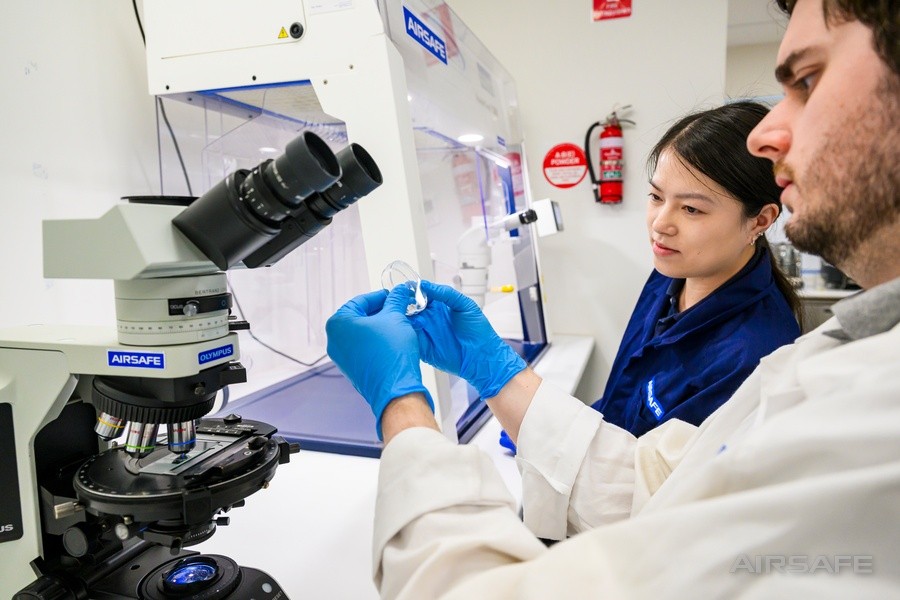
Asbestos testing in Airsafe’s advanced sample testing lab
Why Airsafe for asbestos testing?
Airsafe is one of Sydney’s most respected and reliable asbestos testing services. With over 35 years’ experience in the field of asbestos identification and sampling, our technical expertise and customer service are the best in the business. Our rigorous quality systems mean we meet all government requirements around asbestos testing, so you can rely on results that are accepted by SafeWork, councils and other authorities.
-
By owning and managing our own fully equipped asbestos testing laboratory, we can make sure that:
- Sample analysis results are provided as quickly as possible, without compromising the rigour of the testing process.
- There’s no per-sample cost pressure pushing us to limit our sampling – we test as many as needed to give you a complete picture. Some consultants advertise NATA-accredited analysis when in fact the accreditation belongs to a third-party lab they outsource to. With Airsafe, both the accreditation and the laboratory are ours.
- All laboratory asbestos testing is conducted by highly trained staff.
-
The National Association of Testing Authorities (NATA) is a nationally recognised accrediting body for laboratories. If you’re trying to identify asbestos, make sure testing is conducted by a NATA accredited laboratory. Otherwise, testing reports may not be accepted by SafeWork, local councils, and other authorities.
Airsafe’s laboratory is NATA accredited for Sample Identification for Asbestos (NATA accreditation No. 2959). If you’re in Sydney or NSW and need an asbestos sample tested, you’ll get a definitive answer, same day if required, backed by our reputation and over 640+ Google reviews.
-
Airsafe is more than just an asbestos testing lab: we’re Sydney’s most experienced asbestos consultancy. Since 1988, we have been conducting residential and commercial asbestos surveys, air monitoring and clearance inspections for everyone from households to large corporations and government departments. We have seven Licensed Asbestos Assessors on staff supporting the survey, air monitoring and clearance work we do.
Sydney-based, Australia-wide
While our laboratory is in Beaconsfield, Sydney, samples reach us from regional NSW, interstate and from overseas. Call us on 1300 888 338 to confirm current delivery arrangements before sending yours. For larger jobs requiring on-site sample collection rather than sending samples in, we can dispatch a consultant Australia-wide – travel is built into our quotes for interstate work.
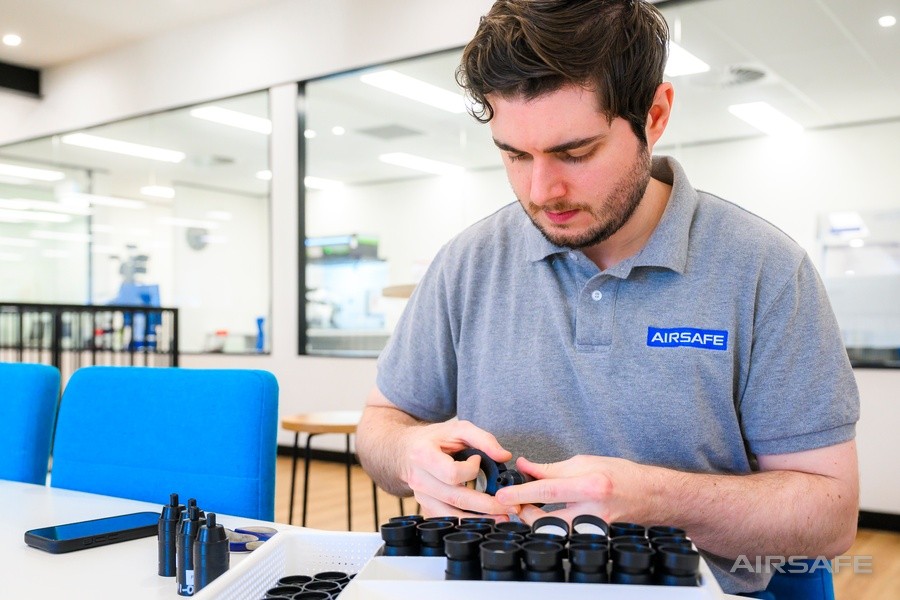
Airsafe’s asbestos testing lab
In order to receive accurate results, asbestos identification must be done in a laboratory with the proper equipment. At Airsafe, to make sure the job has been done right, we don’t outsource sample analysis to a third-party asbestos testing lab. Instead, we have our own NATA accredited laboratory where our highly trained lab staff analyse samples in full detail, using a rigorous process and advanced testing methods, including:
1. Polarised Light Microscopy (PLM)
Polarised Light Microscopy uses a special microscope to create polarised light conditions in which asbestos fibres become visible.
Regular light microscopes use unpolarised, white light. This is the type of light that we see with the naked eye, and its waves vibrate in random directions. Polarised light, however, has waves that vibrate only in one direction, and cannot normally be seen by human beings. The chemical composition of asbestos means that its fibres behave in a certain way under polarised light, making it possible for a trained technician to identify a material as asbestos, rather than another material that might look similar to the naked eye.
2. Dispersion Staining (DS)
Dispersion Staining is an analytical technique that takes advantage of the differences in the dispersion curve of the refractive index of an unknown material, relative to a standard material with a known dispersion curve, to identify or characterise that unknown material.
In asbestos testing, Dispersion Staining is used alongside Polarised Light Microscopy to confirm the presence of asbestos fibres in a sample, and to identify the specific type of asbestos.
4.9 stars across 640+ Google reviews – from builders, contractors and property owners across NSW and beyond.
“I had a contractor working at my home removing bathroom sheeting, which he said didn’t contain asbestos. This went against my gut feeling and I took a sample and delivered it to Airsafe for testing at ~11am today. The report came back at ~4pm (same day) positive for asbestos. The report was clearly written, but under the circumstances, I asked to discuss it with lab staff, which happened in minutes and clarified everything. Plans are now in place for an environmental clean up tomorrow at the contractor’s expense. Great result and service (and I’m still waiting for a competitor to return my call). Thanks Airsafe.”– Malcolm Stephen, October 2024
“Dropped a suspicious sample the other day. Location is convenient and the Airsafe logo can be seen from Botany Road. It is quite straight forward. Buzz the door, leave the sample, pay the fee. The report was received the next day. Happy that the sample turned to be safe.”– Yiran Ma, August 2023
“Airsafe were extraordinarily fast and efficient at processing my samples for potential asbestos. The website had clear instructions on collecting and packaging samples, and an easy online process for generating postage labels. I must say that Australia Post helped with a very quick delivery as well. Less than 36 hours from postage at local PO to getting the results in my inbox!”– Noel Plunkett, May 2025
Frequently asked questions
-
At Airsafe, we often receive phone calls asking us how to identify asbestos by sight. It would make our jobs much easier if asbestos identification was something that can be done with the naked eye. Unfortunately, it is impossible to identify the presence of asbestos by sight or from a verbal description.
It’s true that the likelihood of your workplace and/or a commercial building containing asbestos varies according to when it was built. As a general rule:
- If your workplace was built before the mid-1980s, it is highly likely that it may have some materials containing asbestos.
- If it was built between the mid-1980s and 1990, it is likely that it may have materials containing asbestos.
- If it was built after 1990, it is unlikely that it would have materials containing asbestos.
However, the only way to be sure about any individual material is to have it professionally tested for asbestos using the techniques outlined above. According to law, a person with management or control of a workplace must ensure asbestos or ACM at the workplace is identified by a competent person.
-
According to Safe Work Australia’s Code of Practice on How to Manage and Control Asbestos in the Workplace, a person conducting a business must not carry out or direct or allow a worker to carry out work involving asbestos if that work involves manufacturing, supplying, transporting, storing, removing, using, installing, handling, treating, disposing of or disturbing asbestos or ACM, except in prescribed circumstances.
-
Work Health and Safety Regulations require all persons who conduct a business or undertaking to ensure that all workers and other persons are not put at risk from work carried out as part of the business or undertaking. The person conducting a business or undertaking (i.e. management) is responsible for:
- Control of risk and exposure
- Health monitoring
- Training and use of equipment
- Controlling the use of equipment
- Identifying or assuming asbestos or ACM
-
Most importantly of all, management must ensure that a comprehensive asbestos register and asbestos management plan are prepared, maintained, reviewed, and kept at the workplace. These documents must be readily available to workers, as well as health and safety representatives and other visitors on site. Find out more about asbestos registers and management plans.
FAQs
-
We charge a single flat fee of $110 per asbestos sample tested, including GST. It’s the same price whether you’re having one sample tested or ten, and it covers a full analysis in our NATA accredited laboratory with a written report of the result. If you need a consultant to collect the sample, or a same-day result, call us on 1300 888 338 and we’ll give you a price over the phone.
-
Standard turnaround is the next business day after we receive your sample. If you need an answer sooner, we offer a same-day result for a small surcharge – in many cases within a few hours of the sample arriving at our Beaconsfield lab. Just let us know when you call.
-
Yes. Plenty of our samples reach us from regional NSW, interstate and from overseas. Pack the sample as set out in the step-by-step guide above (double-bagged, with the completed submission form), then send it to Airsafe at Level 1, 488 Botany Road, Beaconsfield NSW 2015. Call us on 1300 888 338 first to confirm current delivery arrangements.
-
You’ll get a written NATA accredited result identifying the type of asbestos. From there, what you do next depends on the material – some asbestos is best left alone and sealed, some needs to come out. We’re happy to give you practical advice over the phone, and if you need removal we can point you to contractors we’ve worked with for years who take the proper precautions.
-
Using a NATA accredited laboratory is a requirement of the Work Health and Safety Regulation, and it’s also what ensures the testing is rigorous and independent. The good news is that it’s easy to check. You can check if a facility is NATA accredited, and the scope of their accreditation, at the NATA website. When your result comes back, look at the test report: it should clearly name the NATA accredited laboratory that carried out the analysis. If all you’re given is a figure over the phone, or a summary without the laboratory’s own report, ask for the report. And if you want to be completely sure, you can call the laboratory and confirm the analysis came from them. Airsafe is a NATA accredited public testing laboratory (Accreditation No. 2959), so when we analyse your sample the result is rigorous, independent and traceable, and you’re always welcome to check.