Can you help me over the phone?
Sorry, our experts are unable to determine whether you’ve found lead in your home over the phone. We can only identify lead through a sample analysis.
Lead paint
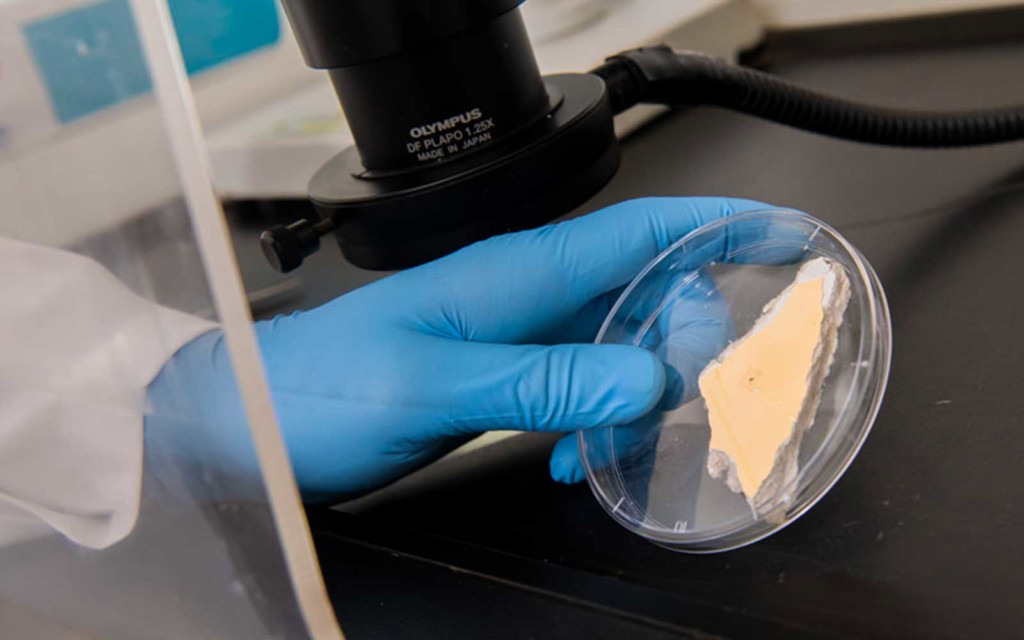
Lead paint (also known as lead-based paint, leaded paint, lead-containing paint and paint containing lead) is paint containing more than 0.1% lead by mass.
Until recently, the allowable amount of lead in paint was 1%. However, the relevant standards were updated in 2017.
Lead paint carries a risk to health if it is ingested or inhaled. There is minimal risk if the paint is in good condition, but it can become risky when it becomes chalky or flaky, or in places like sash windows where it can easily be disturbed.
Dust from lead paint deterioration, peeling or flaking is a recognised source of lead exposure in homes. Lead paint dust can also settle on outdoor soil, water, food and vegetation. It’s dangerous to have fruit and vegetable gardens or your water supply near possible lead contamination.
Lead paint also carries a health risk if is disturbed by paint removal methods like sanding or burning. Even mechanical scraping of lead paint is risky.
Lead in ceiling dust and soil
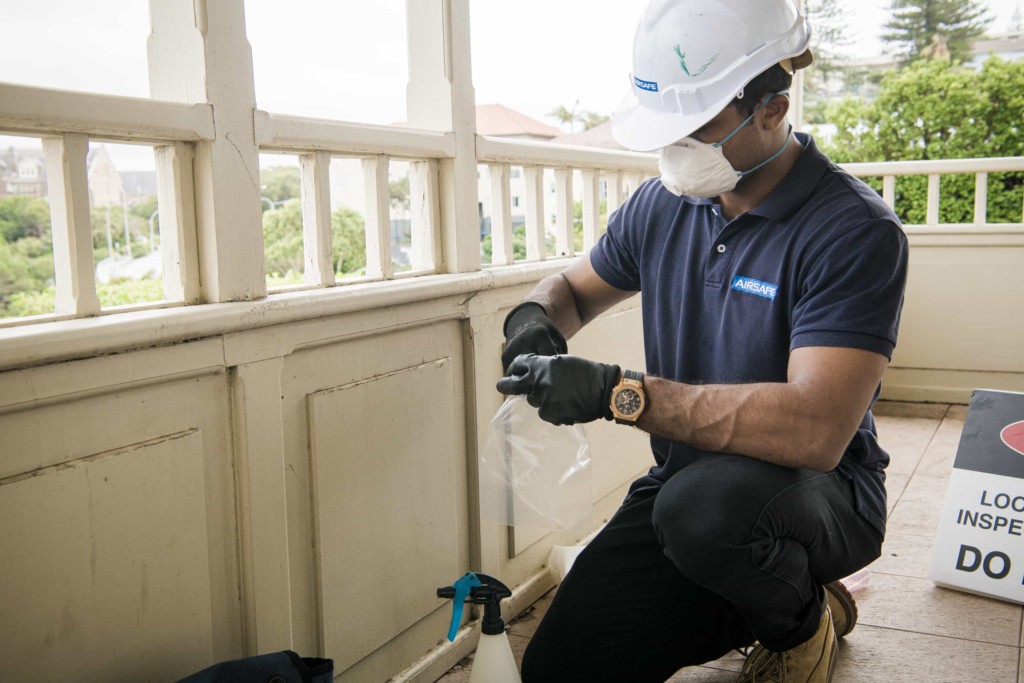
Lead deposits are often found as dust in ceiling spaces, or in soil. Lead in dust or soil is often there as a result of previous refurbishment, but it can also be due to:
- Atmospheric deposits (e.g. from previous lead petrol use)
- Lead residue from nearby industrial sites (e.g. smelters)
- Other lead paint removal projects nearby.
If you suspect you may have found lead in dust or soil, it’s important to have a sample tested straight away.
Lead testing: What should I do now?
Airsafe’s rapid response lead testing process ensures you and your family are protected – fast.
Here’s what to do if you suspect you’ve got lead at home:
- Carefully collect a sample using hand tools (sample size should be 5-100g).
- Place the sample in a click lock plastic bag. You can find these at any supermarket.
- Clean your hand tools thoroughly.
- Complete this form, click “get printable version” and print out the resulting page. Then put the form and the bagged sample in an envelope.
- If you can, bring your sample in person to Airsafe at Level 1, 488 Botany Road, Beaconsfield NSW 2015. (Call us first on 1300 888 338 to let us know you’re coming.)
- If you can’t bring your sample in person, contact us to make other arrangements.
Lead and your family’s health
The most common ways in which human beings are contaminated with lead are breathing in lead-containing dust or fumes, and swallowing lead-containing food or water. High lead levels can cause serious long-term health problems and harm almost every part of the body, especially the brain, kidneys and reproductive organs. Unborn children are at even greater risk of health problems from lead.
Children and adults affected by increased levels of lead in their bodies may at first show no symptoms. When symptoms do appear, they typically include lethargy, stomach pain or constipation, headaches and irritability. Children experience these symptoms at lower levels of exposure than adults do.