Who inspects and tests mould in a Sydney workplace?
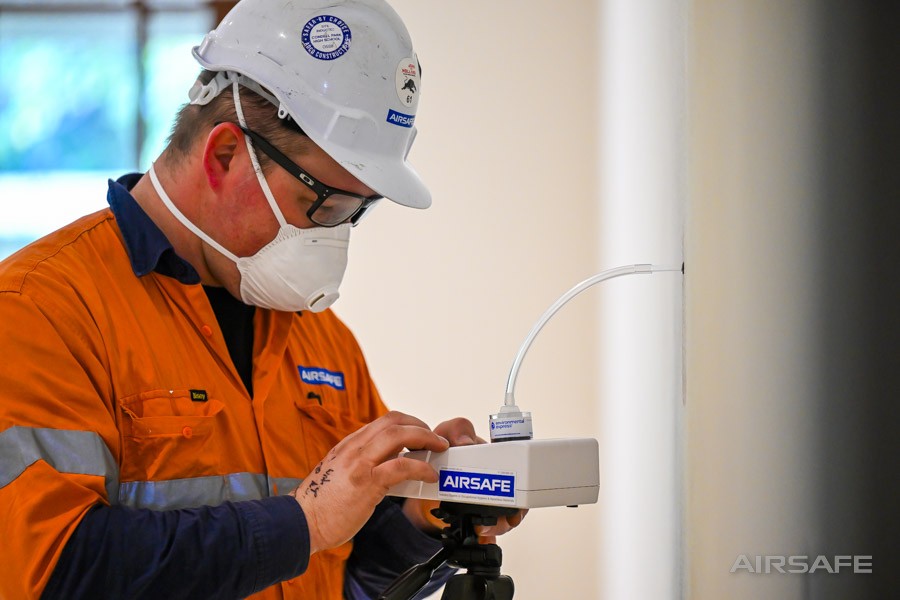
Airsafe inspects and tests mould in Sydney workplaces through its occupational hygienists. We survey the affected areas, take moisture readings and collect air and surface samples while your people get on with their day. Where we suspect mould on a specific surface, we conduct surface sampling.
Who analyses the samples?
Airsafe sends selected samples to an independent NATA-accredited laboratory for analysis. An experienced occupational hygienist interprets the results and finds the source. Airsafe uses the results alongside the physical inspection, moisture readings and site history.
Does Airsafe do the remediation?
No. Airsafe does not do the remediation. We inspect, test and work out the scope of what needs fixing, separately from any cleanup contractor. A remediation contractor you choose carries out the work, and once it’s done we come back and verify it with a clearance inspection.
How soon can someone attend?
Airsafe can normally have an occupational hygienist on site the next day. Just call us on 1300 888 338 and we’ll tell you when we can be there.
When should an employer call us?
Call us when workers report symptoms they think are building related: irritated eyes, congestion, wheezing, headaches that ease when they leave the building. Call us when there’s a musty smell but nothing visible, when mould keeps coming back after cleaning, or after a leak, a flood or a roof failure, before people move back in. And call us when you need an independent answer you can put in front of a safety committee, an insurer or a regulator.
One thing not to do: don’t clean, spray or paint over the mould before we test. Treating the surface can hide the extent of the problem and make the source harder to find.
If you’re not sure whether it’s worth an inspection, call Airsafe on 1300 888 338 and ask.
Your duty as an employer
Under work health and safety law, if you’re in charge of a workplace you must ensure, so far as is reasonably practicable, that workers and others aren’t exposed to risks to their health. Mould is one of those risks, but unlike silica or welding fume, there’s no workplace exposure standard for mould and the Workplace Exposure Limits that replace the standards from 1 December 2026 have no value for mould either. There’s no number to measure against.
That makes the quality of the assessment the whole game. We sample the air indoors and outdoors and compare the spore concentrations and species: if the indoor concentration is higher, or the species are different, that points to an indoor problem. Where we suspect mould on a specific surface, we conduct surface sampling. Selected samples go to an independent NATA-accredited laboratory for analysis, and an experienced occupational hygienist interprets the results and finds the source.
A documented assessment by an independent occupational hygienist also puts you in a strong position: it shows you took the complaint seriously and acted on expert advice.
What does a commercial mould report contain?
The Mould Inspection Report sets out where the mould is, where the moisture is coming from, what the laboratory found, and a scope of works your remediation contractor can quote from, with photographs throughout. It’s written to be read by people who aren’t hygienists: a safety committee, a board, an insurer, a workers compensation assessor. Once remediation is done, Airsafe can come back and verify it with a clearance inspection.
We inspect, test and work out the scope of what needs fixing, separately from any cleanup contractor. A remediation contractor you choose carries out the work, and once it’s done we come back and verify it with a clearance inspection. Because we don’t do the remediation, there’s no conflict of interest in our report.
The Mould Inspection Report sets out where the mould is, where the moisture is coming from, what the laboratory found, and a scope of works your remediation contractor can quote from, with photographs throughout. It’s written to be read by people who aren’t hygienists: a safety committee, a board, an insurer, a workers compensation assessor.
For the full detail of how we test for mould and what’s in the report, see our mould testing and inspections page.
We work around a working building
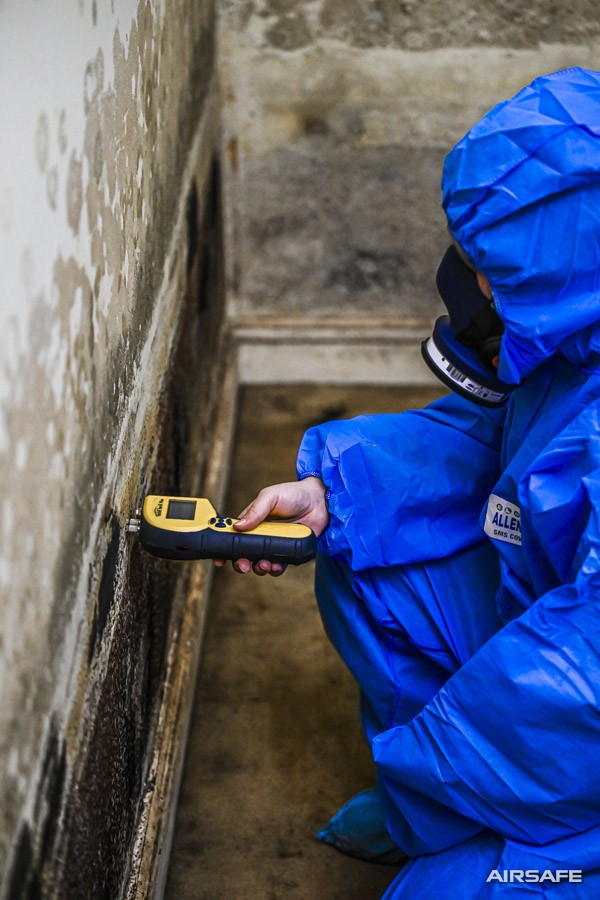
Most workplace mould jobs don’t require anyone to stop work. The inspection is non-destructive: we survey the affected areas, take moisture readings and collect air and surface samples while your people get on with their day. Where containment or access restrictions are genuinely needed, we’ll say so, and say why.
We’re experienced on occupied and sensitive sites. On a major hospital redevelopment in Sydney, we run mould risk assessments and air monitoring in occupied wards while construction goes on around them, and mould has stayed within safe limits right through the build.
We can normally have an occupational hygienist on site the next day. Just call us on 1300 888 338 and we’ll tell you when we can be there.
4.9 stars from over 650 Google reviews and counting, from employers, builders, facility managers and commercial clients across Australia.
“I engaged John from Airsafe to complete some testing for the presence of mould and moisture in a caravan for client. John’s communication and willingness to help was outstanding. His report was clear and concise, detailing all aspects required. I would highly recommend John and his team for any professionaly testing required.”– Kevin Gribble, October 2025
“AIRSAFE has become our go-to company for all air monitoring needs. Working for a large paint company, we’ve found their service not only exceptional but also backed by valuable advice. They are consistently reliable, flexible, and a pleasure to work with. These qualities made it an easy decision to choose them as our preferred supplier.”– Nik Pappas, November 2025
“I found this company to have integrity & professionalism. They stand by their work which is accurate & Thorough. They are also very approachable & service oriented. Good work”– josephine charlesworth, December 2021
FAQs
Who will do the inspection?
An Airsafe occupational hygienist trained in Airsafe’s mould procedures will do the inspection. We survey affected areas, take moisture readings and collect air and surface samples. The team includes Philip Turner, Airsafe’s Certified Occupational Hygienist.
Is there a legal exposure limit for mould at work?
No. Mould has no workplace exposure standard, and the Workplace Exposure Limits that replace the standards from 1 December 2026 have no value for mould either, so there’s no single number that separates a safe building from an unsafe one. Your general duty to protect workers’ health still applies. In practice, mould is assessed by comparing indoor and outdoor air, spore concentrations and species, alongside a physical inspection for moisture and growth. That’s why the experience of the occupational hygienist matters so much.
Do we need to shut the workplace while it’s assessed?
Usually not. The inspection is non-destructive and works around normal operations: we survey the affected areas, take moisture readings and collect air and surface samples while work continues. If the situation genuinely calls for containment or restricted access, we’ll tell you, and tell you why.
Will the report stand up with an insurer or tribunal?
Because we don’t do the remediation, there’s no conflict of interest in our report. That’s also why our reports carry weight in disputes, insurance claims and tribunal matters.
How quickly can you come?
We can normally have an occupational hygienist on site the next day. Same-day attendance can usually be arranged for an additional cost.
What happens after remediation?
Once remediation is done, Airsafe can come back and verify it with a clearance inspection. If the work has been done properly, Airsafe will issue a Clearance Certificate. Because we don’t do the remediation, there’s no conflict of interest in our report.
A worker has reported symptoms they think are mould related. What should we do?
Take it seriously and get the building assessed. Don’t clean, spray or paint over any visible mould first: treating the surface can hide the extent of the problem and make the source harder to find. An independent assessment gives you a clear answer either way: if there’s a problem, you’ll know what to fix, and if there isn’t, you’ll have an independent report saying so.
Contact us about workplace mould today
Keeping your workplace safe and healthy is our highest priority at Airsafe. When mould is raising questions in your building, get in touch with the experts on 1300 888 338, or request a Fast Quote.
Last reviewed: October 2026