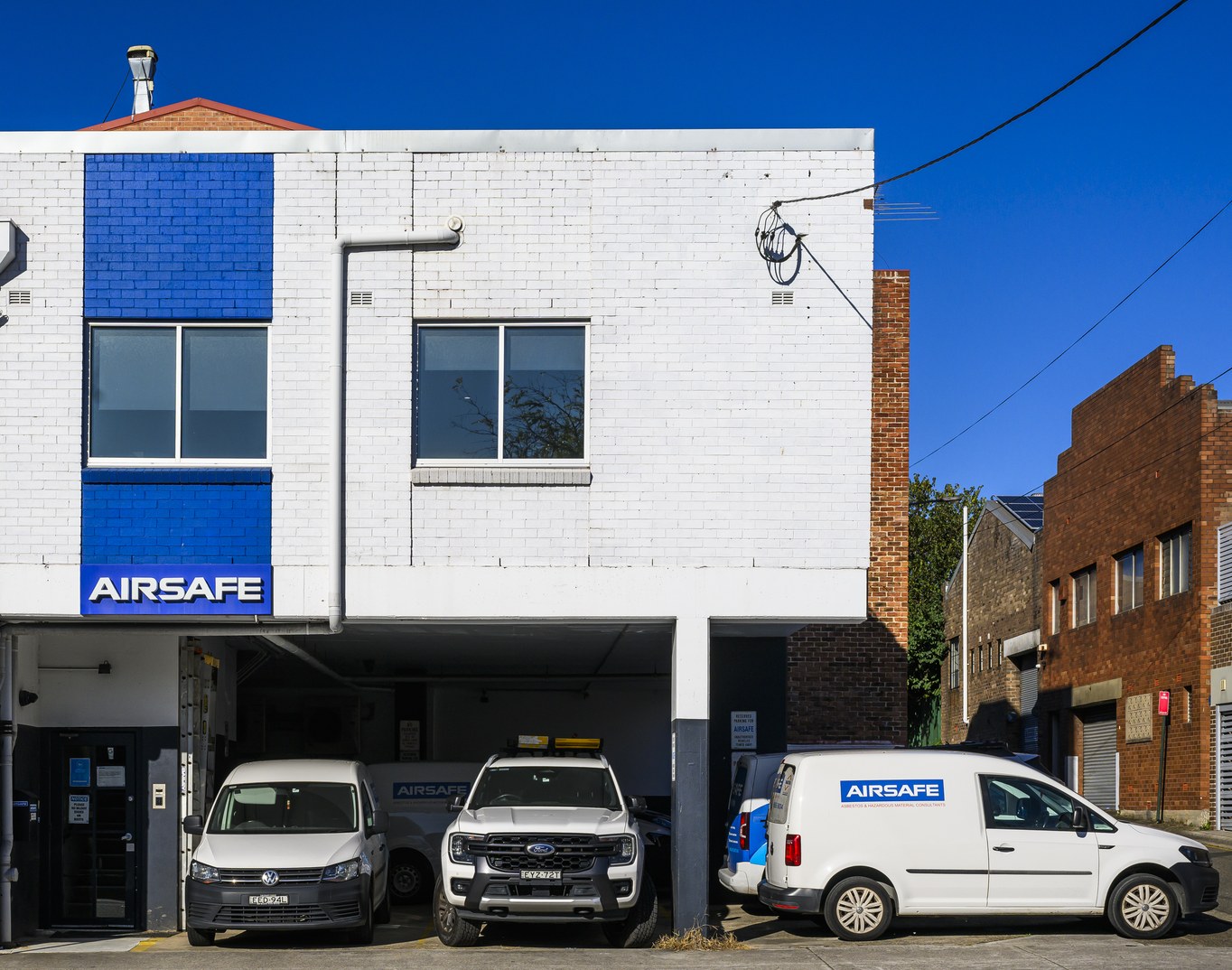
Mould in an apartment or common area? Since 1988, Airsafe has assessed mould in strata buildings across Sydney and NSW – and we don’t do the remediation, so there’s no conflict of interest in what we report.
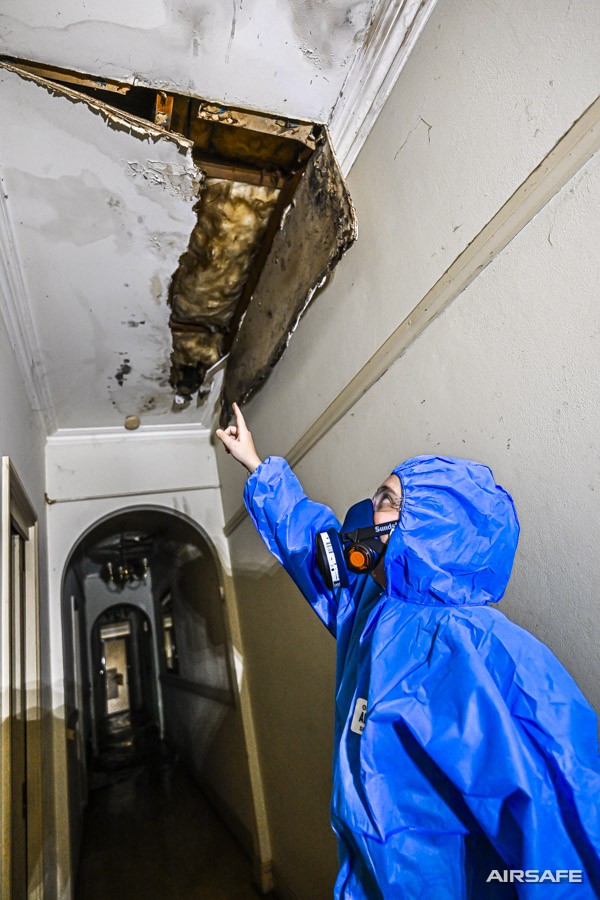
Do you need an inspection at all?
Sometimes no. A small patch of surface mould in one bathroom, in a well-ventilated spot, can often be cleaned up safely by the occupant, and you don’t need us for that.
Call us when mould keeps coming back after cleaning, appears in more than one lot, follows a leak or water ingress, or shows up on walls and ceilings that share a boundary with common property. Call us when a resident has health concerns. And call us when there’s a dispute about who’s responsible and you need an independent report. An inspection finds the source, not just the visible growth.
If you’re not sure which side of that line you’re on, call Airsafe on 1300 888 338 and ask.
Where is the moisture coming from?
In a strata building, that’s the question everything else hangs on. NSW strata law places a duty on the owners corporation to keep common property in good repair – the roof, external walls, windows, balconies, waterproofing membranes and shared plumbing. When the moisture driving the mould comes from common property, the repair is the owners corporation’s responsibility. When it starts inside the lot – a failed shower seal, a leaking appliance, clothes dried indoors with the windows shut – it can sit with the owner or occupant instead.
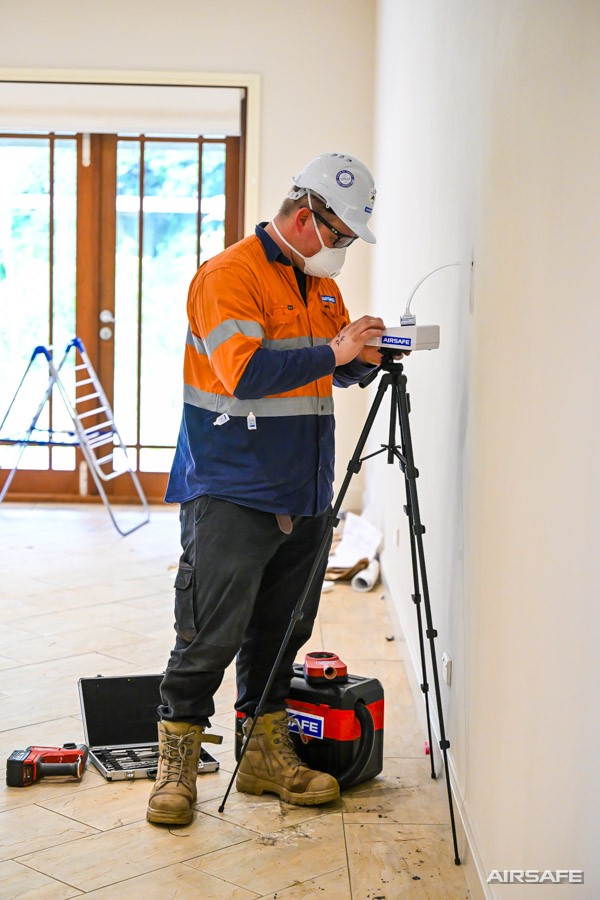
Mould doesn’t tell you which one it is. Growth on a bedroom wall can be fed by a balcony membrane two floors up, and a musty smell in a hallway can start inside a single lot. That’s why our inspection traces the moisture, not just the growth: we survey the affected areas, take moisture readings from building materials, and sample the air and surfaces, with laboratory analysis carried out by a separately NATA accredited laboratory. The report sets out where the mould is, where the water is coming from, and what needs fixing.
An independent report everyone can rely on
Mould disputes in strata buildings – between lot owners and the owners corporation, or between neighbouring lots – often end up in mediation or at the NSW Civil and Administrative Tribunal (NCAT) when the problem isn’t fixed or there’s a disagreement about who’s responsible. We don’t get involved in the blame game. We establish the facts: where the mould is, what’s feeding it, and what it will take to fix. Often, putting the facts on the table is enough to get the problem fixed without a hearing.
Because we don’t do the remediation, there’s no conflict of interest in our report. Where a report may need to carry weight at NCAT or in court, the inspection can be attended and the report signed by Philip Turner, Airsafe’s Certified Occupational Hygienist.
What we do
We inspect, test and work out the scope of what needs fixing, separately from any cleanup contractor. A remediation contractor chosen by the owners corporation or the lot owner carries out the work, and once it’s done we come back and verify it with a clearance inspection.
The report includes a scope of works a remediation contractor can quote from, with photographs throughout. If there’s anything in it you’re not sure about, call us and we’ll talk you through it.
For the full detail of how we test for mould and what’s in the report, see our mould testing and inspections page.
4.9 stars from over 640 Google reviews and counting, from owners corporations, strata managers, property managers and residents across Australia.
“We had an urgent concern regarding an unpleasant odour following some water damage. Daphne came out the next day, did a thorough inspection and sent samples off. Less than a week later we had a clean bill of health which avoided an unnecessary expensive cleanup. Thanks for the speedy and detailed turnaround.”– John White, April 2025
“Provided a comprehensive and detailed report, with recommendations, of our mould issues at home. Looking forward to seeing it being used via a remediation service.”– Sertan Saral, August 2024
“I found this company to have integrity & professionalism. They stand by their work which is accurate & Thorough. They are also very approachable & service oriented. Good work”– josephine charlesworth, December 2021
FAQs
-
It depends on where the moisture is coming from. NSW strata law makes the owners corporation responsible for keeping common property in good repair, so mould fed by a leaking roof, a failed waterproofing membrane or shared plumbing is generally the owners corporation’s problem to fix. Mould caused by something inside the lot can sit with the owner or occupant. We don’t decide liability – that’s for the parties, or for NCAT if it gets that far. What we establish is the fact the question turns on: where the water is coming from.
-
Either. We work for owners corporations, strata managers, building managers, lot owners and tenants. Whoever engages us, the inspection is the same: we find the source, test what’s there, and report what we find. Just call us on 1300 888 338 and tell us who you are and what’s happening in the building.
-
Usually not. We scope the inspection to the affected lots and the common property around them – the areas where mould is visible, where there’s a musty smell, or where water is likely to be tracking. If the inspection points to a building-wide problem, the report will say so, and the scope can be extended from there.
-
You receive a Mould Inspection Report setting out where the mould is, where the moisture is coming from, what the laboratory found, and a scope of works a remediation contractor can quote from. A contractor you choose carries out the work, and once it’s done we come back and verify it with a clearance inspection. Because we don’t do the remediation, there’s no conflict of interest in our report.
Contact us about mould in your building today
Whether you manage one building or a portfolio, Airsafe is here to keep you safe with independent mould inspections, testing and clearance reports. Get in touch with the experts on 1300 888 338, or request a Fast Quote.
Last updated: August 2026