Had mould remediated? A clearance inspection is the proof the job was done properly – and because we don’t do the remediation, there’s no conflict of interest in the result.
What is a mould clearance inspection?
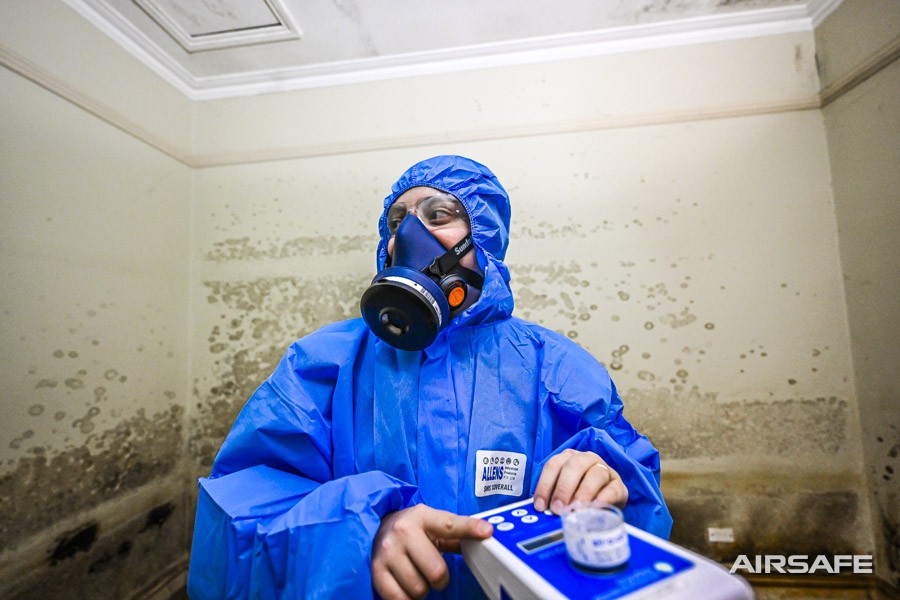
A clearance inspection is how you find out whether mould remediation actually worked. After the contractor has finished, we come back, inspect the areas that were treated, re-sample the air and surfaces, and check that the moisture feeding the mould has been dealt with. If the work is up to standard, we issue a Clearance Certificate.
The principle is simple: the person who did the remediation doesn’t get to mark their own homework. The clearance comes from an occupational hygienist who takes no part in the remediation work.
Do you need a clearance after mould remediation?
There’s no licensing regime for mould work and no legal requirement to obtain a clearance certificate, the way there is after licensed asbestos removal. In practice, though, a clearance is often what the situation demands. Insurers commonly want one before closing a claim. Landlords and tenants want one before a tenancy resumes. Employers want one before staff move back in. And where a dispute has reached mediation or the NSW Civil and Administrative Tribunal (NCAT), a clearance from an occupational hygienist who didn’t do the remediation is the evidence that settles whether the problem was fixed.
If you’re not sure whether you need one, call Airsafe on 1300 888 338 and ask.
What we check
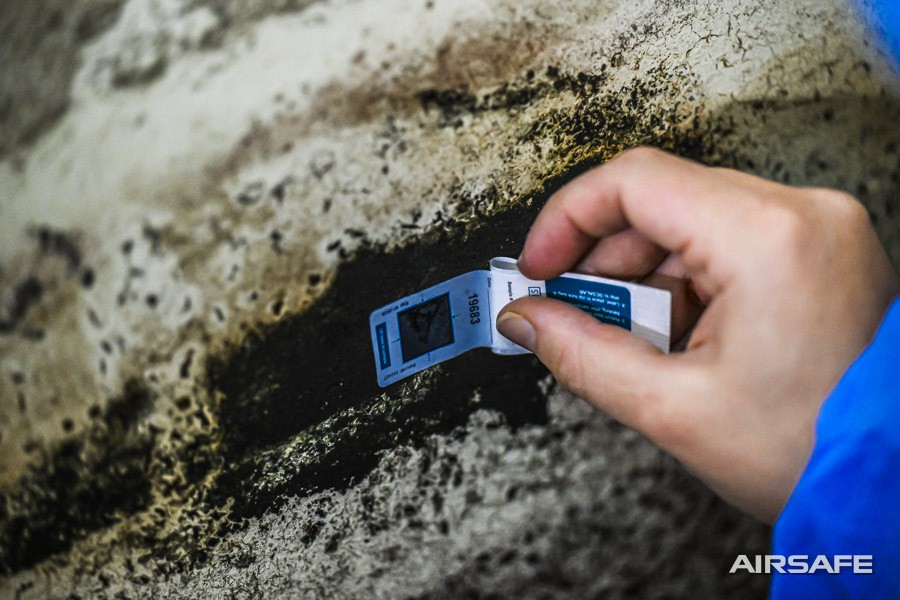
We inspect the premises to confirm that the recommendations from the mould inspection report have been carried out. We visually check all the previously identified areas of concern for odours, mould staining and water staining, re-sample the surfaces and the air – including a blank sample and a control sample collected outside – and take moisture readings behind and around the building materials that were wet. Selected samples go to an independent laboratory that holds its own NATA accreditation for this analysis. If everything comes back clear, we prepare a Clearance Certificate.
For the full detail of how we test for mould and what’s in our reports, see our mould testing and inspections page.
What if the clearance fails?
Sometimes the re-sampling shows the job isn’t finished – mould still present, or moisture still sitting in the materials. When that happens, the report says so plainly, and sets out what still needs doing. The contractor goes back, completes the work, and we re-test. A Clearance Certificate is only issued when the building has actually passed. That’s the point of it.
Can we do the clearance if someone else did the inspection?
Yes. If another consultant did the original inspection, or there was no formal inspection at all, we can still carry out the clearance. We’ll ask for whatever documentation exists – the inspection report, the remediation scope, photographs – and where the paper trail is thin, we inspect and sample more broadly to make sure nothing has been missed.
4.9 stars from over 640 Google reviews and counting, from homeowners, landlords, employers, insurers and property managers across Australia.
“Provided a comprehensive and detailed report, with recommendations, of our mould issues at home. Looking forward to seeing it being used via a remediation service.”– Sertan Saral, August 2024
“We had an urgent concern regarding an unpleasant odour following some water damage. Daphne came out the next day, did a thorough inspection and sent samples off. Less than a week later we had a clean bill of health which avoided an unnecessary expensive cleanup. Thanks for the speedy and detailed turnaround.”– John White, April 2025
“I engaged John from Airsafe to complete some testing for the presence of mould and moisture in a caravan for client. John’s communication and willingness to help was outstanding. His report was clear and concise, detailing all aspects required. I would highly recommend John and his team for any professionaly testing required.”– Kevin Gribble, October 2025
FAQs
-
No. There’s no licensing regime for mould work in Australia and no law requiring a clearance certificate after mould remediation, the way there is after licensed asbestos removal. But in practice, insurers often require one before closing a claim, landlords and agents want one before a tenancy resumes, employers want one before staff return, and a tribunal will want evidence that the problem was actually fixed. A clearance from an occupational hygienist who didn’t do the remediation is that evidence.
-
As soon as the remediation is complete and the treated areas are dry. There’s no point testing while surfaces are still wet or drying equipment is still running – moisture readings are part of what we check. Call us on 1300 888 338 when the contractor is finishing up and we’ll tell you when we can be there.
-
A clearance records the state of the premises at the time of the inspection: the mould addressed, the moisture gone, the air and surface samples clear. If moisture returns later – a new leak, a failed repair – mould can grow again. That’s not the clearance failing; it’s a new problem. Because the clearance report records where the original moisture came from, it’s a useful starting point for working out what’s changed. Call us and we’ll investigate.
-
No. We work out the remedial scope separately from the cleanup contractor, a remediation contractor carries out the work, and we verify it with the clearance inspection. Because we don’t do the remediation, there’s no conflict of interest in our clearance.
Contact us for a mould clearance inspection today
Before anyone moves back in, make sure the job was done properly. Get in touch with the experts on 1300 888 338, or request a Fast Quote.
Last updated: August 2026