Bushfire season is starting, and if you own or manage an older house, shed, garage or small commercial building, the first question is usually: if fire damages the property, what happens to the asbestos?
In New South Wales, the statutory Bush Fire Danger Period runs from 1 October to 31 March, although it may vary due to local conditions. If a disaster has damaged a property that may contain asbestos, get advice before you start the clean-up. A fire-damaged asbestos building does not generate significant levels of asbestos fibres in the air unless it is disturbed, but asbestos fibres may be present in the dust and ash and may pose a risk to people disturbing that dust and ash if inhaled.
That is why the useful work before the season is to know where asbestos may be on the property, and to test suspect materials where that can be done safely.
What does fire actually do to bonded asbestos?
“Fibro” is an abbreviation for “fibrous cement sheet”. It’s a building product that uses a fibrous material, most commonly asbestos, to reinforce thin cement sheets. Fibro is a type of bonded asbestos, meaning that if it’s in good condition and left undisturbed, there’s no danger of asbestos fibres being released into the atmosphere.
In a fire, heat turns water inside asbestos-containing material to steam. That creates a build-up of pressure, which can cause the material to forcefully detach. This is called spalling. Pieces can break away from sheets, roofing, eaves, cladding and other asbestos cement products, and dispersal can also occur when a building collapses, is vandalised or is inappropriately accessed after a fire.
SafeWork NSW’s Safe Work on Roofs Code of Practice puts the point this way:
“If fire, hail or water-blasting damages bonded asbestos, or the material is showing signs of wear from water and age, it may become friable asbestos material.”
Friable simply means easily crumbled. Homes and other structures built or refurbished prior to 1990 that are burnt during bushfires may cause asbestos-containing materials to be disturbed or become friable. Asbestos sheets that are severely damaged or reduced to ash are likely to be friable, while asbestos that is intact or has suffered smoke damage is likely to be classified as non-friable.
What should you not do with ash and rubble?
After a fire, do not enter your property until you are advised that it is safe to do so. Do not spread ash, especially from properties with asbestos materials. Ash should be moistened with water to minimise dust and kept damp, but high pressure water sprays must not be used.
The ordinary clean-up actions are often the problem: sweeping, shovelling, loading debris into a trailer, dragging sheets aside, walking over rubble or trying to bury damaged building material on site. Building rubble should not be buried, because it may contain hazardous materials including asbestos.
Asbestos waste must be double wrapped in heavy duty 0.2 mm plastic, sealed with tape and labelled as asbestos waste, and it may only go to an approved landfill facility. Asbestos doesn’t just affect your family; it can potentially affect your neighbours as well.
Why knowing before the season helps after a fire
If your home was built before 1990, it’s likely to contain some form of asbestos. Buildings built before 1987 may contain asbestos in the form of flat or corrugated sheets, commonly called fibro.
Age is a guide. Built before the mid-1980s, asbestos is highly likely. Between the mid-1980s and 1990, it is likely. After 1990, it is unlikely. Asbestos cement materials were phased out of Australian building products during the 1980s, and the use of asbestos was fully banned in Australia from the end of 2003.
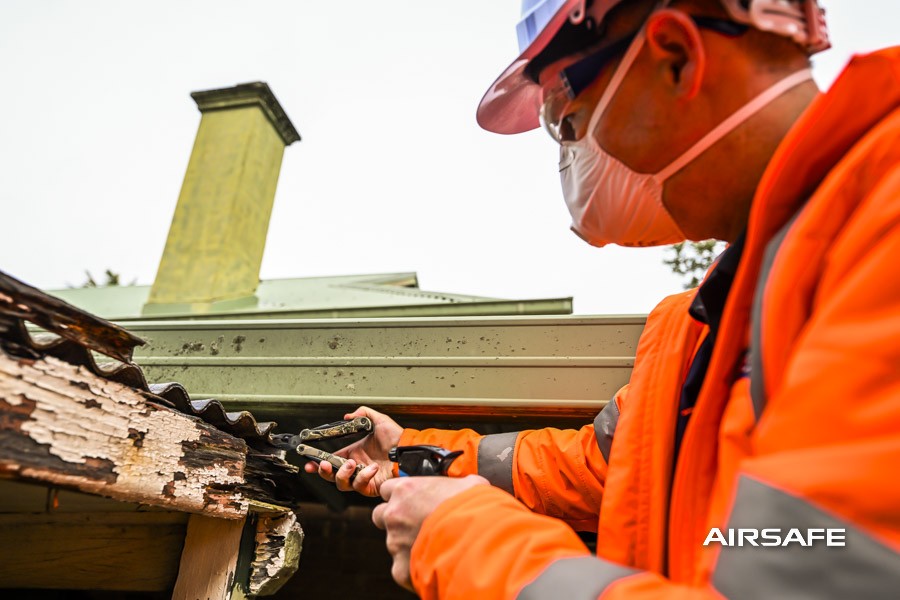
But age is only a guide, because it is impossible to identify the presence of asbestos by sight or from a verbal description. Asbestos was used in thousands of building products, many of which look identical to their asbestos-free equivalents. Only scientific testing of a sample of a material by an accredited National Association of Testing Authorities asbestos testing laboratory can confirm the presence of asbestos.
Around an older property, asbestos may be in more places than the main house. The locations that matter most after a fire often include eaves, wall cladding, roof sheeting, guttering, downpipes, electricity meter box lining, fences, sheds, garages and asbestos in soil.
If you already know that a shed wall, garage roof, fence or meter box lining contains asbestos, the post-fire assessment starts with better information. The assessor is not relying only on what is left after heat, collapse, water and debris have changed the scene. The removalist also has a clearer starting point for deciding what has to be treated as asbestos waste.
For a larger or more complex older property, an asbestos and hazardous material survey may be the more useful pre-season step.
Who does what after a fire?
Clean-up should include a prior site assessment by a licensed asbestos assessor or occupational hygienist. In other words, you need an expert to assess the situation and determine the best way to handle the asbestos.
Local Government NSW guidance for fire-damaged asbestos says this work calls for a Class A removalist, air monitoring during clean-up and removal, and a clearance certificate following asbestos removal. The legal licensing rules are that a friable asbestos removal licence, known as Class A, is required to remove any amount of friable asbestos, while a non-friable asbestos removal licence, known as Class B, is required to remove more than 10 square metres of non-friable asbestos.
Licensed asbestos assessors provide air monitoring and clearance certificates in relation to friable asbestos removal work. Clearance certificates must be issued by independent asbestos assessors for all friable asbestos removal work before a site can be reoccupied. Independent means the assessor did not perform the removal work and is not involved with the business that did.
What Airsafe can and cannot do
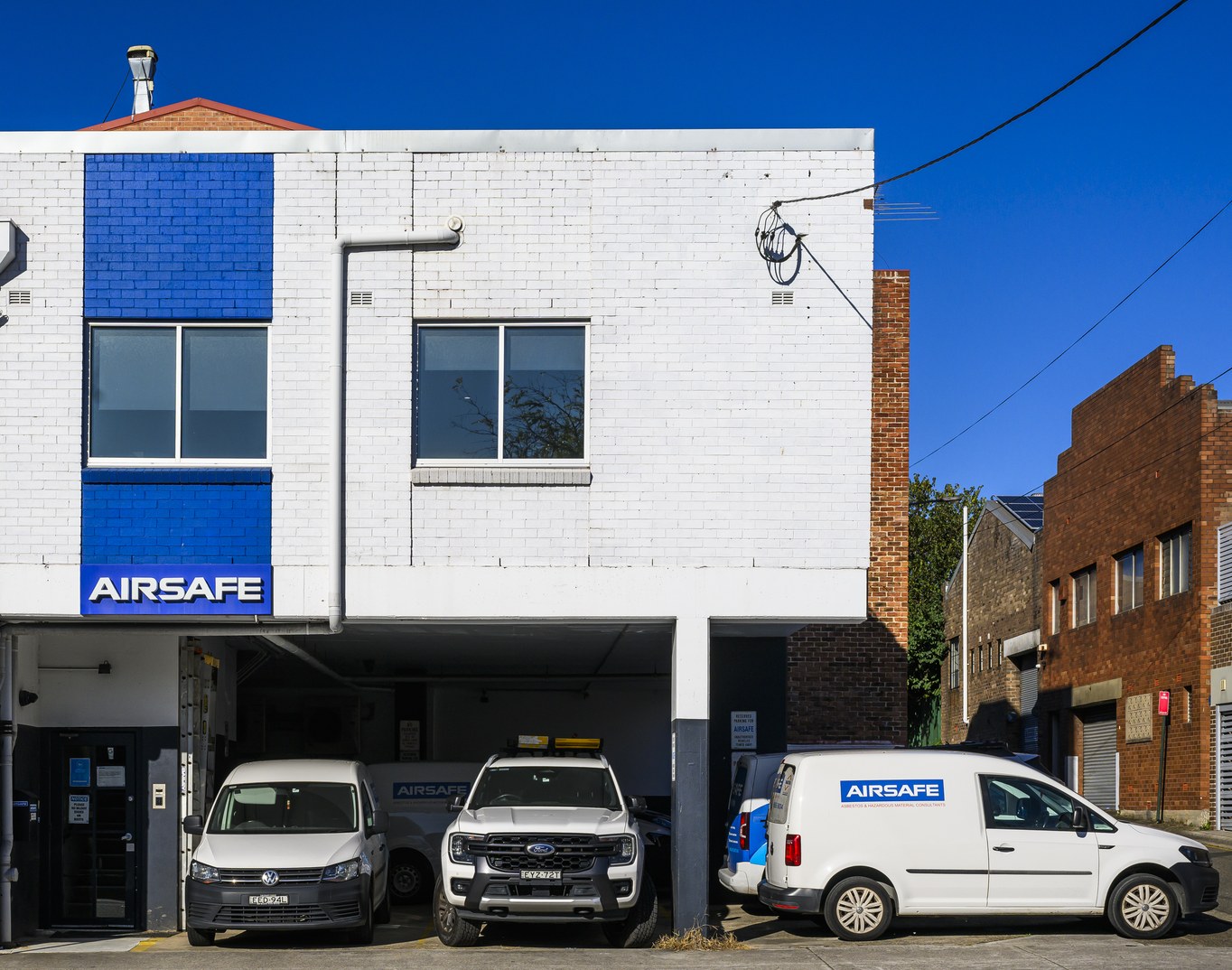
Airsafe doesn’t remove asbestos. We assess, monitor and certify, and that is all we do, so there’s no conflict of interest when we’re monitoring someone else’s removal work. Airsafe also has no role in bushfire preparation, firefighting, land clearing, vegetation management or building certification.
Our role is limited to identifying, sampling, testing, monitoring, assessing and clearing hazardous materials. Airsafe has nine Licensed Asbestos Assessors on staff, and has its own NATA accredited asbestos laboratory for asbestos and mineral fibre identification by polarised light microscopy. Air monitoring and respirable fibre counting are also covered by Airsafe’s own NATA accreditation, number 2959.
After the 2019 bushfires, Airsafe spent months helping damaged properties recover, from the far south coast up to the mid north coast. Our role was to write remediation scopes, identify hazards, monitor the air while the work was done, and run clearance inspections and validation sampling at the end.
Before the season starts, a sensible owner of an older property should make a simple asbestos plan: identify the age of the buildings, note the likely asbestos locations, and test suspect materials where you need certainty. If you want help doing that properly, call Airsafe on 1300 888 338 and ask about asbestos testing or a pre-season hazardous materials survey.