If you’ve seen “asbestos test kits” for sale at hardware stores or online, you may have got the impression that asbestos testing is something you can do yourself.
This is not the case. The only way to test for asbestos is in a scientific laboratory, using specialised techniques like Polarised Light Microscopy (PLM) and Dispersion Staining (DS).
Do asbestos test kits actually test for asbestos?
No. So-called “asbestos test kits” just contain some basic equipment for collecting a sample, along with instructions and some way of getting that sample to a laboratory. Some kits include the laboratory analysis in the price; others leave you to arrange and pay for it separately.
Either way, the kit itself doesn’t perform the test. The actual asbestos identification happens at the laboratory.
Can you tell if something contains asbestos at home?
No. It is impossible to identify asbestos by sight or from a verbal description. You can’t confirm it from a photo, and you can’t confirm it by knocking on the material to hear how it sounds. Asbestos fibres are microscopic, and plenty of materials that contain no asbestos look exactly like materials that do.
There is also no legitimate instant home test. Any product that claims to identify asbestos on the spot, without laboratory analysis, should not be relied on.
What does an asbestos test kit actually contain?
Kits vary, and we can’t speak for every product on the market. Typically you’re paying for some sampling and packaging materials, a set of instructions, and a way to submit the sample to a laboratory. They’re nothing magical. The important part is the laboratory analysis.
Do you need to buy a special asbestos test kit?
No. The result comes from the laboratory analysis, not from the kit.
Be careful, though, about collecting the sample yourself. The old advice was that anyone could take their own sample with a dust mask and some hand tools. Current NSW guidance is more careful than that: SafeWork NSW recommends using a professional, such as an occupational hygienist or licensed asbestos assessor, to take samples of suspected asbestos. Asbestos fibres are released when the material is disturbed, so if the material is damaged, crumbling or badly weathered, or you’re just not sure it’s safe to sample, leave it alone and get a professional to take the sample.
NSW guidance also says you can get a sample tested yourself by sending it to an accredited laboratory. If you already have a safely collected, properly packaged sample, Airsafe can test it: see the step-by-step instructions on our Asbestos Sample Testing page, or the official guidance at asbestos.nsw.gov.au.
Why does the laboratory matter?
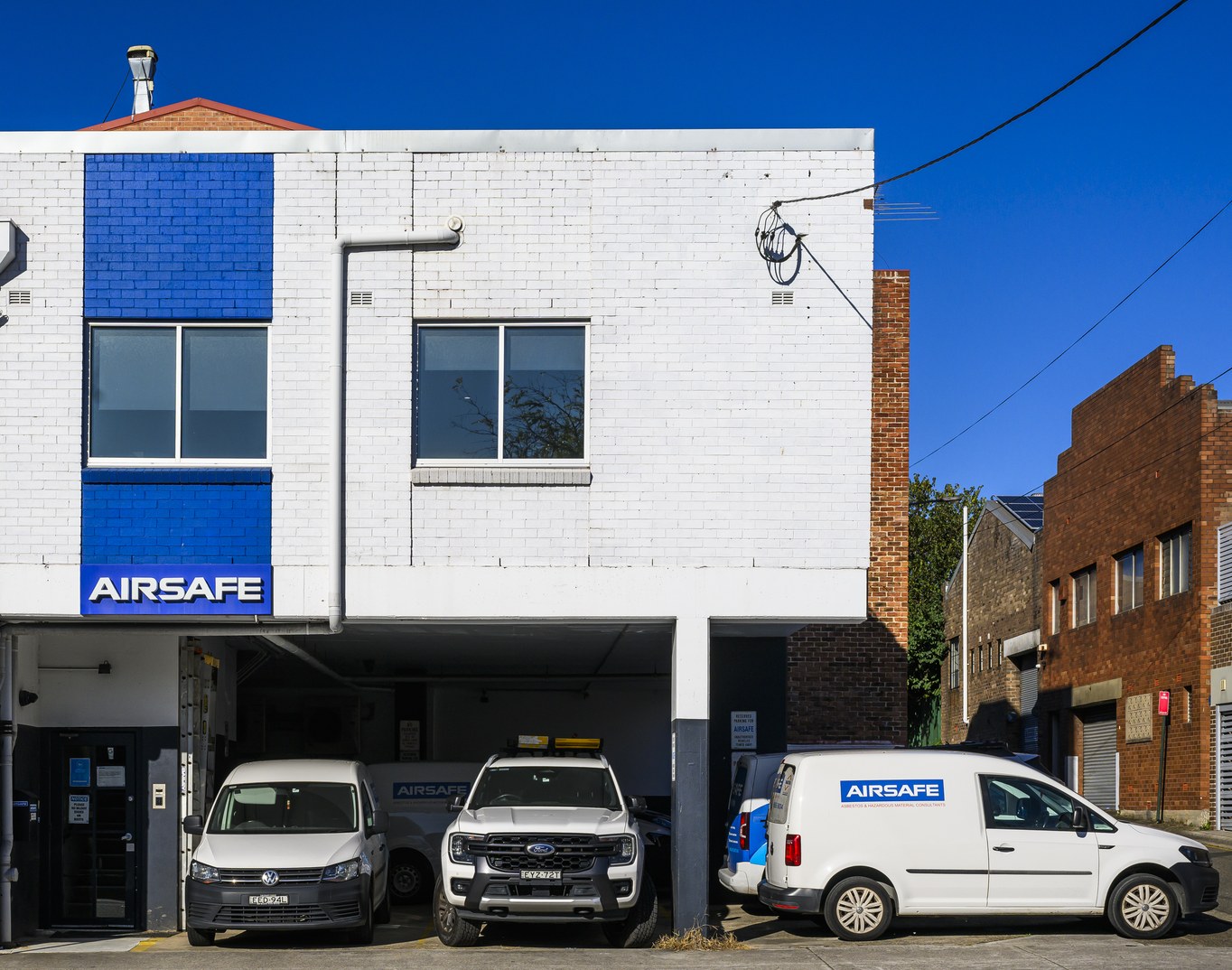
Airsafe is NATA accredited for asbestos sample identification (NATA accreditation No. 2959). NATA is the national body that accredits laboratories, and if asbestos testing isn’t done in a NATA accredited laboratory, the report may not be accepted by SafeWork, local councils and other authorities.
In our laboratory at Beaconsfield, we analyse samples using Polarised Light Microscopy and Dispersion Staining. Under polarised light, asbestos fibres behave in a distinctive way that lets a trained technician tell them apart from other fibres that look similar to the naked eye.
What if the sample is taken from the wrong place?
The laboratory analyses the sample it receives. A result is only useful if the sample is representative of the material being investigated. If there are variations in the appearance, texture or colour of the material, additional samples are needed for a valid analysis.
For the same reason, one negative sample doesn’t clear an entire wall or an entire building. Other materials on the same site may still contain asbestos. If you’re renovating and there are several suspect materials, an asbestos survey by a qualified consultant is usually a better answer than testing one sample at a time.
How much does asbestos testing cost?
Airsafe charges $110 per sample including GST. It’s a single flat fee that covers a full analysis in our NATA accredited laboratory with a written report of the result. You don’t need to buy a commercial kit for us to test your sample.
For more on how it works, see our Asbestos Test Kits page.
What happens if the sample contains asbestos?
A positive result doesn’t automatically mean removal. The right action depends on the type, location and condition of the material. Airsafe doesn’t do removal work: as an independent consultant, we can advise on your options, help you engage a reputable, licensed asbestos removal contractor if removal is needed, conduct air monitoring during the removal, and issue a clearance certificate once the area has been inspected.
If you’ve found something suspicious, call Airsafe on 1300 888 338.