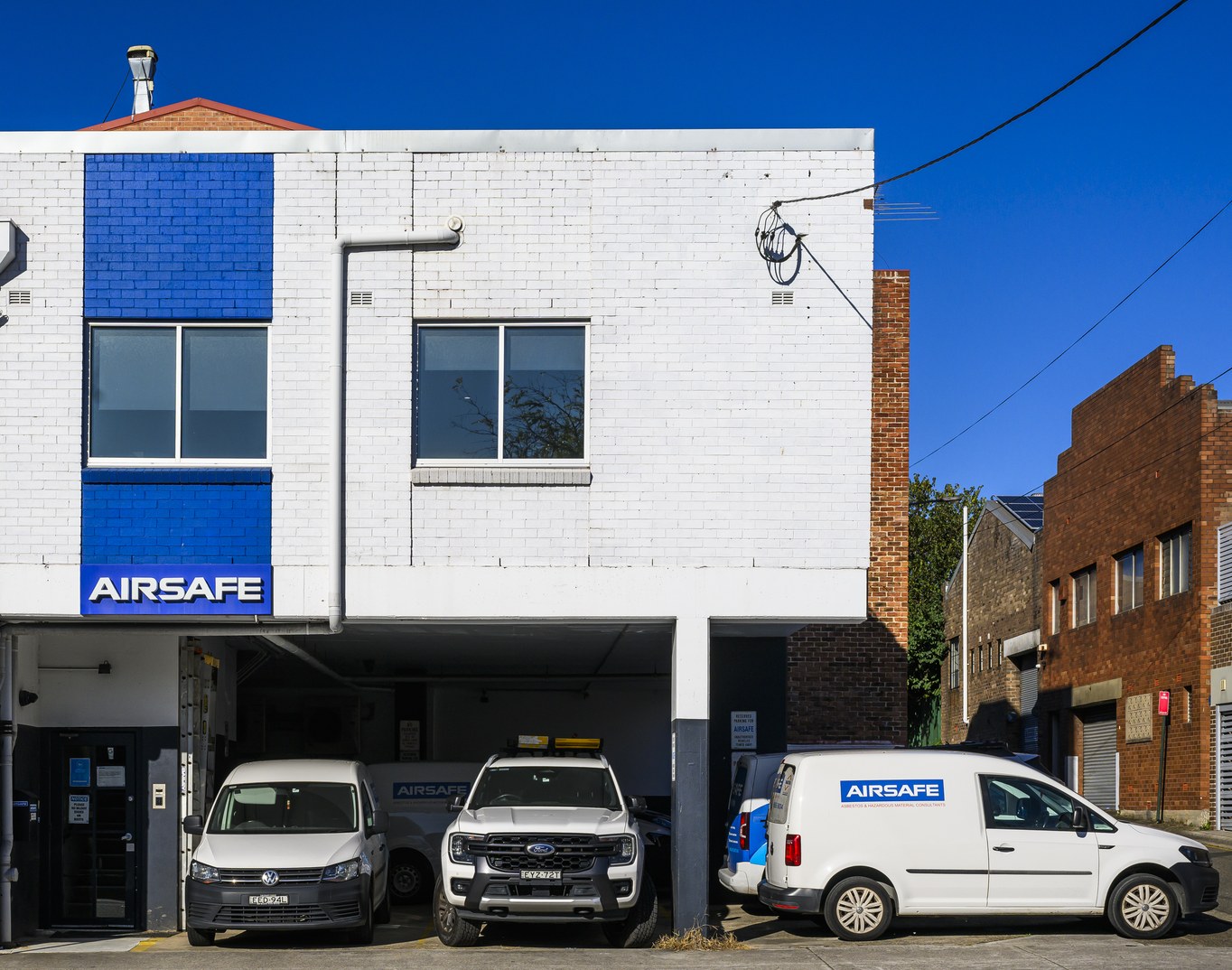
Organise asbestos air monitoring for your project in Sydney, NSW
Asbestos air monitoring is crucial to your health and safety. Airsafe are a leading asbestos air monitoring company across Sydney, the rest of NSW and project sites Australia-wide. Most of our work is for asbestos removal contractors and demolition contractors, and for builders and building owners who engage us to supervise removal works on their projects (smoke testing the enclosure, monitoring throughout, then issuing the clearance certificate). If you’re in a rush, we can often get asbestos air monitoring equipment installed on site within hours. Just call us on 1300 888 338 today.
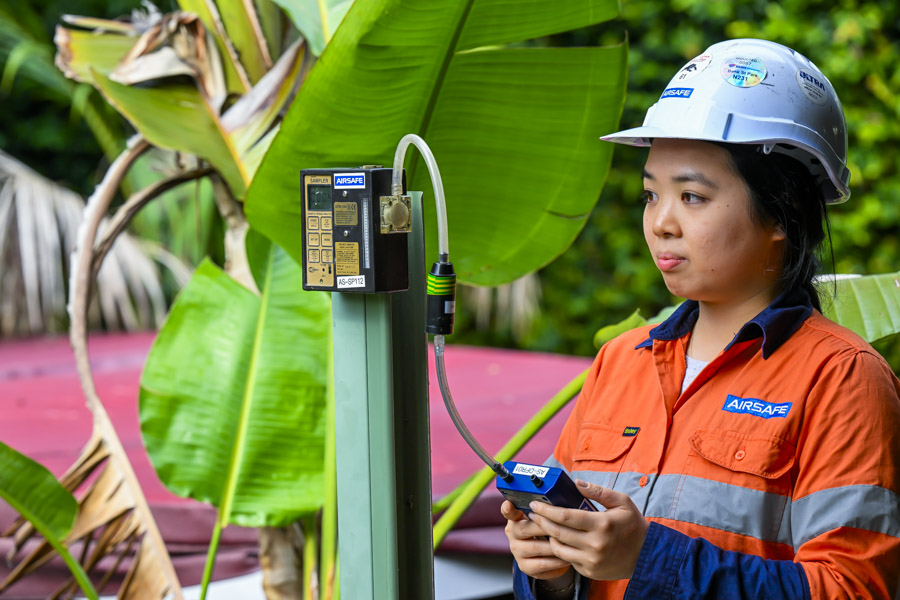
Airsafe doesn’t remove asbestos. We assess, monitor and certify, and that is all we do – so there’s no conflict of interest when we’re monitoring someone else’s removal work. Air monitoring and respirable fibre counting are covered by Airsafe’s own NATA accreditation, number 2959.
Air monitoring is legally required if you’re removing friable asbestos (the most dangerous kind). But we recommend air quality monitoring for all asbestos removal: it doesn’t cost a lot, and it gives you and your neighbours real peace of mind.
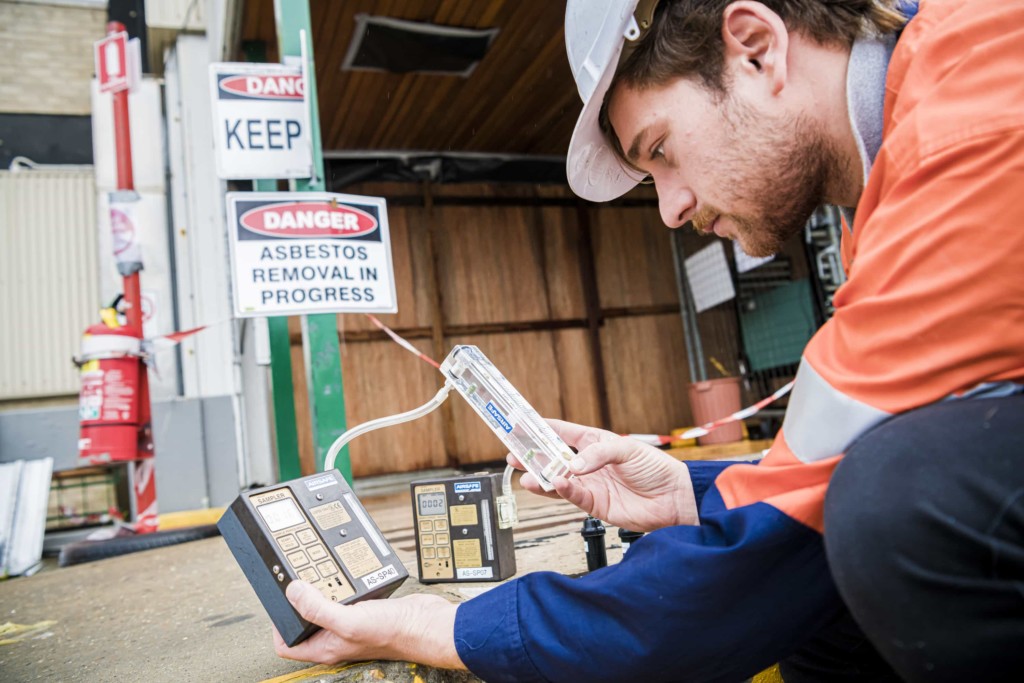
Asbestos air monitoring is most important when asbestos-containing building materials are damaged or have deteriorated over time. The more damaged the material, the more chance that asbestos fibres might be released into the air.
Airsafe is one of Sydney’s most respected providers of airborne asbestos fibre monitoring services. With over 35 years’ experience in asbestos, our monitoring reports carry real authority throughout the industry. We work closely with your demolition or asbestos removal contractors to get the job done safely and efficiently.
Our asbestos air monitoring process
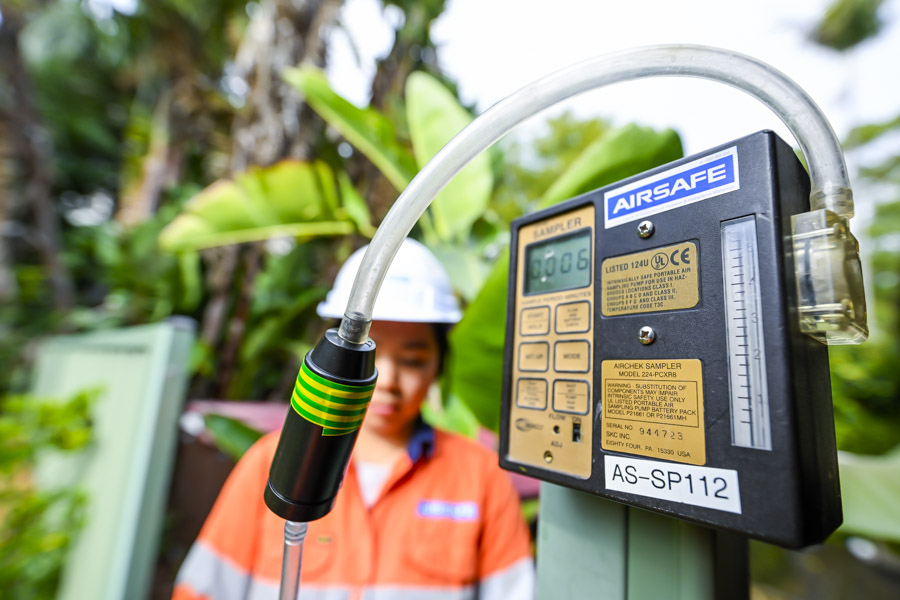
A typical asbestos air monitoring process with Airsafe goes like this:
- Give us a call on 1300 888 338.
- Our consultant will discuss your details and provide a quote.
- One of our fleet of inspection vehicles will be dispatched to your site, anywhere in Sydney.
- Specialist consultants will set up air monitors in relevant areas.
- At the completion of the sampling period, testing is carried out in our NATA-Accredited lab.
- A test report detailing results of asbestos air monitoring is issued within 24 hours.
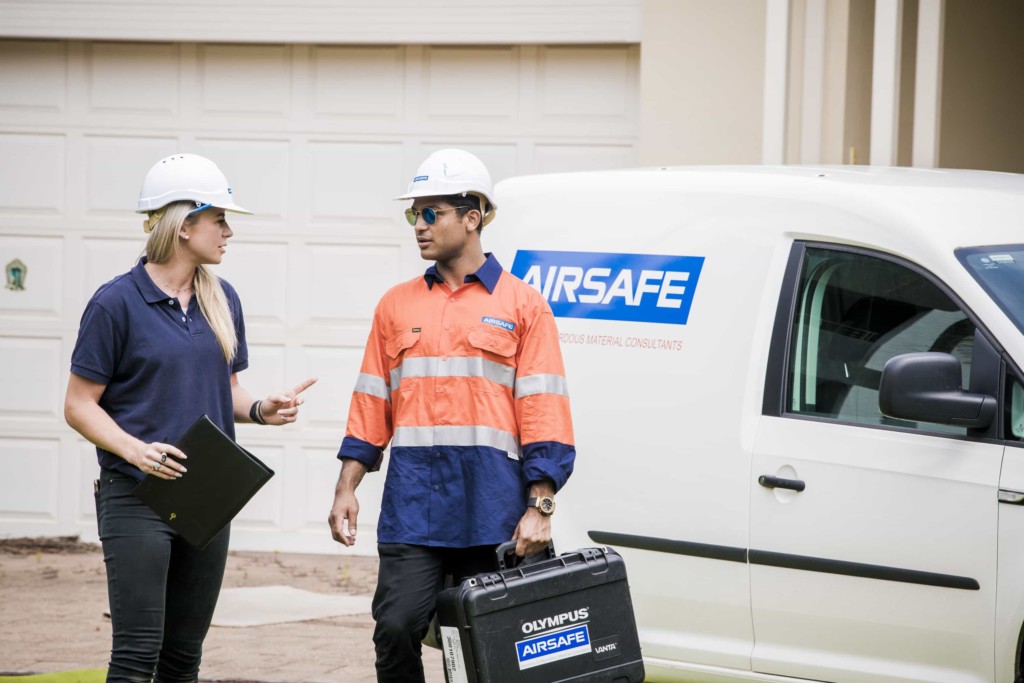
Adherence to asbestos legislation
In recent years, new Work Health and Safety (WHS) Asbestos Regulations have harmonised Australia’s licensing, training and competency arrangements for workers involved in asbestos testing and removal. In accordance with these regulations, a Licensed Asbestos Assessor is required to undertake air monitoring, clearance inspections or the issuing of clearance certificates for class A asbestos removal work.
To be eligible for this licence you must be able to demonstrate that you have carried out training (or have adequate experience) in the asbestos removal industry over the past two years. Airsafe is accredited by NATA (the National Association of Testing Authorities) for asbestos air monitoring (accreditation No. 2959). This includes accreditation for volume measurement, which is what allows us to issue a final concentration result without the disclaimer some labs need to add to their reports. We comply with the requirements of AS ISO/IEC 17025, the standard that governs the general requirements for the competence of testing and calibration laboratories. Our asbestos air quality monitoring is carried out in accordance with the requirements of the NSW Work Health and Safety Regulation.
Licensed Asbestos Assessors in Sydney, NSW and Australia-wide
Since 1 July 2013, air quality monitoring for friable asbestos removal works must be done by a Licensed Asbestos Assessor. Airsafe has seven Licensed Asbestos Assessors on staff, available across Sydney, the rest of NSW and project sites Australia-wide, so contact us to ensure you comply with your legal obligations.
Our air monitoring pumps belong to Airsafe – we don’t hire them in – and they’re maintained and replaced on a regular cycle. When a removal job needs air monitoring at short notice, and they often do, the equipment is ready to go.
“We recently appointed Airsafe to undertake air monitoring and reporting at a brownfield development site during the demolition stage. Their proactive, professional and cost and time-efficient approach and implementation were excellent.”
– Carl O. Peterson, December 2021
“AIRSAFE has become our go-to company for all air monitoring needs. Working for a large paint company, we’ve found their service not only exceptional but also backed by valuable advice. They are consistently reliable, flexible, and a pleasure to work with. These qualities made it an easy decision to choose them as our preferred supplier.”
– Nik Pappas, November 2025
“I use Airsafe on a regular basis for commercial construction. Liam Matthews and the Airsafe team always get the job done professionally, safely, and in a prompt manner as required. If only I could give more stars.”
– Jordan Kissane, September 2021
Frequently asked questions
-
The process of air monitoring involves sampling airborne asbestos fibres to assist in assessing exposure to asbestos and the effectiveness of implemented control measures. In this way, air monitoring improves a homeowner’s understanding of the potential levels of asbestos pollutants on their premises.
Information gathered during the air monitoring process can be used to determine whether or not the risk of asbestos has been removed from the home entirely. By law, asbestos air monitoring must be conducted in accordance with the Guidance Note on the Membrane Filter Method for Estimating Airborne Asbestos Dust.
-
As a general rule, air monitoring requirements will vary depending on the type of asbestos being removed, as well as the location and position of the asbestos in your home. Other factors such as whether or not an enclosure is used during renovations, and whether the asbestos removal work is carried out within a building or outside, will also contribute to the decision making process.
When considering whether or not you need air monitoring in your home, it’s important to remember the following guidelines which have been adapted from those supplied by SafeWork NSW.
Friable asbestos removal
In accordance with government regulations, air monitoring is mandatory for all friable asbestos removal in the home. This includes prior to dismantling an enclosure (that may have been used during removal) and for the purposes of the clearance inspection.
More than 10m2 of non-friable asbestos removal
When you are dealing with more than 10 m2 of non-friable asbestos, air monitoring is not automatically required by law. However, air monitoring by an independent licensed asbestos assessor or competent person is still recommended, in order to ensure compliance with the duty to eliminate or minimise exposure to airborne asbestos.
Public location
It is strongly advised that air monitoring should be considered where the asbestos removal work is being undertaken in or next to a public location. If you live in an apartment complex with communal areas, or if your home is situated next to a public park or playground, you should consider carrying out air monitoring to ensure that your family and your neighbours are safe.
Exposure air monitoring
SafeWork NSW advises that air monitoring should be carried out to determine a person’s exposure to airborne asbestos, if there is uncertainty as to whether the exposure standard may be exceeded and a risk assessment by a competent person indicates that it is necessary. However, since most uses of asbestos are prohibited in the workplace, as well as in the home, exposure monitoring should not be required frequently.
Air monitoring may be required when:
- it is unclear whether new or existing control measures are effective
- there is evidence (for example, dust deposits around the home) that the control measures have deteriorated as a result of poor project maintenance
- modifications or changes in safe work methods have occurred that may adversely affect a worker or removalist’s exposure
- there has been an uncontrolled or unforeseeable disturbance of asbestos in the home.
-
The most obvious benefit of air monitoring is that it confirms that you and your family haven’t been exposed to asbestos during the removal process.
However, there’s another less obvious benefit: it also puts your neighbours’ minds at rest. Even if air monitoring isn’t legally required, your neighbours aren’t likely to be interested in the technical distinction between friable and non-friable asbestos. Air monitoring gives them something you can use to prove that you haven’t compromised their safety. This protection is especially important to have in case of legal action at any time in the future.
-
Back in our state-of-the-art laboratory, one of our asbestos experts undertakes a meticulous, detailed analysis of the samples that have been taken using air monitoring equipment.
Using a NATA accredited laboratory is a requirement of the Work Health and Safety Regulation, and it’s what makes a result rigorous and independent. You can check any provider’s accreditation, and its scope, at the NATA website, and a genuine report will always name the laboratory that carried out the analysis. Here’s what to look for in a report.
The analysis involves examining each sample under a microscope and counting any fibres present. It’s a painstaking process: we have to look at up to one hundred different areas on each slide!
Once we’ve examined the slides, we do a standard calculation to determine whether the number of fibres present (if any) is above the “reporting limit”.
Typically, our laboratory staff repeat this process for several different samples – the exact number depends on the size of the site.
Based on this analysis, you will receive a full report stating:
- Where each sample was taken from, and when
- How many fibres (if any) were found in each sample
- The concentration of fibres (expressed as Fibres/mL)
- A breakdown on the sampling methodology
- Notes on any environmental conditions during the sampling process
- A summary of the results.
-
No, you can’t. Asbestos air monitoring is a highly technical process, requiring specialised equipment and properly trained staff both on site and back in the laboratory.
When dealing with asbestos in the home, many people look for ways in which they can test for the material themselves, in order to try to save both time and money. However, to ensure that your home is free from potentially dangerous, airborne asbestos particles, an independent licensed asbestos assessor such as Airsafe must be employed to undertake air monitoring within the asbestos removal area.
-
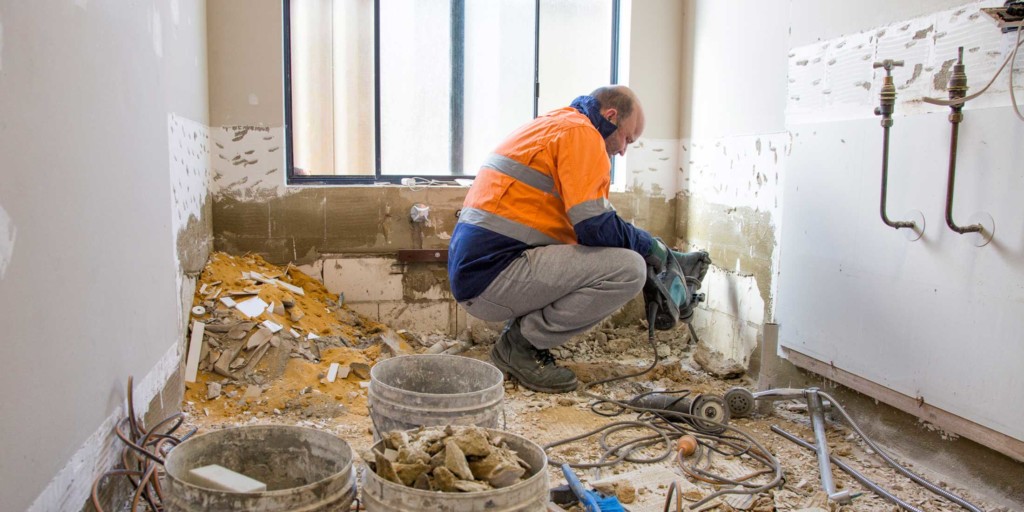
Exposure to airborne asbestos particles is the greatest risk to a person’s health. If asbestos or asbestos containing materials are disturbed during renovations, asbestos fibres may become airborne, leaving homeowners and their families (and in some cases, their neighbours) at risk of inhaling the dangerous particles.
These particles remain in the lungs and, over time, can cause disease. The likelihood of a person developing an asbestos-related disease depends on how much asbestos they were exposed to and for how long.
As DIY home improvements spike in popularity, more and more renovators are becoming unknowingly exposed to airborne asbestos particles in the home.
-
Air monitoring runs while the removal is happening. The clearance inspection happens at the end and certifies that the area is safe to use again. On most friable removal jobs, the same Licensed Asbestos Assessor handles both: monitors going up at the start, clearance certificate at the end, one continuous engagement.
-
Yes. When a builder, building owner or principal contractor engages us to supervise a removal contractor’s work, we run the whole package: smoke testing the enclosure, control air monitoring throughout, inspections during the removal, and the clearance certificate at the end. The same Licensed Asbestos Assessor is on the whole job. Just call us on 1300 888 338 and we’ll talk through what’s involved.
-
For the full duration of the work, plus any setup and clearance. On a smaller commercial job, that might be a couple of days. On a larger commercial or industrial site, it often runs for several weeks. We work to the removal contractor’s timetable and stay on site for as long as the job needs us.
-
Volume measurement. Not every NATA accredited laboratory holds accreditation for volume measurement (air). Without it, the lab has to add a “NATA accreditation does not cover the performance of this service” disclaimer to the concentration figure on the report. Airsafe holds volume measurement accreditation under NATA No. 2959, so our concentration figures don’t carry that disclaimer.