Lead and heavy metal testing across Sydney, NSW and Australia-wide
Airsafe has been identifying lead and heavy metals in paint, dust and soil since 1988. Most of our lead testing work is for builders renovating heritage buildings, demolition and asbestos removal contractors stripping older structures, environmental consultants and engineers assessing contaminated land, and industrial sites where workers may be exposed to lead. Homeowners also use us when they need a clear answer before a renovation or a sale – the testing is the same. Wherever you are, samples can be couriered to our Sydney lab, and we travel interstate for larger on-site work.
Our results carry NATA-accredited authority. Airsafe was the first laboratory in Australia to be NATA-accredited for paint analysis for elevated levels of lead using portable XRF, and remains, to our knowledge, the only Australian laboratory holding this accreditation. Reports are issued to the same standard whether the sample comes from a Sydney CBD demolition or a homeowner’s kitchen wall.
For more than 35 years we have tested for lead and heavy metals on the structures where old lead paint is most common – bridges, commercial buildings and car parks – and for scores of asbestos removal and demolition contractors working on older buildings. During the federal Sydney Airport Noise Insulation Program, Airsafe ran the lead air monitoring while lead-contaminated ceiling dust was removed before insulation went in – working for the contractors across the bulk of the program’s thousands of homes, and on most of its public buildings as well. More recently, our work for Mann Group on the Sydney Metro West Eastern Tunnelling Package included lead air monitoring and analysis, alongside an asbestos and hazardous materials audit across the program, which included the demolition of around nine CBD buildings. Just call us on 1300 888 338.
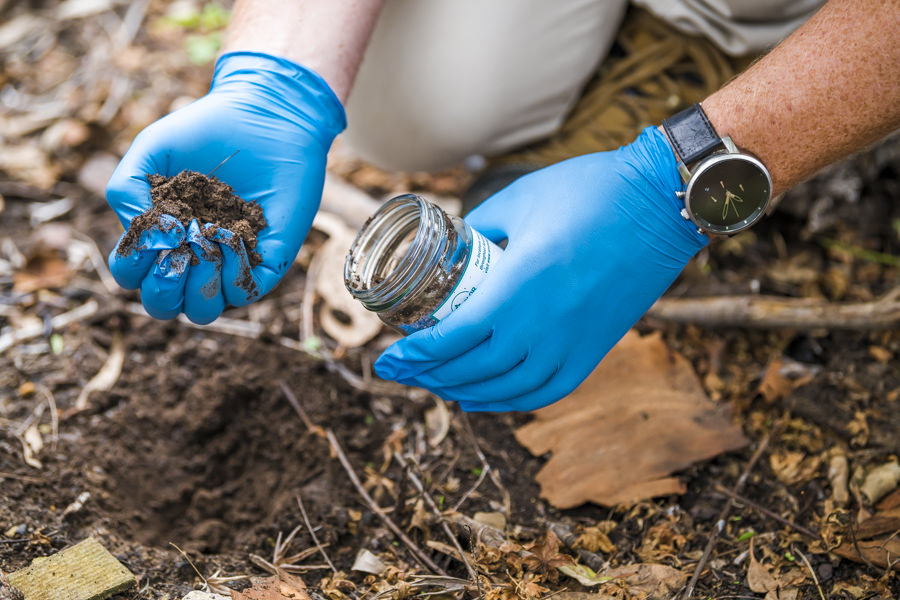
How to collect and package your lead or heavy metal sample
How we test for lead: XRF analysers
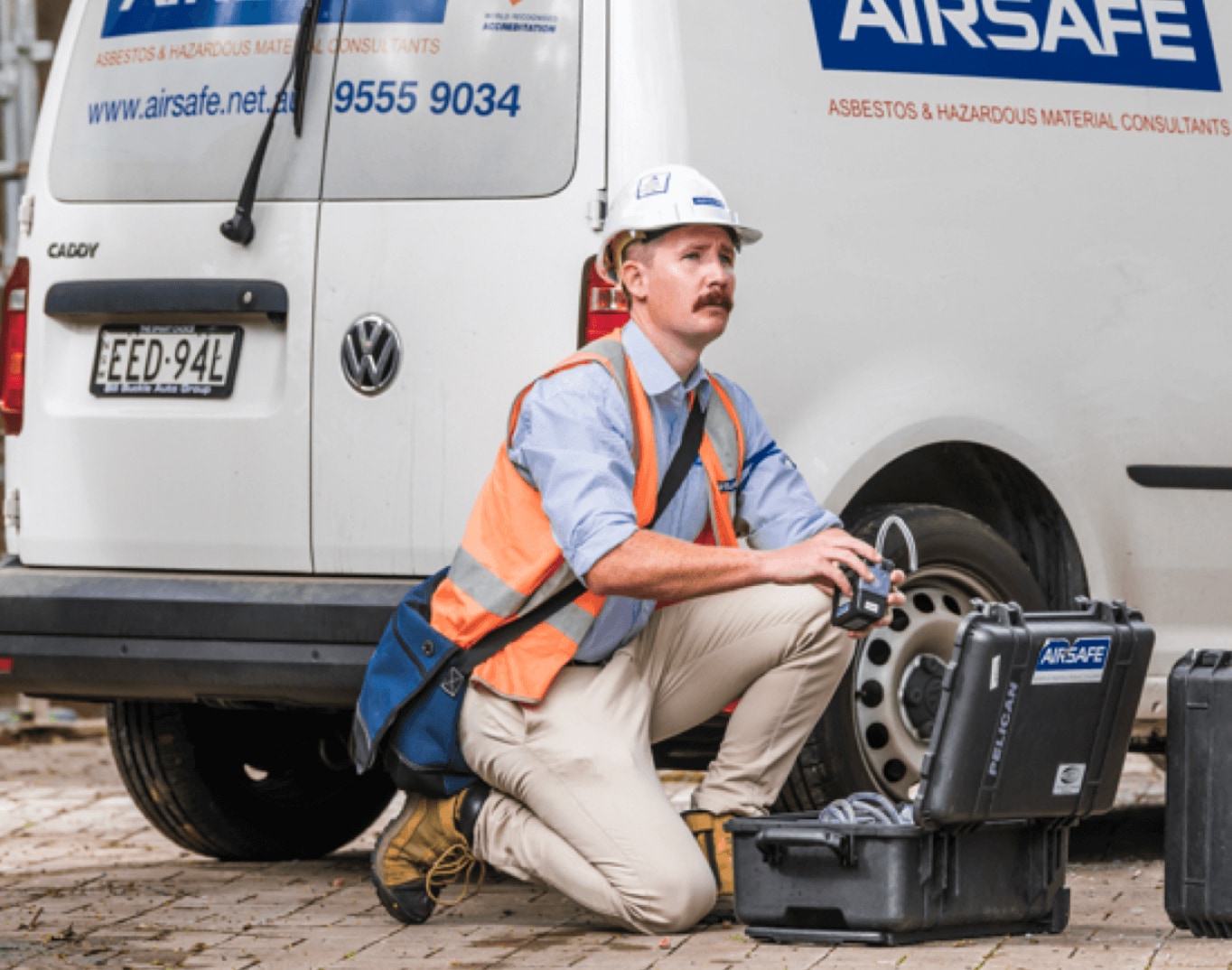
Our state-of-the-art lead testing equipment includes two Olympus Vanta XRF analysers. XRF (X-ray fluorescence) is a non-destructive analytical technique used to determine the elemental composition of materials. XRF analysers determine the chemistry of a sample by measuring the fluorescent (or secondary) X-ray emitted from a sample when it is excited by a primary X-ray source.
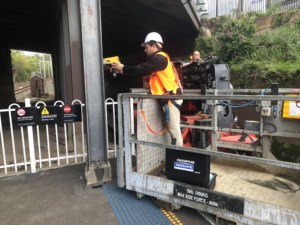
XRF analysers can quantify or qualify practically every material on earth. With handheld XRF analysers, you have the option of taking the instrument into just about any location the unit will fit into. This gives us great flexibility in how we test for lead, because we don’t have to collect a sample for off-site laboratory testing. On-site testing via XRF is non-destructive, saves time and allows us to test a greater volume of product than off-site sampling allows.
XRF is also invaluable in remedial works. Along with a visual inspection, it means we can ensure the removal area has been adequately cleaned prior to dismantling containment zones.
NATA-accredited lead and heavy metal testing
NATA accreditation is what gives a lead result its legal and regulatory weight. Airsafe holds NATA accreditation No. 2959 from the National Association of Testing Authorities, so a result from us is traceable, reliable, and accepted by councils, regulators and the courts – not just taken on trust.
Our XRF analysers are calibrated to test for:
- lead paint and lead in dust in accordance with AS/NZS 4361.2:2017 Guide to Hazardous Paint Management Part 2: Lead Paint in residential, public and commercial buildings
- heavy metals in soils in accordance with the NEPM: National Environment Protection (Assessment of Site Contamination) Measure. Heavy metals tested under NEPM include cadmium, arsenic, mercury, zinc, copper, nickel and lead.
Hexavalent chromium has its own monitoring approach and is covered on a separate page – see our hexavalent chromium monitoring page.
Airsafe also holds certified reference materials for paint and bulk samples. Certified reference materials are samples of known composition used to validate each method against objective standards – what XRF and most analytical instrumentation requires for accurate calibration.
Our lead and heavy metal testing reports are NATA endorsed and compliant with ISO/IEC 17025, the standard governing the general requirements for the competence of testing and calibration laboratories.
Why our own lab matters
Most lead and asbestos consultants don’t own a laboratory. They send each sample to a third-party lab and pay for every one, so the more samples they take, the more it costs them – a quiet pressure to take fewer. Some will even call their service NATA accredited when it’s the outside lab that holds the accreditation, not them.
Airsafe owns its own lab, and the accreditation is ours. An extra sample costs us nothing, so we take as many as a job actually needs – and we’re never waiting on another lab for the result. If you’re not sure what your job needs, just call us on 1300 888 338.
4.9 stars across 600+ Google reviews – from builders, consultants and homeowners across NSW and beyond.
“Highly Recommend Airsafe OHC for all inquires, from asbestos samples to Lead samples an site contamination for DA. One stop shop for all your inquires regarding to asbestos and hazardous materials. Fast response and quick turn around on all works assigned to. Been using Airsafe for over 15+ years and always had excellent customer service by Airsafe. High attention to details on the works they perform and high expert advice if needed from the Airsafe OHC team.”– Alan S.
“I highly recommend Angus from Airsafe. He attended by apartment to test for lead paint. Angus was obviously skilled and knowledgeable in regards to the process and was able to confidently and answer any questions I had throughout. He finished sooner than expected and rather than leaving he carried out testing in some other areas so I was left with a detailed and comprehensive report that details exactly what I needed to know about lead in my apartment.”– Sarah Marriott
“Airsafe was engaged to provide a lead paint inspection of our home. We were impressed with the use of their analyzer on site, the quick turn around of the report and the easy to read format.”– David Brown
Lead paint: your old hazardous materials surveys may be out of date
Lead paint (also known as lead-based paint, leaded paint, lead-containing paint and paint containing lead) is defined in Australian standards as paint containing more than 0.1% lead by mass.
All paint manufactured since 1997 contains less than 0.1% lead, but paints manufactured earlier often have lead in higher concentrations.
Until recently, the allowable concentration of lead in paint was 1%. However, the relevant standards were updated in 2017 (see the Guide to hazardous paint management, Part 1 and Part 2.)
These changes mean that old hazardous materials surveys are out of date. Paint that was previously deemed lead-free could now be deemed lead-containing, if the concentration of lead is between 0.1% and 1%.
Lead paint risks
Lead paint presents a risk to health if it is ingested or inhaled. There is minimal risk if the condition of the paint is sound, but it can become risky when it chalks or flakes, or in places like sash windows where it is subject to frequent abrasion.
Dust from deteriorated lead paint is a recognised source of lead exposure in residential, public and commercial buildings. The peeling and flaking of lead paint may also cause dangerous residues of lead to build up in accumulated dust.
As well as depositing inside buildings, lead paint dust can settle on adjacent external soil, water, food and vegetation. Therefore, food-producing gardens, or water supplies for human or animal consumption, should not be positioned near areas of possible lead contamination.
Lead paint also presents a health risk if is disturbed by paint removal methods like sanding or burning. Even mechanical scraping of lead paint poses health risks. In fact, removing paint can be especially risky, as small particles of dust may lodge in furnishings and carpets, making detection or removal difficult.
Proposed work sites may already be contaminated with lead due to earlier, poorly controlled maintenance or repainting practices. It may be necessary to determine background levels in surrounding soil, or on interior and exterior surfaces, prior to work commencing.

Lead paint regulations
The power to control pollution caused by lead hazards is given to councils under the Protection of the Environment Operations Act 1997. Prevention notices with required actions can be issued if a council reasonably suspects that any activity has been or is being carried on in an environmentally unsatisfactory manner.
The NSW Work Health and Safety Regulation contains the following clauses, which can carry penalties if not carried out.
- “A person conducting a business or undertaking at a workplace must assess each lead process carried out by the business or undertaking at the workplace to determine if lead risk work is carried out in the process.”
- “A person conducting a business or undertaking at a workplace must ensure, so far as is reasonably practicable, that contamination by lead is confined to a lead process area at the workplace.”
- “A person conducting a business or undertaking at a workplace must ensure that any measures implemented to control health risks from exposure to lead at the workplace are reviewed and as necessary revised.”
Lead in ceiling dust and soil
Lead deposits are often found as dust in ceiling spaces, or in soil. Lead in dust or soil is often there as a result of previous refurbishment, but it can also be due to:
- Atmospheric deposits (e.g. from previous lead petrol use)
- Lead residue from nearby industrial sites (e.g. smelters)
- Other lead paint removal projects nearby.
If you suspect you may have found lead in dust or soil, it’s important to have a sample tested straight away.
Criteria for lead dust levels have not been established in Australia. Lead dust levels are typically compared to health investigation levels for soil contaminants as stated in the National Environment Protection (Assessment of Site Contamination) Measure 1999 (April 2013).
Health effects of lead
The two primary means of lead contamination in humans are breathing in dust or fumes that contain lead, and swallowing food or water that contains lead. High lead levels can cause serious long-term health problems and harm almost every part of the body, especially the brain, kidneys and reproductive organs. Lead can damage the developing brain and nervous systems of unborn children much more easily than those of adults.
Children and adults with increased levels of lead in their bodies may show no symptoms, even though their health is being affected. When symptoms do become obvious, they include lethargy, stomach pain or constipation, headaches and irritability. Children show these symptoms at lower levels of exposure than adults do.
FAQs
-
For samples dropped at our Beaconsfield laboratory or couriered in, results are usually back within one to two business days. For urgent jobs – a contractor on site, an ABF compliance deadline, a settlement closing – just call us first on 1300 888 338 and we can usually arrange same-day or next-day turnaround. For on-site XRF testing, we give you preliminary results in real time as we walk the site.
-
For lead in paint, yes – our XRF analysers are NATA-accredited under our in-house method and produce results that meet AS/NZS 4361.2:2017 for paint and the NEPM for soils. On-site XRF is non-destructive, fast, and lets us test a much greater volume of material than off-site sampling allows. For heavy metals in soils, we use XRF on site and confirm with laboratory analysis where the regulatory framework requires it.
-
As well as lead in paint, dust and soil, our XRF analysers are calibrated for heavy metals in soils under the NEPM standard – cadmium, arsenic, mercury, zinc, copper, nickel and lead. Hexavalent chromium has its own monitoring approach and is covered on a separate page – see our hexavalent chromium monitoring page. For any other heavy metal or contaminant you’re not sure about, just call us on 1300 888 338 and we’ll tell you whether we can test it.
-
It depends on when the survey was done. The lead paint standard was tightened in 2017 – paint containing between 0.1% and 1% lead used to be deemed lead-free and is now classified as lead-containing. If your survey predates 2017, paint that was previously called lead-free may need re-testing under the current standard before renovation, demolition or removal work begins.
-
Yes. Most of our ABF-related testing is for asbestos, which is prohibited from import into Australia, but we also test imported products for lead and other heavy metals where that forms part of your compliance requirement. Reports are issued from a NATA-accredited facility and contain the specifics regulators expect. If you’re an importer with a testing requirement, just call us on 1300 888 338 with what you need tested.
Contact us for lead testing today
Don’t risk your health and the health of others. Airsafe is here to ensure your space is safe with commercial and residential lead testing services. To get our expert help, call us on 1300 888 338.
Last updated: June 2026