What a dry-looking room can still be hiding
Water has been through your place: a burst pipe, a storm, an overflowing gutter or a flood. The water has gone, the floors look dry, and now you’re deciding whether people can move back in.
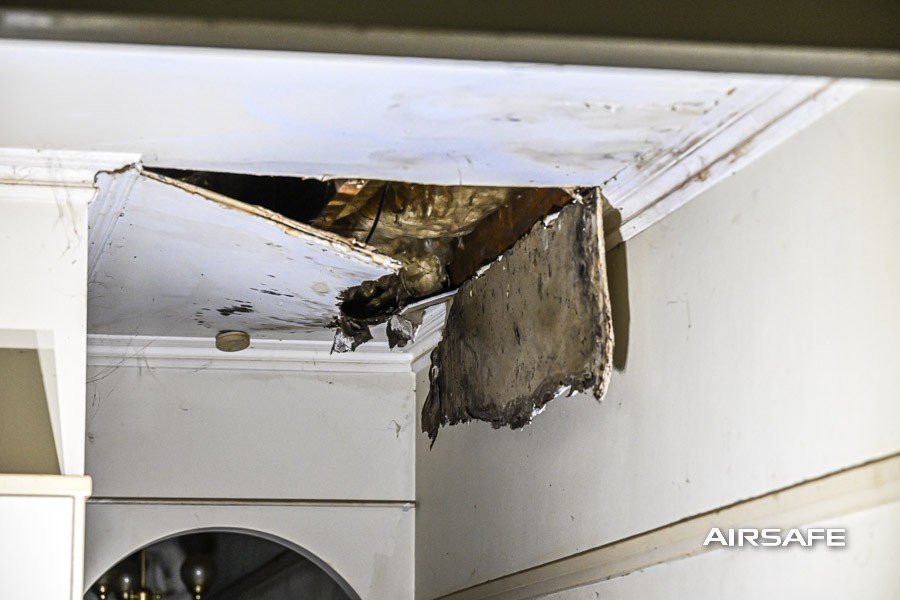
A dry-looking surface doesn’t mean the building is dry. The places that stay wet are often the ones you can’t see: wall cavities, under floors, ceiling spaces, insulation, under floor coverings and under the house.
Flood water is not clean water. NSW Health says floodwater and the debris it leaves behind may be contaminated with sewage. It can also carry chemicals and germs such as bacteria, fungi and viruses.
Not every water event needs an inspection. A small leak of clean water, found quickly and dried properly, usually doesn’t need us. Call us when the water sat for more than a day or two, when it was storm water or flood water rather than clean water, when wall cavities, subfloors or ceiling spaces got wet, when a musty smell hangs around after everything looks dry, or when someone in the building isn’t well. Our mould after a flood, leak or storm page explains that situation in more detail.
Safety checks before anyone goes back in
Before mould is considered, the building has to be safe to enter and the services have to be safe to use. The NSW SES issues an all clear when it is safe to return to an area after an evacuation, and NSW Government advice is not to enter a damaged building or structure unless authorities say it is safe. NSW Health and NSW Government advice is that electrical equipment, power points and hot water systems exposed to floodwater or water damage should be inspected by a licensed electrician before use, and gas appliances and gas bottles exposed to floodwater should be inspected by a qualified tradesperson before use.
Why mould is the moving-back-in problem
Mould needs moisture and nutrients to grow. In a flood, storm or major leak, both are usually present.
Wet building materials such as plasterboard, carpet, insulation and timber can support mould growth within days. Even a quick water intrusion may take days or weeks for an area to dry out, during which time mould spores can spread and thrive.
Hidden mould behind walls, under floors or above ceilings can keep growing long after the visible surfaces have dried. An inspection finds the source, not just what you can see.
NSW Health says most mould is visible, so it is generally not necessary to test for mould in the home. NSW Health also says some mould contamination may be present in cavities or the ceiling. After a flood, storm or leak, those can be exactly the places that got wet and stayed wet.
If you think you have mould in your home but cannot find the source of the problem, NSW Health says you could employ an occupational hygienist.
What should be checked before moving back in
Start with the history of the water and the places it reached, especially if it was storm water or flood water that sat in the building.
NSW Health advises checking for trapped water or mud in walls or floor cavities, and draining water away from under the house to increase airflow. NSW Government clean-up advice also says wall and floor cavities should be checked for mud, debris and floodwater.
Floor coverings matter. NSW Health advises removing wet items where possible, including floor coverings, rugs, mats, furniture, bedding, linen and clothing. If floor coverings are removed, the floor underneath should be thoroughly cleaned and dried before any new material is laid.
Insulation and ceiling spaces need attention if water came through the roof, gutters, upstairs rooms or ceiling. Wet insulation can hold moisture where it can’t be seen from the room below.
Porous contents need a harder look than hard surfaces. Items that are beyond repair will require disposal. These might include porous items like mattresses, pillows, timber or plasterboard which may have absorbed quantities of mould and contaminated water. NSW Health says flood-affected mattresses are difficult to treat and may need to be discarded.
Air ducts and vents should not be ignored. If mould spores have gotten into air ducts and vents, they can circulate around the building, so these areas need to be thoroughly cleaned as well.
Also consider who is moving back in. NSW Health says most people will not experience any health problems from contact with mould, but people with asthma, allergies or other breathing conditions may be more sensitive, and people with weakened immune systems or chronic lung diseases are more at risk of mould infection. If you or family members suffer health problems after contact with mould, contact your doctor.
What an occupational hygienist does
When an inspection is warranted, we begin with an inspection of the indoor environment, surveying the area for odours indicating mould or bacterial growth, moisture sources such as stagnant water or leaking pipes, and water-damaged building materials.
We conduct moisture sampling, meaning moisture readings with a moisture meter, of building materials and items the occupational hygienist presumes to be wet.
Air sampling is the most common way we assess mould levels, as it’s the most reliable way of assessing respiratory exposure to mould: we sample both indoor and outdoor air and compare the spore concentrations. If the indoor concentration is higher, or the mould is of different species, this can indicate an indoor hazard.
Where we suspect mould on a specific surface, we also conduct surface sampling. Selected samples go to a separately NATA accredited laboratory.
You receive a Mould Inspection Report that sets out where the mould is, where the moisture is coming from, what the laboratory found, and a scope of works your remediation contractor can quote from. Photographs throughout, so you can see what we saw. You can read more about the process on our mould testing and inspections page.
Before we arrive, photograph the mould, the water line, the affected rooms and any damaged materials before anyone touches them, and if materials have to come out for safety reasons, photograph them first. Don’t scrub, spray, bleach or paint over the affected areas, and don’t run drying equipment hard in the day or two before we come, as that can skew the moisture readings we rely on to trace the source.
Who fixes it, and who checks the fix
Airsafe doesn’t do the drying or the mould removal, and we don’t mark up anyone who does. We inspect, test and work out the scope of what needs fixing, separately from any cleanup contractor.
A remediation contractor you choose carries out the work. Once remediation is done, we can come back and verify it with a clearance inspection: re-sampling the treated areas and confirming the moisture problem is actually resolved, not just painted over.
A clearance inspection can include surface and airborne re-sampling with an outdoor control sample, and moisture readings behind or around the previously wet materials. Airsafe then prepares a Clearance Certificate. Our mould clearance inspections page sets out how that final check works.
For tenants, landlords and property managers, an independent report can help keep the discussion factual, but Airsafe doesn’t get involved in the blame game between landlords and tenants.
Airsafe’s role
Since 1988 we’ve assessed mould in homes, apartments, commercial and industrial buildings, hospitals, schools and government facilities across Sydney, NSW and Australia. We work for homeowners and tenants, and for property managers, builders and facility managers on live and occupied sites.
When flooding and years of wear left mould through the heritage buildings at Jenolan Caves, the Trust brought Airsafe in to work out how far it had spread and what was driving it.
If the water has gone but you’re not sure the building is dry, call Airsafe on 1300 888 338.