The overall limit for welding fume stays at 1 mg/m3 on 1 December. The important changes are to some of the individual substances that can make up the fume.
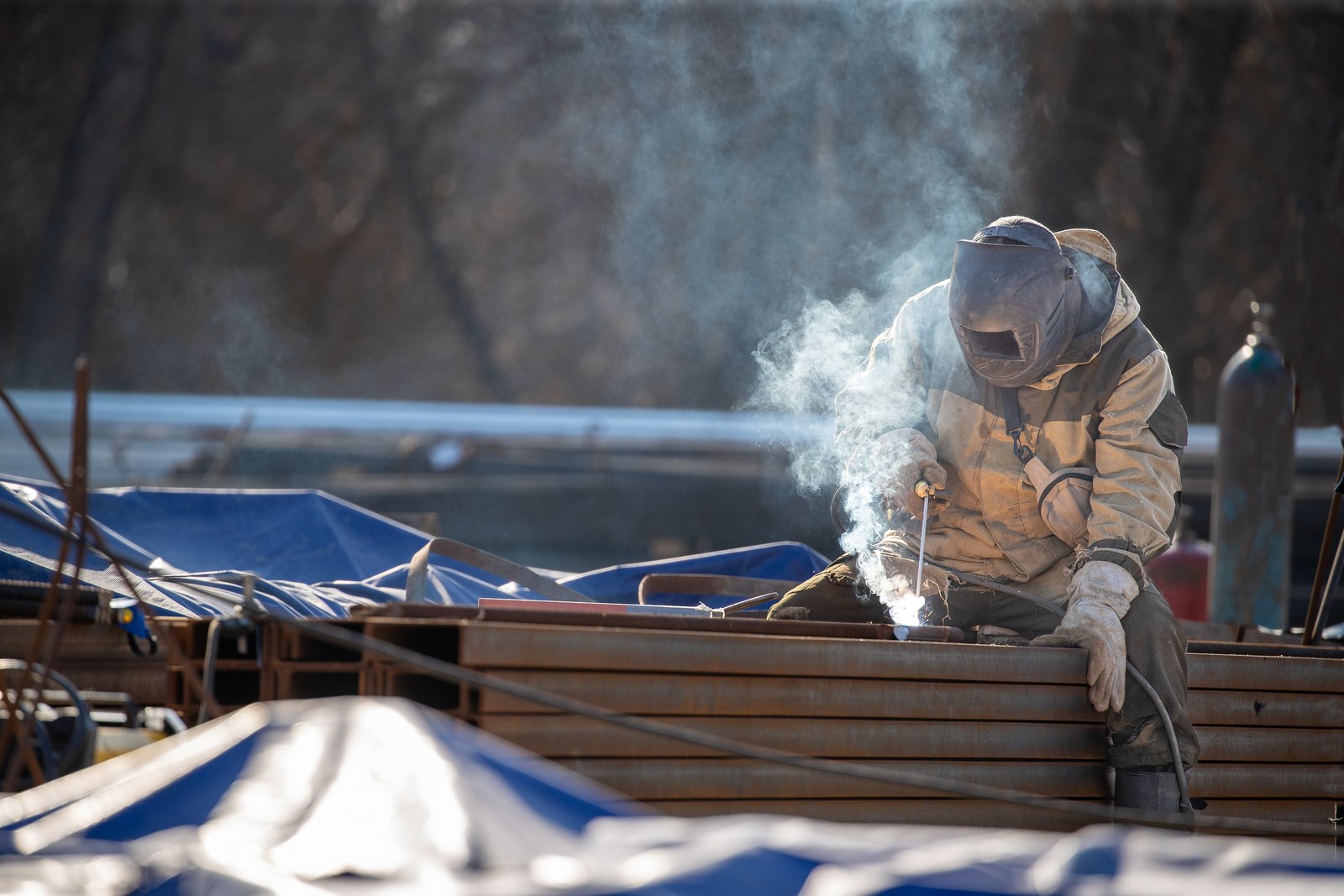
Welding fume is not one chemical. What is in it depends on the welding process, the metal being welded, the consumables and any coatings or contamination on the workpiece.
What stays the same?
The workplace exposure standard for welding fumes not otherwise classified was reduced to 1 mg/m3 as an eight-hour time weighted average in NSW on 18 January 2024. That figure carries through when the WES list becomes the WEL list on 1 December 2026.
It is important to note that this is the limit for welding fumes in total. Individual substances in the fume have their own limits, and they also need to be dealt with. That was already true under the WES list; the December change makes some of those individual limits tighter.
Which limits change?
Manganese is one of the biggest changes. Its current 1 mg/m3 WES is replaced by separate WELs of 0.1 mg/m3 for the inhalable fraction and 0.02 mg/m3 for the respirable fraction. Nickel metal and insoluble compounds move to 0.1 mg/m3, down from the current 1 mg/m3 WES for nickel metal, while cobalt metal and inorganic compounds move from 0.05 mg/m3 to 0.02 mg/m3.
For anyone welding stainless steel, hard-facing alloys or other materials containing these metals, that is enough reason to look at what the last monitoring program actually measured.
What happens to chromium VI?
Chromium VI compounds are on Safe Work Australia’s list of non-threshold genotoxic carcinogens. From 1 December 2026 they no longer have a numerical workplace exposure limit.
Chromium VI still has to be controlled. Safe Work Australia says that where a non-threshold genotoxic carcinogen is present, the business must eliminate it if reasonably practicable, replace it with a safer alternative if possible, or otherwise reduce the risk as much as reasonably practicable. For welding processes that can generate chromium VI, especially some stainless-steel work, you need to know what is in the fume.
Do you need to monitor again?
Not automatically. A recent monitoring program can still be useful if it represents the work being done now, the process and materials have not changed, and the individual contaminants that matter were actually measured.
If the old report only gives you total welding fume, read it again before December. The same applies if the welding process or consumables have changed, or if manganese, nickel, cobalt or chromium VI were never considered; a workplace that looked comfortable against the old figures can have a different result against the new ones.
The existing air-monitoring duty also remains. If you are not certain on reasonable grounds that exposure is below the relevant standard or limit, or monitoring is needed to determine whether there is a risk to health, air monitoring is required.
How welding fume monitoring works
Personal exposure monitoring is generally the starting point because it measures the air in the worker’s breathing zone while the welding is being done. The sampling strategy has to represent the actual process, materials, duration and controls.
Airsafe takes samples on site using calibrated sampling equipment under our NATA accreditation for sampled-air volume measurement. That accreditation is for measuring the volume of air sampled. Where laboratory analysis of welding-fume components is required, the samples are analysed by a separately NATA accredited laboratory.
If results show a problem, we advise on controls following the standard hierarchy of controls.
The preference is always to reduce the fume at source before relying on respiratory protection for the remaining risk.
How Airsafe can help
Whether your welding activities are new, or you have existing risk assessments and controls that need to be reviewed, Airsafe can help. We are based in Sydney, but our consultants travel throughout Australia for workplace monitoring.
For welding fume monitoring, call Airsafe on 1300 888 338.
Questions people ask
What is the exposure limit for welding fume in Australia?
The workplace exposure standard for welding fumes not otherwise classified is 1 mg/m3 as an eight-hour time weighted average. That same 1 mg/m3 figure carries through when the WES list becomes the WEL list on 1 December 2026. It applies to total welding fume, and individual substances in the fume also have their own limits.
Is welding fume monitoring required by law?
Under WHS regulations, air monitoring is required if you’re not certain, on reasonable grounds, that exposure is below the relevant standard or limit. It’s also required where monitoring is needed to work out whether there is a risk to health. SafeWork NSW says monitoring can also check whether existing controls are working.
Are stainless steel welding fumes more dangerous?
Stainless steel welding can involve metals that need particular attention, including chromium and nickel. Stainless steel and hard-facing alloys are the jobs most likely to involve manganese, nickel, cobalt and chromium VI. From 1 December 2026, chromium VI compounds have no numerical limit and must be controlled under Safe Work Australia’s non-threshold genotoxic carcinogen approach.
How is welding fume exposure measured?
Personal exposure monitoring is generally used first. It measures the air in the worker’s breathing zone while welding is happening, using sampling that represents the real process, materials, welding duration and controls. Airsafe takes samples on site; flow rates and air volumes are measured under Airsafe’s NATA accreditation (No. 2959), and the filters are analysed by an external NATA-accredited laboratory.
What are the health effects of welding fume?
SafeWork NSW lists health effects including headaches, dizziness, nausea, irritation of the nose, throat and lungs, asthma, wheezing and metal fume fever. It also lists lung damage such as bronchitis, pneumonia, emphysema and COPD, nerve problems, and increased long-term risk of lung and kidney cancers. Welding fumes are classified by IARC as Group 1 carcinogens.
What is the best way to control welding fume?
Work through the hierarchy of controls. SafeWork NSW starts with eliminating the need to weld, then substituting lower-fume processes, consumables and gases, removing coatings and contaminants, isolating welding, and using engineering controls such as on-gun extraction and local exhaust ventilation. Respiratory protective equipment sits last, as part of a plan that includes engineering controls.
Do welders need health monitoring?
The business (the PCBU) must provide health monitoring where there is a significant health risk from exposure to a Schedule 14 hazardous chemical, such as lead, cadmium or chromium. SafeWork NSW says welding fume can contain Schedule 14 metals, and the PCBU should get advice from a medical practitioner or occupational physician experienced in health monitoring.
Will we need more regular welding fume monitoring after 1 December 2026?
The WHS Regulation sets no fixed monitoring frequency. The total welding fume limit doesn’t change on 1 December 2026; it has been 1 mg/m3 since 18 January 2024. Individual metal limits change: manganese, nickel and cobalt reduce, and chromium VI has no numerical limit. Old total-fume results, changed work, or results close to a limit may mean monitoring again.