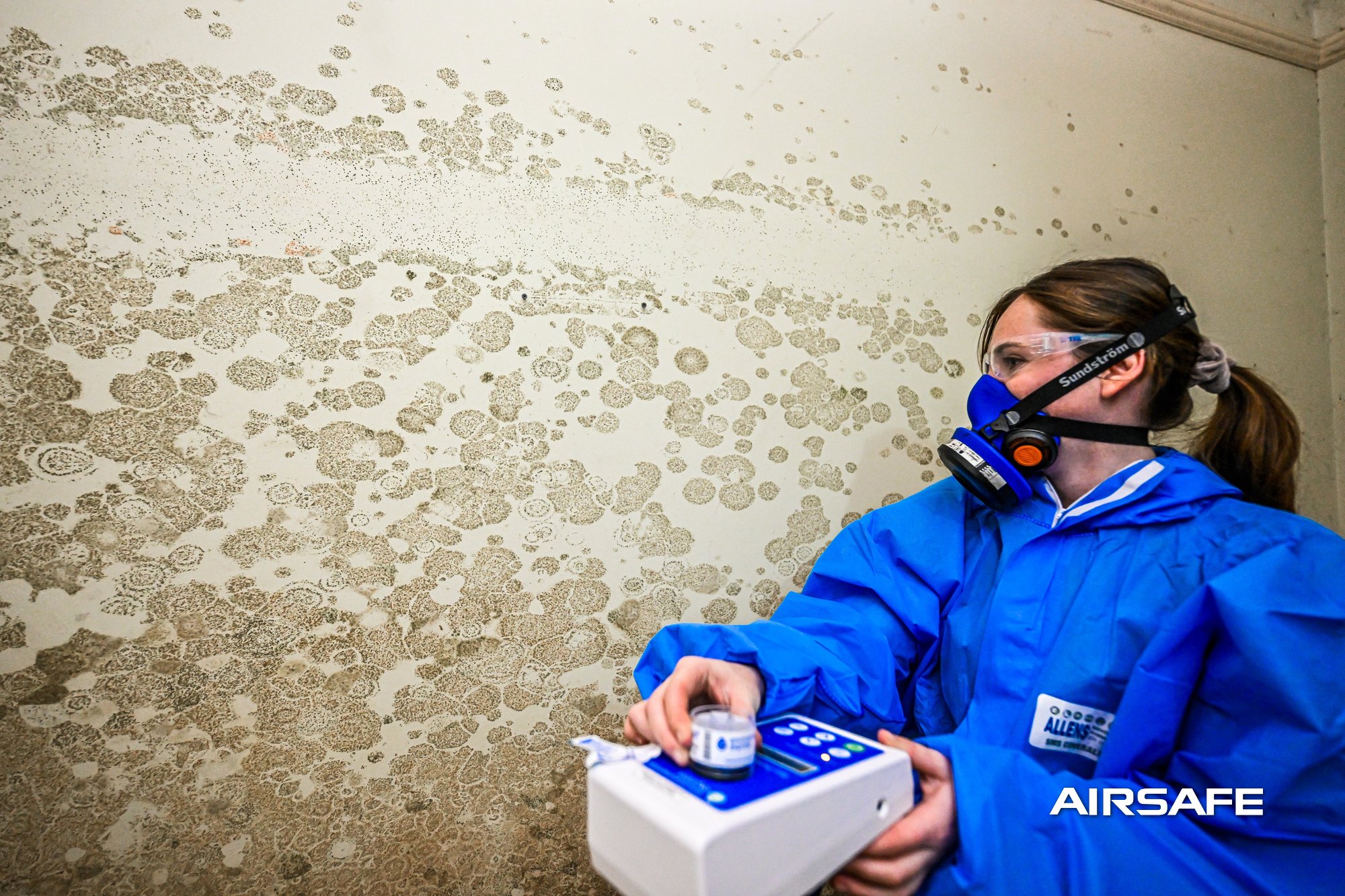
If you’ve found mould or noticed a musty smell in your home, you may be about to book an inspection. Numbers depend on the areas of concern, but Airsafe takes at least two indoor air samples, an outdoor comparison sample and surface samples where mould is visible, with moisture readings of materials that may be wet.
What happens before any samples are taken?
We begin with an inspection of the indoor environment. We look for odours that suggest mould or bacterial growth. We also check for moisture sources, such as leaking pipes or stagnant water, and water-damaged materials.
We take moisture readings, which measure how wet building materials are, from materials that may be wet. These help us trace the source of the moisture.
An inspection is worth considering if:
- mould keeps coming back after cleaning
- it covers a large area
- you suspect mould behind walls or under floors
- you’ve had a leak or water damage
- someone in your home has health concerns.
A small surface patch in a well-ventilated spot can often be cleaned up safely yourself. Airsafe is Sydney-based and travels Australia-wide, including throughout NSW.
Why are air samples taken inside and outside?
Air sampling helps assess your indoor air quality by measuring mould you could breathe in. It measures spores, the tiny particles mould releases into the air.
We take indoor and outdoor samples at the same time. The outside sample gives us normal outdoor levels to compare with your indoor results. Higher indoor levels, or different types of mould indoors, can indicate an indoor hazard.
Mould can hide behind cupboards and furniture, as well as inside walls or under floors. We can investigate a musty smell even when you can’t see mould.
You can’t identify the species, or type, by colour alone, even with black mould. Selected samples are analysed by a laboratory accredited for mould analysis by Australia’s accreditation body, NATA.
What decides how many samples you need?
The number of samples depends on the areas of concern found during the inspection. We take surface samples from places where mould is visible or suspected. These can help identify where exposure is coming from.
We quote an inspection and report fee including two indoor air samples, plus a charge for any extra samples. For a Fast Quote, tell us what you’re seeing and where.
There’s no single legal exposure limit for indoor mould in Australia. An occupational hygienist is the consultant who assesses your home and interprets the findings.
Your Mould Inspection Report includes:
- where mould was found
- where moisture is coming from
- sample results and photographs
- a scope of works, setting out the cleanup work for your contractor to quote on.
We don’t do the cleanup, so our report is independent of that work. For mould in rental properties, we don’t take sides in tenant and landlord disputes.
NSW Health’s mould fact sheet says that since most mould is visible, testing in the home is generally not necessary, but some mould may be present in cavities or the ceiling. Symptoms alone can’t establish whether mould is present. We don’t diagnose illness. If you’re worried about your health, speak to your doctor.
What should you do before the inspection?
Before we arrive:
- Photograph the mould and any water damage before anyone touches it.
- Don’t scrub, spray, bleach or paint over affected areas. Treatment can hide the extent of the problem and make its source harder to find.
- Stop an active leak, but leave damaged materials in place if it’s safe.
- Don’t run drying equipment hard in the day or two before the inspection. It can distort the moisture readings.
After remediation, or mould cleanup, mould clearance inspections check the treated areas. We re-sample air and surfaces, and check that the moisture source has been dealt with. If the work is up to standard, we issue a Clearance Certificate confirming that assessment. Clearance inspections are quoted separately.
For mould testing and inspections, call Airsafe on 1300 888 338.
Questions people ask
Why is an outdoor air sample taken during a mould inspection?
The outdoor sample gives us a reference for the air around your home. We collect it alongside the indoor samples. Comparing them helps us assess whether indoor mould levels are higher. Different mould types indoors can also suggest a problem within the building.
Can mould testing tell you what type of mould it is?
Yes. Testing can establish whether a sample contains mould and identify the type present. Colour doesn’t give you that answer. Mould described as black, green or white still needs analysis to work out which species, or type of mould, is there.
Can you test for mould you can’t see?
We can investigate suspected hidden mould by checking for smells and sources of moisture. Mould may be concealed behind furniture, beneath floors or within walls. Air samples let us compare conditions inside and outside your home. We interpret those results alongside the inspection findings.
Should I clean the mould before the inspection?
Leave the affected surfaces untreated until we’ve inspected them. Cleaning or painting can obscure the problem and make it harder to trace. Take photos first, including any water damage. If water is still leaking, stop it. Keep damaged materials where they are when safe.