Worried that a property has been used to manufacture drugs, or to smoke methamphetamine? It might be something a neighbour mentioned, a police visit you’ve heard about, an odd smell story from a previous tenancy, or simply pre-purchase caution before you commit to a house.
You cannot tell by looking. Methamphetamine residue is invisible and odourless, so a clean-looking house can still have residue on walls, ceilings, benches, cupboards and other surfaces.
Testing means an occupational hygienist swab-testing surfaces across the property and comparing the results against the national guideline. Airsafe provides meth and drug residue testing for buyers, sellers, landlords, property managers and insurers, and enquiries are handled in confidence.
How does a house become contaminated?
A house does not have to have been a clandestine drug laboratory to have a methamphetamine residue problem.
Manufacturing methamphetamine can contaminate a property, but smoking methamphetamine inside a house can also leave residue on internal surfaces. Approximately four out of five contaminated properties test positive because of drug use, not manufacture.
That distinction matters because the levels are often very different. WA Health guidance reports that contamination from smoking methamphetamine is typically low-level, averaging below 3 micrograms per 100 square centimetres, while manufacture can leave residues exceeding 100 micrograms per 100 square centimetres. In ordinary terms, smoking-only contamination is usually a smaller residue problem than a drug lab, and remediation is usually simpler.
But the same health investigation level is used for both. If residue is above the guideline, it needs to be dealt with whether it came from smoking or manufacture.
Why does meth residue matter for people living there?
Methamphetamine residue matters because people living in the house can come into contact with it repeatedly.
Exposure happens through skin contact with contaminated surfaces and through ingestion, especially where hands touch a surface and then go to the mouth. That makes infants and young children the most exposed occupants, because they spend more time on floors, touch more surfaces and have more hand-to-mouth behaviour.
Reported symptoms for occupants of contaminated properties include headaches, nausea and dizziness, breathing difficulties and chest or sinus irritation, skin and eye irritation, and sleep and behavioural problems, especially in children.
Just because a property has a rumour attached to it, that doesn’t necessarily mean it is over the guideline. But because the residue is invisible and odourless, testing is the only way to know for certain whether the property is contaminated.
What does the 0.5 microgram guideline mean?
The practical question is simple: when swabs are taken from inside surfaces, is the residue above or below the level used in the national guidance?
The national Clandestine Drug Laboratory Remediation Guidelines set 0.5 micrograms per 100 square centimetres as the level for methylamphetamine on inside surfaces. A result greater than that is considered unacceptable under the guideline.
That figure is a national guideline and health investigation level. It is not a NSW statutory exposure limit. It is still the number used to assess whether a residential property needs further action.
The same 0.5 micrograms per 100 square centimetres guideline applies whether the residue came from manufacture or from smoking methamphetamine in the property.
How does the testing work?
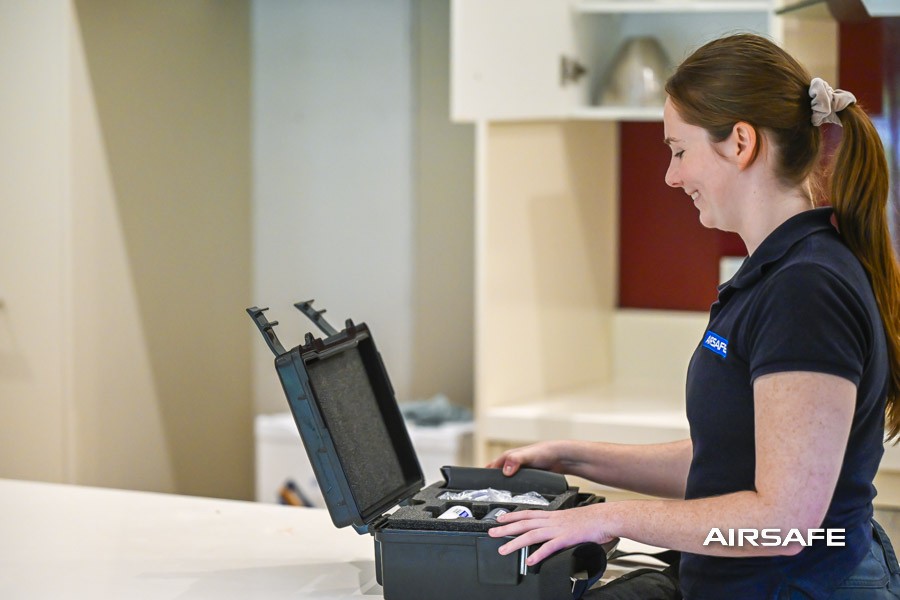
We start with a screening assessment: swab tests across the property using immunoassay swabs calibrated at the 0.5 microgram level, which give a quick yes/no on whether residue is present.
Where a screen comes back positive, we collect an analytical swab from an adjacent area and send it for quantitative analysis, so you get a reliable number, not just an indication.
The quantitative analysis is performed at a NATA-accredited laboratory.
A typical residential assessment involves around six to twelve samples, depending on the size of the property and what we find.
The sampling locations depend on the property and the concern. In a house, that can include living areas, bedrooms, bathrooms, kitchens, laundries and other areas where residue may be present. The point is to test the surfaces people actually live around and touch, rather than relying on a superficial look around.
What happens if the house is over the guideline?
If a property tests above the guideline, it needs to be decontaminated by a specialist remediation contractor.
Airsafe doesn’t do the decontamination ourselves, but that’s exactly why our testing is worth having. We inspect, test and work out the scope of what needs fixing, separately from any cleanup contractor. A remediation contractor you choose carries out the work.
Once the contractor has finished, we re-test the property and issue an independent clearance report confirming it now meets the guideline.
That last part matters. The report isn’t just a record of the problem. It is the document you rely on if there’s a dispute, an insurance claim or a question about whether the property has been properly cleaned. We don’t profit from the cleanup, so when we say a property is clear, it’s because the numbers say so.
When is meth residue testing worth doing?
Meth residue testing is worth considering when there is a realistic reason to be concerned about a property’s history, or when the consequences of not knowing are significant.
Common situations include:
- before buying a property, particularly where there is a rumour or concern about previous drug use
- between tenancies, if a landlord or property manager has reason to suspect contamination
- at the end of a tenancy dispute, where testing can provide numbers rather than argument
- after police activity at a property
- for an insurance matter, where a report may be needed to support a claim
- before re-occupying a property after remediation
For sellers and agents, there is also a disclosure issue. In NSW, a selling agent has to disclose a prescribed material fact if, within the last 2 years, the property has been used for the manufacture, cultivation or supply of any prohibited drug. Significant health or safety risks are also prescribed material facts.
Agents are expected to take reasonable steps to work out whether material facts apply. In plain English, that means making appropriate inquiries with the property owner rather than simply waiting to be told.
Related read: Do you have to disclose asbestos when selling a house in NSW?
What should you do next?
If you are worried about a house, don’t rely on appearance, smell or reassurance from someone who has not tested it. Get it swab-tested and compare the results with the national guideline.
Identifying and assessing hazardous contamination is what Airsafe has done since 1988. If you need a pre-purchase check, a result for a tenancy or insurance claim, or clearance after remediation, call Airsafe on 1300 888 338.
Questions people ask
Can meth residue be cleaned, and who checks the property afterwards?
If testing shows residue above the guideline, the property needs decontamination by a specialist remediation contractor. Airsafe can inspect and test first, then re-test after the cleanup is finished. If the results meet the guideline, Airsafe issues an independent clearance report.
Does Airsafe test for meth residue?
Yes. Airsafe provides meth and drug residue testing for buyers, sellers, landlords, property managers and insurers. Testing involves swabbing surfaces across the property, with positive screening results followed by quantitative analysis at a NATA-accredited laboratory. Enquiries are handled in confidence.