Deposited dust is the dust that settles out of the air onto surfaces. Inhalable dust is the fraction that can enter the nose and mouth. Respirable dust is the smaller fraction that can reach deep into the lungs.
They answer different questions, so they are measured differently.
Deposited dust: what settles
Deposited dust is measured with deposition gauges, left on site to collect whatever settles into them over a set period. It is mainly a measure of nuisance and amenity: the dust on cars, windowsills and outdoor furniture around a construction, demolition, quarry or industrial site.
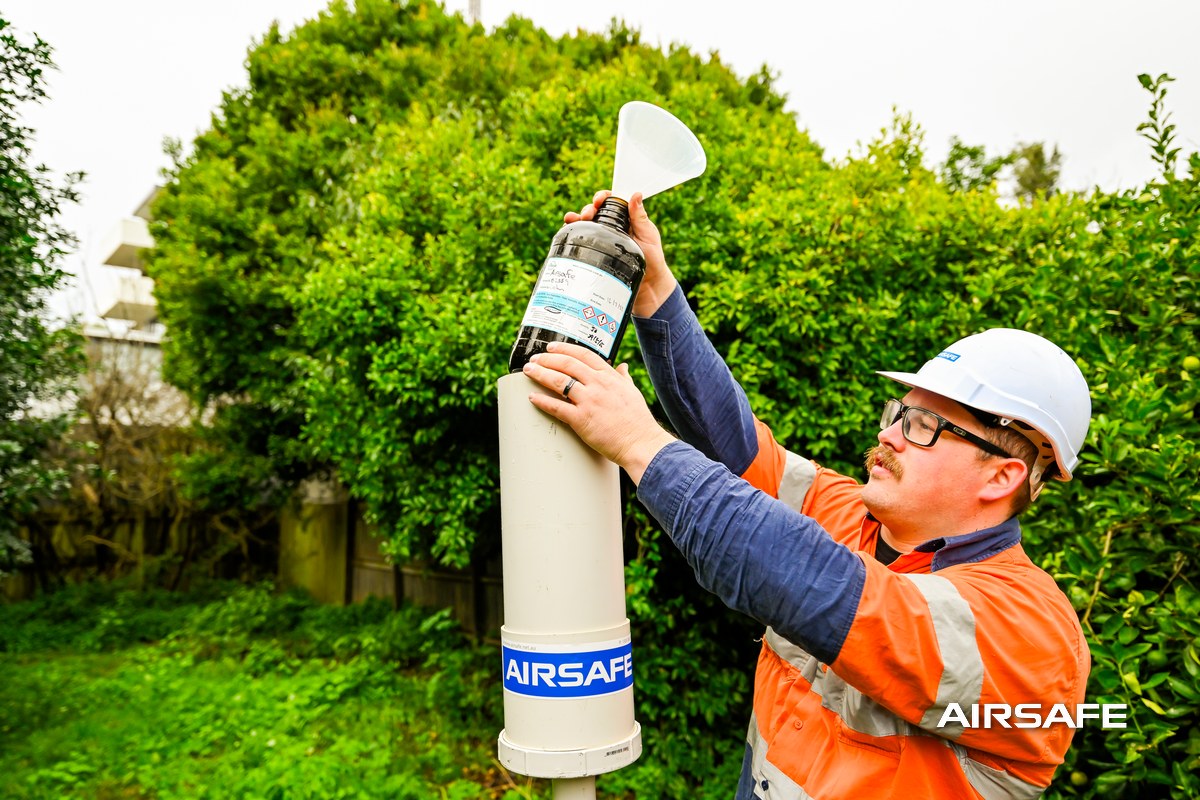
Councils and consent conditions often require deposited dust monitoring at site boundaries because it shows what is leaving the site and landing on neighbouring property.
What it cannot tell you is what your workers are breathing. Dust that has already settled is no longer in the air.
Inhalable and respirable dust: what is breathed in
Inhalable dust can enter through the nose and mouth during normal breathing. Respirable dust is a subset of that airborne dust, made up of the finer particles capable of reaching deep into the lungs.
Airsafe conducts inhalable dust monitoring in accordance with AS 3640 and respirable dust monitoring in accordance with AS 2985. For personal exposure monitoring, the sampling head is worn in the worker’s breathing zone so the result represents the air that worker is actually breathing during the job.
The substance in the dust still matters. Wood dust, metal dust, mineral dust and general nuisance dust do not all have the same exposure limit simply because they look similar in the air.
Why the distinction matters
A site can look dusty without exceeding a worker exposure standard, and a site can look clean while workers breathe respirable dust at levels that damage their lungs. The visible dust settling on surfaces and the finer dust reaching deep into the lungs are different problems.
Most monitoring programs use a mix of methods, depending on what you need to find out. Personal monitoring measures worker exposure. Static or real-time monitoring can show what a process is releasing, whether dust is moving beyond a work area, or whether a control is working.
Asbestos and crystalline silica are handled separately because they have their own methods and requirements. If your concern is silica from concrete, bricks, tiles or stone, that is respirable crystalline silica monitoring rather than general dust monitoring.
Some of the limits change in December
From 1 December 2026, workplace exposure standards become workplace exposure limits. A number of dust limits change at the same time. Portland cement moves from 10 mg/m3 to 1 mg/m3 respirable, while the softwood dust limit drops from 5 mg/m3 to 2 mg/m3.
Respirable crystalline silica stays at 0.05 mg/m3 as an 8-hour time-weighted average, including from 1 December 2026. On 24 June 2026, Safe Work Australia announced that the proposed lower limits for nine chemicals, including silica, had not received majority support from WHS ministers.
If your site has been working to an old result, check what was actually sampled. The same figure can mean something very different if the dust fraction or the limit has changed.
How Airsafe can help
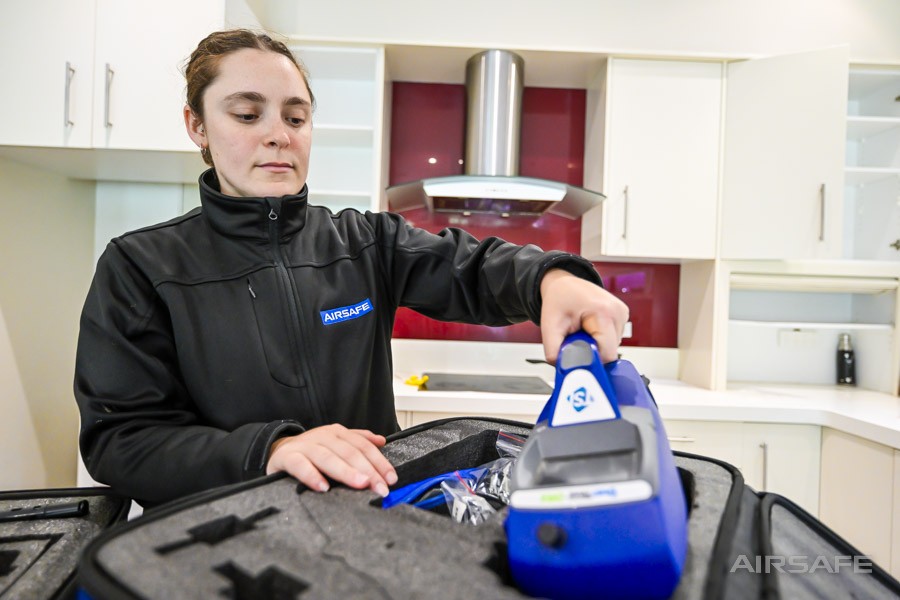
Airsafe runs personal exposure monitoring for inhalable and respirable dust, along with static and real-time airborne dust monitoring and deposited dust monitoring with deposition gauges at site boundaries. Since 1988, we have run dust programs for construction and demolition, manufacturing, sawmilling and joinery, quarrying and mining, food and agriculture, and government. We are based in Sydney and travel throughout Australia for dust monitoring work, using our own sampling pumps, DustTrak monitors and fixed DusTech stations where they suit the job.
If you know you have a dust problem but are not sure what needs to be measured, call Airsafe on 1300 888 338.
Questions people ask
How is respirable dust measured at a workplace?
For personal exposure monitoring, a worker wears the sampling head in their breathing zone during the job. Airsafe conducts respirable dust monitoring in accordance with AS 2985, so the sample represents the air that person is breathing while they work. Static or real-time monitoring can also be used where the question is about a process or work area.
Is silica dust the same as respirable dust?
Silica dust is a substance. Respirable dust is a size fraction small enough to get deep into the lungs. If your concern is silica from concrete, bricks, tiles or stone, the monitoring is for respirable crystalline silica, which has its own methods and requirements.
Do I need deposited dust monitoring around a demolition or excavation site?
You may need it if council requirements or consent conditions apply. Deposited dust monitoring uses gauges left at the site boundary to collect dust that settles over a set period. It is commonly used around demolition, excavation, construction and similar sites to see what is leaving the site and landing on nearby property.
What is the exposure limit for respirable dust in Australia?
There is no single limit for every kind of respirable dust. The substance in the dust matters, as wood dust, metal dust, mineral dust and general nuisance dust can have different limits. Respirable crystalline silica stays at 0.05 mg/m3 as an 8-hour time-weighted average, including from 1 December 2026.
Can dust monitoring tell where the dust is coming from?
Dust monitoring can help work out what a process is releasing and whether dust is moving beyond a work area. Static or real-time monitoring can be useful for this. Deposited dust monitoring at a boundary can show what is settling off site, while personal monitoring is used for worker exposure.