We often get calls from clients asking for an “asbestos register” when what they actually need first is an asbestos survey. The terms get used almost interchangeably, and in practice they’re part of the same job. But they’re not quite the same thing.
The survey, also called an asbestos audit, is the inspection. The asbestos register is the document that records what asbestos has been identified or assumed to be present, where it is and what condition it’s in. A broader asbestos and hazardous materials survey can also cover lead in paint, synthetic mineral fibre and polychlorinated biphenyls.
For many commercial sites, the finished survey report and register arrive as one package. That’s why people often use the words as though they mean the same thing.
The survey comes first
Depending on when your premises were built, this might mean completing an asbestos and hazardous materials survey, and maintaining an asbestos register and management plan for any asbestos that is found.
For a NSW workplace, the asbestos register is the legal record. SafeWork NSW says a register is required where the workplace was built before 31 December 2003, or where asbestos has been identified. The exception is a building constructed after that date where no asbestos has been identified and none is likely to be present.
If demolition or refurbishment is planned, the existing register has to be reviewed before the work starts and revised if it isn’t good enough for the proposed work. An old register that says “inaccessible area” is not much help if that wall or ceiling is about to be opened up.
For a private home, the workplace register rules don’t simply turn the homeowner into a PCBU. But once builders, demolition contractors or other businesses are carrying out work, asbestos still has to be dealt with safely. Finding it before the job starts is generally a lot cheaper than finding it halfway through demolition.
An asbestos register has to stay current
The NSW asbestos code of practice says the register should be reviewed at least once every five years. Under the NSW Work Health and Safety Regulation, the register must also be reviewed when the asbestos management plan is reviewed, if more asbestos is found, or if asbestos is removed, disturbed, sealed or enclosed. Before demolition or refurbishment, the register must be checked again and revised if it is inadequate for the work being planned.
The asbestos management plan has its own five-year review requirement under the NSW Work Health and Safety Regulation. When that plan is reviewed, the register is reviewed too.
If asbestos is removed next month, the register should change next month.
A broader hazardous materials register may sit alongside the asbestos register and include lead paint, synthetic mineral fibre, PCBs and other materials. The specific five-year legal review requirement we’re talking about here applies to the asbestos management plan. Reviewing that plan also triggers a review of the asbestos register.
What does Airsafe inspect?
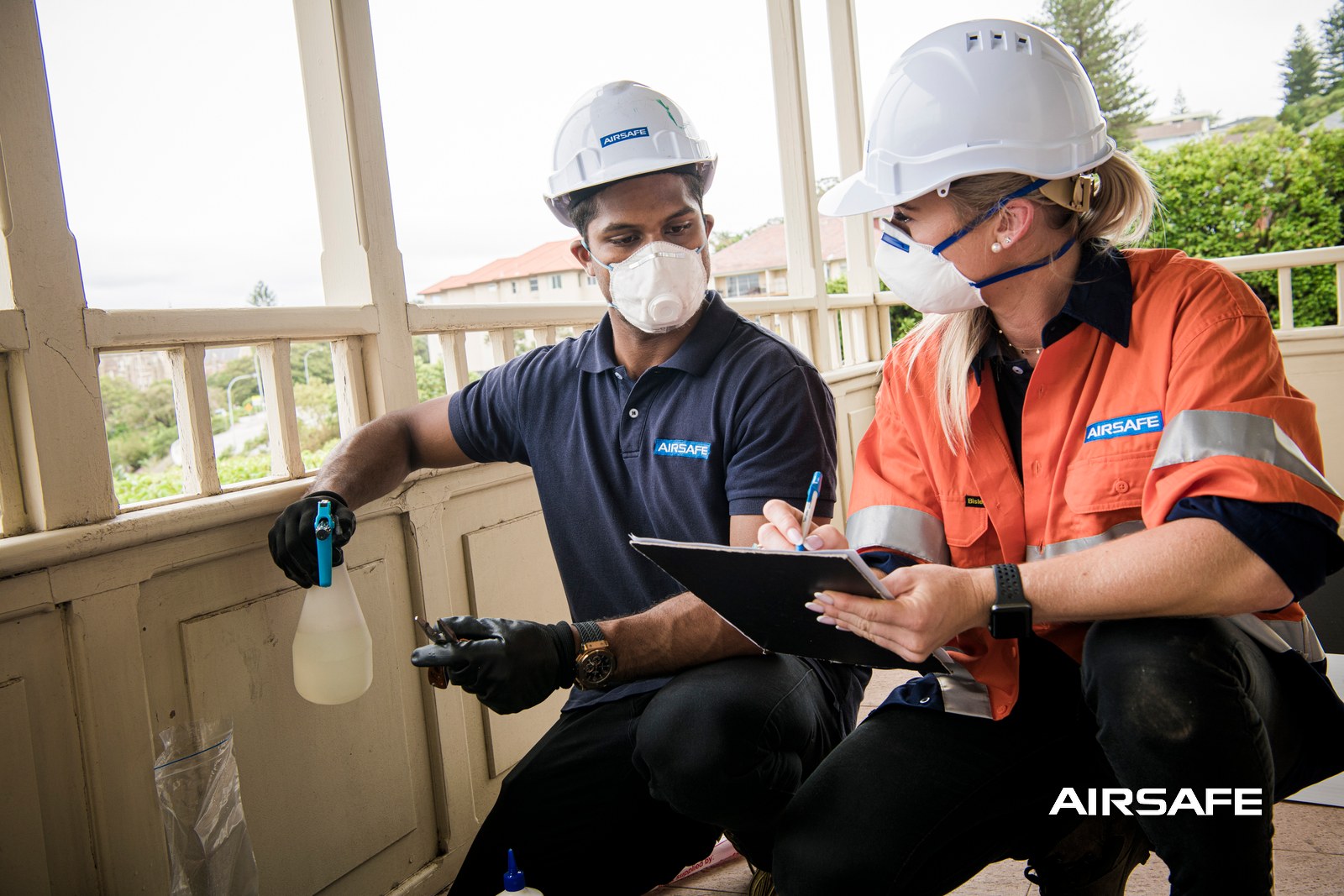
The most important component of an asbestos and hazardous materials survey is a close inspection of your premises by an experienced asbestos consultant who knows what to look for.
The consultant inspects the accessible parts of the buildings and structures, including rooms, ceiling spaces, service areas, plant rooms, shafts, storage areas and other areas relevant to the scope. Suspect materials are recorded and sampled where appropriate.
Airsafe tests asbestos samples in our own NATA accredited laboratory, Accreditation No. 2959. For lead in existing painted surfaces and paint flakes, Airsafe also holds NATA accreditation for portable XRF screening within the published scope. Airsafe currently has seven Licensed Asbestos Assessors on staff.
What’s in the report and register?
At the end of the survey, you receive a report setting out what was inspected and what was found. Depending on the scope, it can include photographs, laboratory results, recommendations and a legally compliant asbestos register for the site.
The register records the asbestos that has been identified or assumed, along with details such as its location, type and condition. If asbestos is identified at a workplace, an asbestos management plan is also required.
Although the asbestos register and management plan are closely related and are generally prepared at the same time, strictly speaking they’re different documents. The register tells you where the asbestos is. The management plan tells you how you’re going to deal with it.
What happens after the first survey?
If no asbestos is identified within the scope of the survey, the report records that result. If asbestos is found, the action depends on its type, location, condition and what work is planned. Some material can remain safely in place and be managed. Other material may need to be removed before refurbishment or demolition starts.
Airsafe doesn’t do asbestos removal. We identify and assess the material, prepare and maintain the register and management plan, monitor removal work where required and carry out independent clearance work within the appropriate scope.
We can also take over an existing asbestos register prepared by somebody else. We review the listed materials, inspect their current condition, update the document and add anything that has changed or been found since the previous survey. From there, we can handle the five-yearly reviews and interim updates when work is carried out.
Airsafe is based in Sydney, but our asbestos consultants travel throughout Australia for surveys, registers and review work.
If your workplace has an asbestos register that hasn’t been looked at for five years, or the building has changed since it was prepared, call Airsafe on 1300 888 338.