From 1 December 2026 there is a national workplace exposure limit for diesel particulate matter of 0.01 mg/m3, measured as respirable elemental carbon over an eight-hour shift, and under the national list it applies to workplaces where workers breathe diesel exhaust, including warehouses, loading docks and vehicle workshops where forklifts, trucks and other diesel plant run. Victoria and Western Australia have their own arrangements for diesel particulate matter, covered below. Air monitoring is required when you cannot be reasonably certain that exposure stays below the limit, or when you need it to find out whether there is a risk to health. That can be the case indoors or in partly enclosed areas where exhaust can build up. Monitoring is best done after the risk assessment and once controls are in place, and it can show whether those controls work.
Which workplaces does the diesel limit affect?
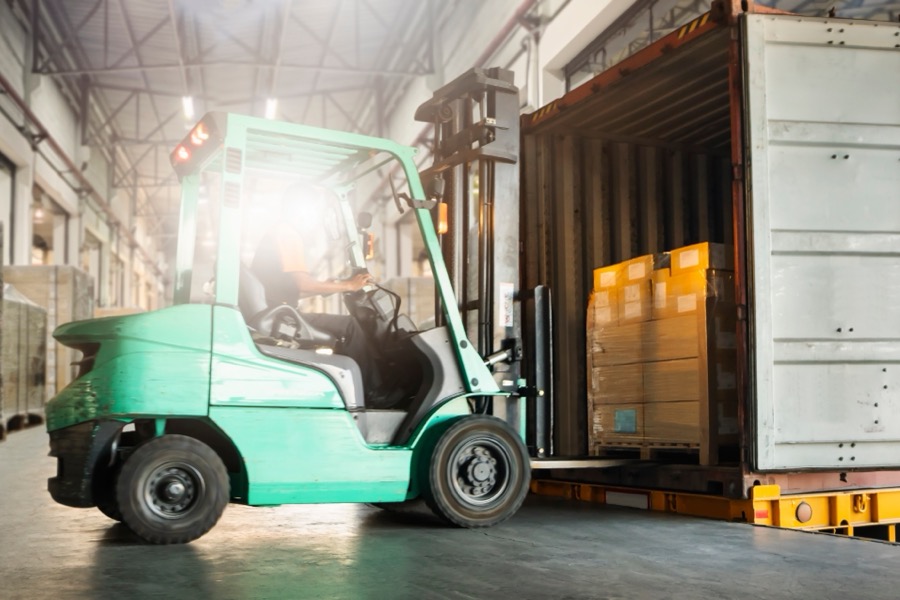
The Safe Work Australia diesel guide names heavy vehicles and diesel plant as common sources of exposure. That includes forklifts, trucks, loaders and generators, along with other diesel equipment used in transport and logistics, construction, mining, agriculture and vehicle maintenance.
Exposure can be higher indoors or in partly enclosed areas, including enclosed, poorly ventilated vehicle repair workshops, car parks and tunnels, where forklifts, trucks or other diesel engines run and exhaust can build up.
Workers most at risk include forklift drivers, loading dock workers, truck drivers and vehicle maintenance workers.
What is the limit, and how is diesel exhaust measured?
Safe Work Australia has added diesel particulate matter to the new Workplace exposure limits for airborne contaminants list. From 1 December 2026 the WEL for diesel particulate matter is 0.01 mg/m3, measured as respirable elemental carbon and averaged over an eight-hour shift. For background on the wider 1 December 2026 changes, see our article on the 1 December 2026 changes.
There is no single WEL for diesel engine exhaust as a whole, because diesel exhaust is a mixture and its make-up changes with engine type, fuel and operating conditions. The diesel particulate limit is used as the indicator. In practice, you may also need to measure nitrogen dioxide, carbon monoxide and aldehydes such as formaldehyde.
Diesel engine exhaust is carcinogenic. Safe Work Australia says research estimated that 1.2 million Australian workers were exposed to diesel engine exhaust at work in 2011, and that about 130 Australians a year are diagnosed with lung cancer caused by work-related exposure to diesel engine exhaust. Airsafe’s 2024 diesel article has more background on diesel particulate matter.
When do you have to do air monitoring?
Air monitoring must not be used in place of control measures. The Safe Work Australia guidance says it is best done after the risk assessment and after controls are in place.
Not all work needs air monitoring. If you can be reasonably certain that exposure will stay below the WEL, you do not need to monitor unless monitoring is needed to find out whether there is a risk to health. If you are not certain whether an exposure limit is likely to be exceeded, or you need monitoring to work out whether there is a risk to health, air monitoring must occur.
A suitably qualified person, such as an occupational hygienist, can decide whether monitoring is needed and design the monitoring program.
Monitoring can show when exhaust builds up, whether controls are failing or deteriorating, and whether the controls are doing their job. The guide says controls should be reviewed when, for example, diesel particulate results approach the WEL, such as results above half of it.
Are the rules different in Victoria or Western Australia?
Yes, in both. WorkSafe Victoria says diesel particulate matter, measured as respirable elemental carbon, is one of 15 substances with transition arrangements until 30 November 2029.
In Victoria, from 1 December 2026 the limit for diesel particulate matter is 0.1 mg/m3 for all industries. From 1 December 2029 it becomes 0.01 mg/m3 for all industries other than underground mining. Underground mining in Victoria stays at 0.1 mg/m3.
WorkSafe WA says a regulatory impact assessment on the WEL for diesel particulate matter will be done before any changes are made to diesel particulate standards or limits in Western Australia, so a WA workplace should check the current position with WorkSafe WA.
The other regulators we checked, including SafeWork NSW, say the WEL list applies from 1 December 2026. If you’re in doubt about how the change is being implemented where you operate, ask your WHS regulator.
What reduces diesel exhaust in a warehouse or workshop?
The first question is whether diesel plant can be replaced. The guide puts electric, propane, compressed natural gas or petrol-powered plant ahead of diesel where that is practicable, while also managing any new risks created by the replacement.
If diesel plant stays in use, the guide points to low-emission fuels and well-maintained engines. Proper tuning and suitable lubricants also affect emissions.
The next step is to keep people away from exhaust where you can. That may mean separating the part of a workshop where engines run, keeping workers out of areas where exhaust is present, or using positive pressure ventilation for indoor areas. Local exhaust or general ventilation is important where engines idle or are maintained.
Diesel particulate filters and other after-treatment can also reduce emissions. The guide says to ask the equipment supplier what is fitted or can be retrofitted.
How does Airsafe monitor diesel particulate?
Airsafe starts with an initial risk assessment and walkthrough of the premises. That means identifying the activities that generate diesel exhaust and, where possible, consulting the workers who operate diesel-powered machinery.
The risk changes with the location of the operating engine, ventilation, the number of engines, engine type, age and size, fuel used, emission controls, tuning and maintenance, pattern of use, and how long workers are exposed.
For diesel particulate monitoring, Airsafe uses personal sampling with a calibrated pump worn by the worker in the breathing zone. Airsafe also offers portable and fixed DPM monitoring, with daily checking.
Samples are analysed as respirable elemental carbon by an external NATA-accredited laboratory. Air volumes are measured under Airsafe’s NATA accreditation for sampled-air volume measurement. If the results show a problem, Airsafe advises on control measures following the hierarchy of controls.
You can also ask for a quote through our Fast Quote form.
For diesel particulate monitoring, call Airsafe on 1300 888 338.
Questions people ask
What is the exposure limit for diesel particulate matter from 1 December 2026?
From 1 December 2026, the national workplace exposure limit for diesel particulate matter is 0.01 mg/m3. It is measured as respirable elemental carbon and averaged over an eight-hour shift. Diesel particulate matter is a new entry on the national WEL list. Victoria and Western Australia have their own arrangements for diesel particulate matter.
Does the diesel limit apply to forklifts in a warehouse?
Under the national list, yes, if workers can breathe diesel exhaust from those forklifts. The Safe Work Australia guide names forklifts among common sources of workplace diesel exhaust exposure. Warehouses can be a concern where diesel plant operates indoors or in partly enclosed areas and ventilation is limited. Victoria and Western Australia have their own arrangements for diesel particulate matter.
Do we have to monitor diesel exhaust at our workplace?
You need air monitoring if you are not certain whether the exposure limit is likely to be exceeded, or if monitoring is needed to find out whether there is a risk to health. If you can be reasonably certain exposure will stay below the limit, monitoring is not required unless monitoring is needed to find out whether there is a risk to health.
What limit applies to diesel particulate in Victoria?
Victoria has transition arrangements for diesel particulate matter. From 1 December 2026, the Victorian limit is 0.1 mg/m3 for all industries. From 1 December 2029, the limit becomes 0.01 mg/m3 for all industries other than underground mining, which remains at 0.1 mg/m3.
How is diesel particulate matter measured?
The WEL is measured as respirable elemental carbon. Airsafe collects personal samples in the worker’s breathing zone using a calibrated pump. Those samples are analysed by an external NATA-accredited laboratory, while Airsafe measures sampled-air volumes under its own NATA accreditation.
Are diesel exhaust fumes carcinogenic?
Yes. Diesel engine exhaust is carcinogenic. It causes lung cancer and is linked with an increased risk of bladder cancer. Safe Work Australia says about 130 Australians are diagnosed each year with lung cancer caused by work-related exposure to diesel engine exhaust.