Yes. From 1 July 2026, if an approved NSW code of practice applies to your work, you have to follow it, unless you can show that another way of managing the risk provides the same or a better level of health and safety.
That is an important change. Until now, a code of practice was strong guidance and could be used as evidence of what you should have done. It was not, by itself, something you were legally required to follow.
The law uses the term PCBU, short for person conducting a business or undertaking. In most cases, that simply means the business or organisation responsible for the work. We will use ‘business’ here because it is easier to read.
What changed, and why it matters
Codes of practice have been around for years. They explain, in practical terms, how to meet the duties in the work health and safety laws: how to find asbestos, how to control silica dust, how to keep noise down. Most businesses that take safety seriously already follow them.
What’s new is that following the code is now the expected minimum. SafeWork NSW puts it plainly: codes are now the minimum performance standards that a business is expected to comply with. If you do things differently, it’s up to you to show your way is as good or better.
That doesn’t create new duties around asbestos or silica. The duty to keep an asbestos register, to have an asbestos management plan, to monitor the air and to control silica dust was already in the NSW Work Health and Safety Regulation. What has changed is the detail. The code now sets the benchmark for how those duties are carried out.
The new duty is section 26A of the NSW Work Health and Safety Act, inserted by the Industrial Relations and Other Legislation Amendment (Workplace Protections) Act 2025.
The duty applies to every approved code in NSW, not just the psychosocial hazards code that has had most of the attention. For Airsafe’s clients, the ones that matter most are the two asbestos codes and the new respirable crystalline silica code.
Asbestos: your register and management plan are now measured against the code
So you may be wondering: what’s an asbestos register, what’s an asbestos management plan, are they the same thing, and do I need them?
Briefly, an asbestos register states WHERE asbestos has been found in your workplace. An asbestos management plan is about the PROCESSES you have in place for dealing with that asbestos.
If any asbestos has been identified at your workplace, you’re legally required to have both. The only exception is a building constructed after 31 December 2003 where no asbestos has been identified or is likely to be present. None of that is new.
What the code adds is the standard your register and plan have to meet. From 1 July 2026, that standard is the one you’re expected to follow:
- Asbestos has to be identified by a competent person.
- If a material can’t be identified but a competent person reasonably believes it’s asbestos, you treat it as asbestos.
- Samples can only be analysed by a laboratory accredited by NATA for the relevant test method, or one approved or operated by the regulator.
- The register has to be reviewed at least once every five years, and whenever asbestos is removed, disturbed, sealed or enclosed.
- The management plan is more of a living document. It has to be reviewed at least every five years too.
In practice, that means a register that hasn’t been looked at since 2019, or a survey that skipped the ceiling space, would fall short of the code you’re now required to follow.
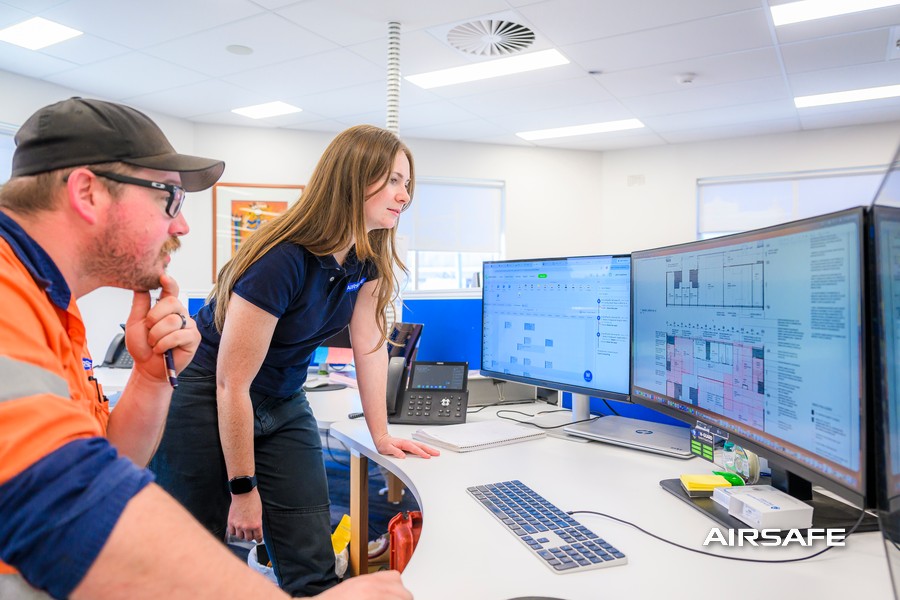
At Airsafe, we treat any suspect material as containing asbestos until we ascertain otherwise. Survey samples are analysed in our own NATA accredited laboratory (NATA accreditation No. 2959), seven of our consultants are Licensed Asbestos Assessors, and our survey reports are accepted by SafeWork, local councils and certifiers.
Silica: the new code covers construction sites, not just benchtops
The engineered stone ban came into effect on 1 July 2024, but silica didn’t go with it. Sand, stone, concrete, bricks and tiles all contain crystalline silica, and cutting, grinding or drilling them still puts silica dust into the air.
SafeWork NSW’s new code for managing the risks of respirable crystalline silica was approved on 20 February 2026. It applies to any material with at least 1% crystalline silica by weight: concrete, bricks, tiles, asphalt, natural stone, porcelain and ceramics. That takes in construction, tunnelling and demolition sites as much as stonemasonry.
The air monitoring duty isn’t new either. Under the Regulation, if you’re not certain, on reasonable grounds, that silica dust at your workplace is below the exposure standard of 0.05 mg/m3 over an eight-hour shift, you have to arrange air monitoring to find out.
What the code adds, and what you’re now measured against, is how that gets done:
- Air monitoring is carried out by an expert in air monitoring, such as an occupational hygienist, and sampled in accordance with AS 2985.
- Health monitoring is required where there’s a significant risk to workers’ health. The code treats air monitoring results above half the exposure standard as a sign of that.
- A silica risk control plan has to be in place before any high-risk processing starts.
One thing that isn’t changing is the number. In June 2026, WHS ministers put a proposed halving of the silica exposure standard to 0.025 mg/m3 on hold. The limit stays at 0.05 mg/m3 when the workplace exposure limits replace the workplace exposure standards on 1 December 2026.
Don’t read that as a reprieve. In the past 12 months SafeWork NSW issued more than 145 silica-related notices and received over 45 reports of silicosis.
The same logic applies to welding fume under the Welding processes code. We cover that separately on our welding fume monitoring page.
What “the same or better” means in practice
If you follow the code, you need to be able to show it. If you don’t, you need to be able to show that your approach is at least as good. Either way, it comes down to records.
For most of our clients, that means a current asbestos register and management plan, air monitoring reports measured against the current exposure standards, and a silica risk control plan where one is required.
It gives you a record that can be referred back to later on, in case any questions come up.
How Airsafe can help
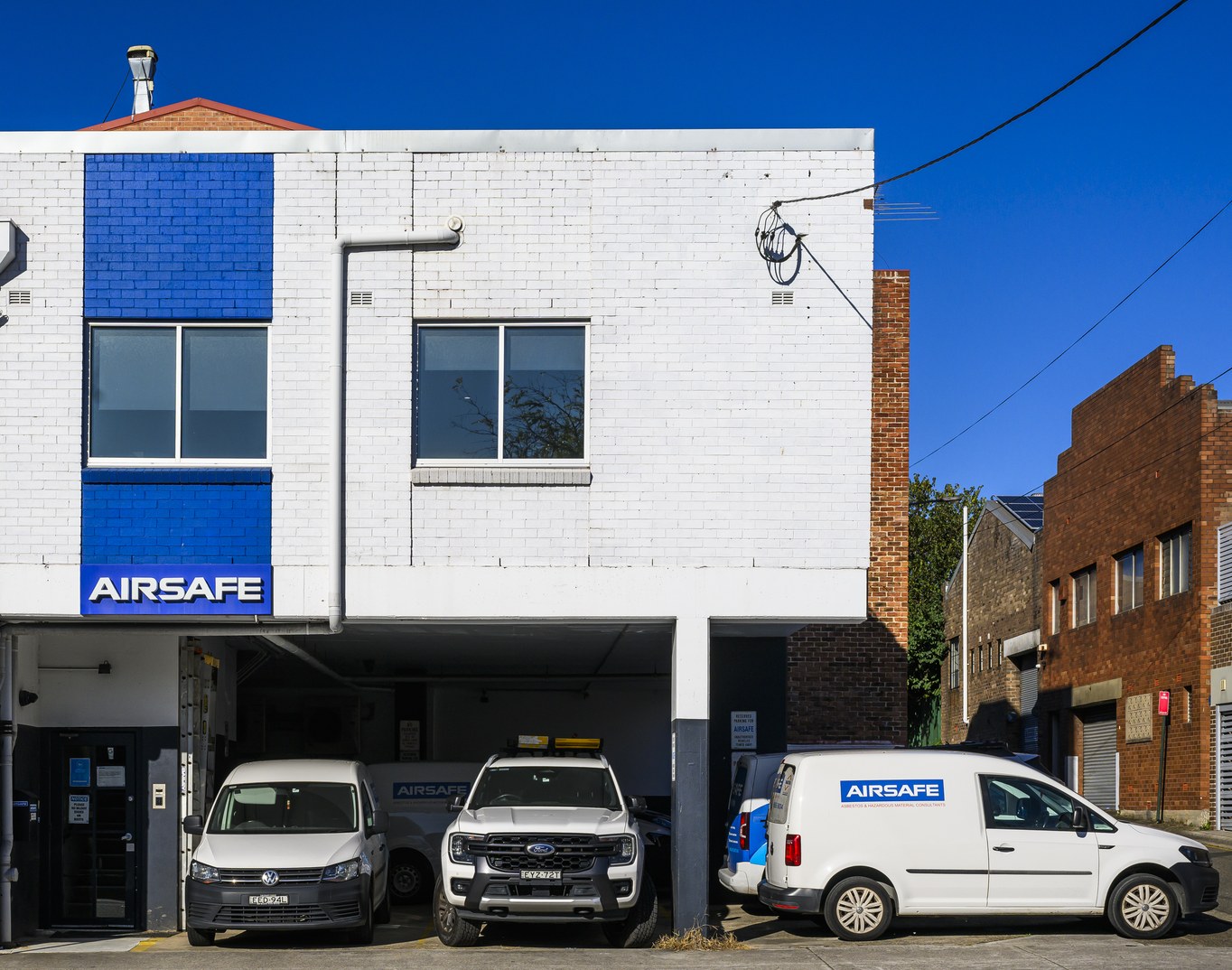
Since 1988, Airsafe has carried out asbestos and hazardous materials surveys, prepared asbestos registers and management plans, and run silica air monitoring programs across Sydney, NSW and Australia.
For silica, we take the air samples on site under our NATA accreditation for volume measurement, and the filters are analysed by a separately NATA accredited laboratory.
If you’re not sure where your workplace sits against the codes that now apply to it, call Airsafe on 1300 888 338.