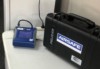
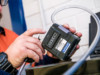
A silica monitoring program with Airsafe means personal sampling on the workers doing the highest-exposure tasks, fitted around how your site actually runs. You get a clear report on where each worker stands against the workplace exposure standard, and practical advice on what to fix if levels are too high.
What is crystalline silica?
Silica is silicon dioxide, a naturally occurring and abundant mineral that makes up the majority of rocks and soils. It comes in both non-crystalline and crystalline forms. The crystalline form is a possible hazard when it turns into dust.
Crystalline silica is a common component in building materials including:
- bricks
- tiles
- concrete
- engineered and natural stone products
- sandstone
- fibre cement sheeting
Crystalline silica is also used to manufacture engineered stone. Engineered stone in benchtops, panels and slabs has been banned across Australia since 1 July 2024 (see below).
How silica dust is generated
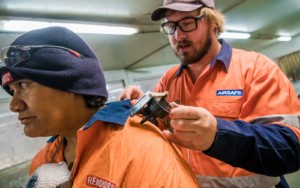
Crystalline silica can become a health hazard when dust is produced. This happens during mechanical processes such as crushing, cutting, drilling, grinding, sawing or polishing of silica-containing materials, whether natural or engineered.
Activities that commonly generate silica dust include:
- stone masonry
- facade renovation
- blast cleaning of buildings, especially using sand
- demolition processes
- concrete scabbling, cutting or drilling
- tunnelling
- manufacturing and fabrication of stone products
Some dust particles are so small that they cannot be seen. These are known as respirable crystalline silica (RCS) particles. RCS particles are more than fifteen times smaller than a piece of human hair, and small enough to penetrate deep into the lungs.
Health effects of respirable crystalline silica exposure
Because respirable crystalline silica particles are so small, they can lodge deep in the lungs and cause illness or disease. Non-crystalline or amorphous silica does not cause this type of lung damage.
The most serious disease caused by RCS is silicosis, an irreversible lung disease that causes permanent disability and can be fatal. Silicosis happens when RCS causes inflammation and scarring of the lung tissue, reducing the lungs’ ability to take in oxygen. Damage to the lungs from RCS and symptoms of disease may not appear for many years, but they can also develop after a short exposure to high levels of RCS.
Over the past decade, more than 500 workers’ compensation claims have been made in Australia in relation to silicosis. The alarming incidence of disease has led the Australian Government and state governments to take action.
There are a number of forms of silicosis, depending on how much dust workers have been exposed to and over what period of time:
- Acute silicosis, which can develop after a short exposure to very high levels of silica dust, within a few weeks or years, and causes severe inflammation and an outpouring of protein into the lung.
- Accelerated silicosis, which can develop after exposures of 3 to 10 years to moderate to high levels of silica dust and causes inflammation, protein in the lung, and scarring of the lung (fibrotic nodules).
- Chronic silicosis, which can develop after long-term exposure to lower levels of silica dust and causes fibrotic nodules and shortness of breath, and can include progressive massive fibrosis where the fibrotic nodules in the lung aggregate.
Workers exposed to silica dust may also develop other diseases, including:
- chronic bronchitis
- emphysema
- lung cancer
- kidney damage
- scleroderma (a disease of the connective tissue of the body that causes scar tissue to form in skin, joints and other organs)
The engineered stone ban
Since 1 July 2024, there has been an Australia-wide ban on the use, supply and manufacture of engineered stone benchtops, panels and slabs. Businesses can no longer carry out work with engineered stone slabs, panels and benchtops, or ask their workers to do so.
The ban was introduced in response to rising rates of silicosis, particularly among engineered stone workers. According to Safe Work Australia:
While silicosis cases have been reported in workers using different types of silica-containing materials across a range of industries, a disproportionate number of silicosis cases are in engineered stone workers. In these workers (compared to workers exposed to silica from natural sources), silicosis is associated with a shorter duration of exposure to silica, faster disease progression and higher mortality.
Under the Work Health and Safety Regulations, engineered stone is defined as an artificial product that:
- contains at least 1% crystalline silica as a weight/weight concentration,
- is created by combining natural stone materials with other chemical constituents (such as water, resins or pigments), and
- becomes hardened.
Engineered stone was commonly used in Australia for kitchen benchtops as an economical alternative to natural stone products like marble or granite, sold under brand names including Caesarstone, Essastone and Quantum Quartz.
Why silica still matters after the ban
The engineered stone ban was designed to address the most common cause of silicosis among Australian workers. But the need to identify and control respirable crystalline silica exposure in the workplace hasn’t gone away. There are a number of reasons for this:
- The ban is only on engineered stone. Other products that contain crystalline silica, including natural stone, are not banned. While the risk from working with these products is lower, it still exists and needs to be controlled.
- Only engineered stone benchtops, panels and slabs are banned. Engineered stone products that are not intended to be processed – such as prefabricated sinks, jewellery and garden ornaments – are not subject to the ban. Any work that involves processing these products must still be controlled.
- Previously installed engineered stone can still be worked on. Repairs, minor modification, removal and disposal of engineered stone benchtops, panels and slabs installed prior to the ban are not subject to the ban. All such work must be controlled, and businesses planning to undertake this work need to notify WHS regulators such as SafeWork NSW in advance.
If you work with products containing crystalline silica, contact Airsafe to make sure you’re meeting your duty of care to your workers.
How we control silica exposure
When advising you on how to control silica exposure, Airsafe applies the hierarchy of control, assessing the following options in order of priority:
- Elimination: eliminating activities that generate silica dust, where possible.
- Substitution: using materials that are less likely to generate silica dust, if available.
- Engineering controls: water suppression, ventilation systems, dust collection devices or other physical barriers that capture silica dust at the source.
- Administrative controls: limiting exposure time, training, and shift rotation.
- Personal protective equipment: respiratory protection for any worker who may still be exposed.
Airsafe’s air monitoring tells you whether your controls are working. We measure exposure against the workplace exposure standard, identify gaps, and recommend the steps that will protect your workers with the least disruption to your operations.
Why choose Airsafe for silica monitoring?
Airsafe offers a complete suite of services to control the risk of crystalline silica dust exposure. We also give you the reassurance of knowing you’re dealing with one of NSW’s most experienced and respected occupational hygiene consultancies.
For silica air monitoring, Airsafe is accredited by NATA for volume measurement. We sample silica dust on site using NATA-accredited equipment, then send the filters to a separately NATA accredited laboratory for analysis. All Airsafe test reports have metrological traceability, and all work is completed in accordance with the relevant Australian Standard, AS 2985.
The sampling pumps and cyclones we bring to site are our own – owned, maintained and replaced by Airsafe rather than hired in for the job. That means they’re available the moment a project needs monitoring, with calibration on our own schedule.
If crystalline silica is identified during air testing, we develop an exposure assessment strategy and help you implement the regulatory requirements for occupational health and hygiene.
Case file: Sydney Metro West, Eastern Tunnelling Package
Over roughly twelve months, Airsafe ran respirable crystalline silica monitoring for Mann Group across around nine CBD building demolitions on Pitt and Hunter Streets and the wider Metro program, alongside lead air monitoring, inhalable dust, diesel exhaust, occupational exposure assessments and noise. Two full-time Licensed Asbestos Assessors on the ground, an on-site lab, full integration with the demolition program. All occupational hygiene reports across the program were signed off by Airsafe’s Certified Occupational Hygienist. It’s one of the biggest combined asbestos removal and occupational hygiene jobs ever undertaken in Sydney.
For a silica monitoring quote, get in touch with us today on 1300 888 338.
Case file: RAAF Base Richmond runway resurfacing
When the runway at RAAF Base Richmond was resurfaced, Airsafe monitored the crews for respirable crystalline silica. The work could only run overnight, in tight windows when flights were grounded, and it had to be ready to stop the moment an aircraft needed to move – so the monitoring was planned around the operation, not the other way around. We ran personal sampling on the workers in the highest-exposure tasks, watched how the dust was being generated and suppressed, and compared the results against the exposure standard. The findings gave clear direction on where the dust controls needed tightening, in a high-security defence environment that left no room to improvise.
4.9 stars from over 640 Google reviews and counting, from builders, demolition contractors, tunnellers, fabricators, mining and industrial clients across Australia.
“AIRSAFE has become our go-to company for all air monitoring needs. Working for a large paint company, we’ve found their service not only exceptional but also backed by valuable advice. They are consistently reliable, flexible, and a pleasure to work with. These qualities made it an easy decision to choose them as our preferred supplier.”
– Nik Pappas, November 2025
“We recently appointed Airsafe to undertake air monitoring and reporting at a brownfield development site during the demolition stage. Their proactive, professional and cost and time-efficient approach and implementation were excellent.”
– Carl O. Peterson, December 2021
“I use Airsafe on a regular basis for commercial construction. Liam Matthews and the Airsafe team always get the job done professionally, safely, and in a prompt manner as required. If only I could give more stars.”
– Jordan Kissane, September 2021
Workplace exposure standards for silica
The eight-hour time weighted average workplace exposure standard for respirable crystalline silica (RCS) is 0.05 mg/m3. This means that your workers must not be exposed to levels of RCS greater than 0.05 mg/m3 over an eight-hour working day, for a five-day working week.
This exposure standard halved from the previous standard of 0.1 mg/m3 on 1 July 2020. If a monitoring program was undertaken at your workplace before that date, the results may be out of date and need to be redone, especially if the measured exposure was between 0.05 mg/m3 and 0.1 mg/m3.
Some have argued that the current 0.05 mg/m3 exposure standard is too low or too difficult to achieve in practice. Airsafe believes it’s justified by the risks.
When new silica monitoring is required
Even if you’ve had respirable crystalline silica monitoring conducted before, it may need to be redone if one or more of the following is true:
- Since the last assessment, there have been significant changes to work practices (for example, new equipment being commissioned), production, processes (for example, work process redesign), procedures, or control measures, which may reasonably be expected to result in new or additional exposures.
- A health monitoring report indicates an adverse result when the worker’s baseline or previous monitoring reports revealed no abnormalities.
- A health representative requests a review of control measures, but current air monitoring records are unavailable.
- Worker consultation results in a substantiated complaint from a worker or their representative, or a substantiated matter is raised by an entry permit holder regarding possible contravention of the workplace exposure standard, and current air monitoring records are not available.
Frequently asked questions
-
Silica is silicon dioxide, a common natural mineral found in rocks, soil and sand, and in building materials like concrete, mortar, bricks, tiles, sandstone, fibre cement sheeting and engineered stone. When materials containing crystalline silica are crushed, cut, drilled, ground, sawn or polished, they can generate very fine dust particles. Particles small enough to lodge deep in the lungs are known as respirable crystalline silica, or RCS. RCS exposure can cause silicosis, an irreversible and potentially fatal lung disease. Non-crystalline or amorphous silica does not cause this kind of damage.
-
The current eight-hour time weighted average workplace exposure standard for respirable crystalline silica is 0.05 mg/m3. This means your workers must not be exposed to levels of RCS greater than 0.05 mg/m3 over an eight-hour working day, for a five-day working week. The standard halved from 0.1 mg/m3 on 1 July 2020. If your last silica monitoring program was completed before that date, the results may be out of date.
-
Under the Work Health and Safety Regulation, employers and contractors must monitor airborne contaminants when there’s a chance the exposure standard could be exceeded. That includes most mechanical work on stone, concrete, tile, fibre cement or other silica-containing materials. Even if you’ve had monitoring done before, you may need to redo it if you’ve changed equipment, processes or controls, or if a previous health monitoring report shows an adverse result. Just call us on 1300 888 338 if you’d like to talk through your situation.
-
We take silica samples on site using equipment accredited by NATA for volume measurement, then send the filters to a separately NATA accredited laboratory for analysis. All work is completed in accordance with the relevant Australian Standard and all our test reports have metrological traceability.
-
Yes. Most silica monitoring jobs we do are part of a broader occupational hygiene program covering inhalable dust, lead air monitoring, welding fumes, diesel particulate matter, noise and other contaminants. We can run respirable crystalline silica monitoring alongside any of these as a single integrated program.
Contact us for a respirable crystalline silica risk assessment today
Airsafe is here to help you keep your workers safe and meet your legal obligations. Whether you’re concerned about potential worker exposure to crystalline silica, doing permitted work with previously installed engineered stone, or running an integrated occupational hygiene program across a major project, our team can help.
For any questions about respirable crystalline silica identification, monitoring or control, call Airsafe on 1300 888 338.
Last updated: August 2026